The Levels Playbook

How to improve your cholesterol and reduce your cardiac risk

Cardiovascular disease is still the leading cause of death worldwide — and much of that risk is tied to cholesterol-carrying particles in your blood. This guide covers what your cholesterol numbers actually mean, why both LDL and ApoB are useful to know, and six lifestyle interventions that research suggests can make a meaningful difference.

01 — Foundation

Cholesterol, LDL, and ApoB: What the Numbers Mean

Most people learn they have "high cholesterol" from a standard lipid panel — a number that typically refers to LDL cholesterol. LDL is the primary carrier of cholesterol in the blood, and elevated LDL is one of the most well-established modifiable risk factors for cardiovascular disease. The science here is not seriously disputed among cardiologists and lipidologists.

What LDL measures is the amount of cholesterol carried in LDL particles. But what actually causes arterial damage is the particles themselves — when too many are circulating, they can lodge in artery walls, trigger an inflammatory response, and over time build into plaque. Enough plaque accumulation narrows the arteries and raises the risk of heart attack and stroke. It's particle count, not cholesterol mass per se, that drives this process.

Key distinction

ApoB (Apolipoprotein B) gives you a more direct count of dangerous particles. Each harmful lipoprotein — LDL, VLDL, IDL, Lp(a) — carries exactly one ApoB molecule, so measuring ApoB is effectively a particle census. Research consistently shows it's a stronger predictor of cardiovascular events than LDL alone, particularly when LDL is in the borderline range or when triglycerides are elevated.

Go deeper (audio)

For full conversations with cardiologists and lipid researchers — including coronary calcium scoring, ApoB, and what standard panels miss — browse curated episodes on A Whole New Level, Levels' podcast hub.

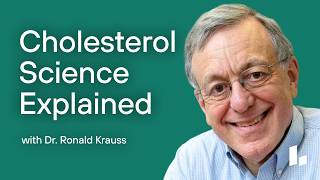
"Where ApoB is more attractive is in borderline situations — when LDL isn't dramatically elevated, but there may be something going on with the particle profile that the cholesterol number alone won't reveal."
Ronald M. Krauss, MD — Senior Scientist, Professor of Medicine, UCSF ▶ Listen

In practice, most people will start with LDL — it's what standard labs report and what most clinical guidelines are built around. ApoB is still considered optional in most clinical settings, so don't let the absence of one stop you from acting on LDL. The interventions below address both. The goal is the same: fewer harmful particles, less plaque, lower long-term risk.

LDL targets
Lab (Normal)<100 mg/dL
Optimal<70 mg/dL
ApoB targets
Lab (Normal)<90 mg/dL
Optimal<70 mg/dL

02 — Core dietary strategies

Three Dietary Levers With the Strongest Evidence

Diet is where most people have the most direct control. These three strategies work through distinct biological pathways, and their effects are additive. Individual responses vary — sometimes substantially — but the general direction of effect is well-supported.

1

Reduce Saturated Fat

The food matters as much as the gram count — and what you replace it with matters most of all

Targets
<10% calories from saturated fat|Replace with unsaturated fats, not refined carbs
Why it works

Saturated fat suppresses LDL receptor expression on liver cells, slowing the clearance of LDL particles from circulation. Reducing intake can restore receptor activity and lower circulating LDL and ApoB. The effect, however, varies considerably by person — and depends critically on what replaces it. Swapping saturated fat for unsaturated fat (olive oil, nuts, avocado) tends to be beneficial. Swapping it for refined carbohydrates can be counterproductive, particularly for people with elevated triglycerides.

Individual variation

In controlled studies, the same dietary intervention has produced outcomes ranging from meaningful LDL reduction to a modest increase in some individuals. This likely reflects differences in LDL particle subtype — a dimension most standard lipid panels don't capture. If you reduce saturated fat and retest, pay attention to your actual response.

"Saturated fat in cheese is not necessarily associated with heart disease risk. Saturated fat in red meat may be — but there are other factors in red meat beyond saturated fat that can be responsible for risk. It's really the food that contains the saturated fat that matters."
Ronald M. Krauss, MD — Senior Scientist, Professor of Medicine, UCSF ▶ Listen
Key actions
Be mindful of the highest-saturated-fat sources: processed meats, butter, large amounts of full-fat dairy, fried foods
Substitute with unsaturated fats — olive oil, avocado, nuts, seeds — rather than refined carbs
Prioritize whole food sources over processed foods regardless of fat content
If drinking unfiltered coffee (French press, espresso), consider switching to filtered — diterpenes in unfiltered coffee can raise LDL
Smart swaps
Consider limitingConsider substituting
Butter (1 tbsp / 12g sat fat)Extra-virgin olive oil (1 tbsp / 2g sat fat)
Ribeye steak (3 oz / 9g sat fat)Grilled salmon (3 oz / 1g sat fat)
Whole-fat cheddar (1 oz / 6g sat fat)Part-skim mozzarella (1 oz / 3g sat fat)
Processed deli salami (2 oz / 7g sat fat)Turkey breast (2 oz / 0.5g sat fat)
Coconut oil (1 tbsp / 12g sat fat)Avocado oil (1 tbsp / 2g sat fat)
2

Increase Soluble Fiber

Binds bile acids in the gut, encouraging the liver to pull cholesterol-carrying particles from the bloodstream

Targets
30–50g total fiber/day|including 10–15g soluble
Why it works

Soluble fiber forms a gel in the digestive tract that binds bile acids — which the body synthesizes from cholesterol — and carries them out in stool. To replenish them, the liver upregulates LDL receptors and draws cholesterol-carrying particles from the blood. This mechanism is well-established. The magnitude of effect varies by individual and by the type and consistency of fiber intake.

Key actions
Build meals around high-soluble-fiber foods: oats, beans, lentils, Brussels sprouts, apples, berries, chia seeds
Consider psyllium husk supplementation (~10g/day) — has reasonably consistent evidence for modest LDL/ApoB reduction
Increase fiber gradually over 1–2 weeks to minimize digestive discomfort
Smart swaps
Lower-fiber choiceHigher-fiber alternative
White bread (1 slice / 0.5g fiber)Oatmeal (1 cup cooked / 4g fiber)
White rice (1 cup / 0.6g fiber)Black beans (1 cup / 15g fiber)
Potato chips (1 oz / 0.9g fiber)Apple with skin (1 medium / 4.5g fiber)
Regular pasta (1 cup / 2.5g fiber)Lentil pasta (1 cup / 7g fiber)
3

Reduce Refined Carbohydrates & Added Sugar

Limits the liver's production of triglyceride-rich VLDL particles — a driver of total particle burden

Targets
0g added sugar (optimal)|<100g refined carbs/day (practical limit)
Why it works

Refined carbohydrates cause rapid blood sugar elevation, which prompts the liver to increase triglyceride production. These triglycerides get packaged into VLDL particles — each carrying one ApoB protein — before entering the bloodstream. In people with elevated triglycerides, VLDL can represent a meaningfully larger fraction of total particle burden. Reducing refined carb intake tends to lower triglycerides and VLDL production, modestly reducing overall ApoB levels over time.

Individual variation

Effects are most pronounced in people who already have elevated triglycerides, and vary considerably by individual. Think of this as dialing down the rate of new particle production, not eliminating it — genetics, overall diet composition, and other factors all play a role.

Key actions
Reduce or eliminate sugar-sweetened beverages and fruit juices
Limit white bread, bagels, pastries, and crackers as primary carb sources
Favor whole-food carbohydrates: legumes, vegetables, berries, whole grains
Smart swaps
Higher-glycemic choiceLower-glycemic alternative
Soda (12 oz / 39g sugar)Sparkling water with lemon (0g sugar)
Orange juice (8 oz / 26g sugar)Whole orange (1 medium / 9g sugar + 3g fiber)
Regular pasta (1 cup / 43g carbs)Zucchini noodles (1 cup / 4g carbs)
White rice (1 cup / 45g carbs)Cauliflower rice (1 cup / 5g carbs)

03 — Supporting strategies

Three More Levers Worth Taking Seriously

Exercise, sleep, and supplements have meaningful evidence — even if individual effect sizes are harder to pin down precisely. Each works through mechanisms the dietary strategies don't fully address, and they likely amplify one another.

4

Exercise: Aerobic + Resistance, Combined

Two types of training work through distinct mechanisms — combining them produces better outcomes than either alone

Targets
150+ min/week moderate cardio|2–3 sessions/week resistance training
Why it works

Aerobic exercise stimulates lipoprotein lipase, an enzyme that breaks down triglycerides within VLDL particles, reducing their concentration in blood. Resistance training works differently: it improves insulin sensitivity and body composition, both linked to lower triglyceride production and better overall lipid profiles over time. The combination appears to produce additive effects. Individual responses vary considerably based on genetics, baseline fitness, diet quality, and sleep.

↑ Benefits for lipid profiles typically begin to show after roughly 12 weeks of consistent trainingWeekly targets
Type
Target
Example activities
Aerobic (cardio)
150+ min moderate, or 75 min vigorous / week
Brisk walking, cycling, swimming, rowing, Zone 2 jogging
Resistance training
2–3 sessions per week
Full-body compound movements: squats, rows, push-ups; 2–3 sets of 8–12 reps
Key actions
If currently sedentary, start with 20–30 min walks 3–4× per week — building the habit matters more than optimizing intensity early
Add 10–15 min walks after your largest meal — helps blunt post-meal glucose spikes and the triglyceride production they can drive
Add resistance training 2× per week: bodyweight squats, push-ups, and rows are sufficient to start
If you have existing cardiovascular conditions, check with your doctor before significantly increasing intensity
5

Sleep & Stress: Supporting Infrastructure

Poor sleep and chronic stress don't show up on a lipid panel — but they undermine everything else you're doing

Targets
7–9 hours nightly sleep|15 min/day mindfulness or breathwork
Why it works

Short sleep duration and elevated cortisol from chronic stress both disrupt the hormonal environment the liver needs to manage lipid production efficiently. Studies consistently find that people sleeping fewer than 6 hours per night tend to have higher triglycerides and worse lipid profiles on average. Stress activates the HPA axis, driving cortisol and catecholamines that can elevate triglycerides and LDL. Individual responses vary — but the mechanisms are real.

↑ Even one night under 6 hours has a measurable effect on next-day insulin sensitivity and metabolic markersSleep & stress targets
Sleep
7–9 hours per night
Consistent sleep/wake times, including weekends
Cool room: 65–68°F (18–20°C)
No screens 30–60 min before bed
No alcohol or large meals within 3 hrs of sleep
Stress management
10–15 min daily breathwork or meditation
Regular time in nature
Social connection and support
Identify and reduce chronic stressors where possible
Sleep and exercise both reduce cortisol baseline
Additional factors worth considering
Time your largest meal earlier — eating a bigger lunch vs. dinner may improve overnight triglyceride metabolism
Limit alcohol — even moderate amounts raise triglycerides and can interfere with lipid clearance
Consider an overnight fasting window (14–16 hours) — may support liver clearance of existing particles, though effects vary
6

Supplements & Medication

Evidence-ranked — from psyllium husk and omega-3s to statins and PCSK9 inhibitors

The gap between the top and bottom of this table is significant. Statins have decades of cardiovascular outcome data; nattokinase has almost none for lipid effects specifically. Be skeptical of marketing claims, and discuss anything prescription-adjacent with your physician.

Supplement / MedicationEvidenceWhat it does
Statins (prescription)✓ Strong30–55% LDL reduction; proven cardiovascular event reduction in high-risk populations. Most studied drug class in history.
PCSK9 inhibitors (prescription)✓ StrongVery deep LDL reductions (50–60%+); plaque regression shown in imaging studies. Currently injectable; oral formulation in development.
Omega-3s (EPA+DHA)✓ StrongAt 3–4g EPA+DHA daily, reliably reduces triglycerides. Direct LDL/ApoB effect is modest. Prescription-grade fish oil has better cardiovascular outcome data.
Psyllium husk (~10g/day)✓ StrongConsistent modest LDL reduction via bile acid binding. Low cost, low risk.
Plant sterols/stanols (2g/day)~ ModerateBlock intestinal cholesterol absorption; studies show modest LDL reduction.
Red yeast rice~ ModerateContains monacolin K, chemically similar to lovastatin. Variable potency. Discuss with your physician.
Berberine~ ModerateModest LDL and glucose improvement in studies; less data in Western populations. May interact with medications.
Nattokinase— LimitedLimited human evidence for lipid reduction. Some research on fibrinolytic activity. Use caution if on anticoagulants.
CoQ10— LimitedDoes not lower cholesterol. Primarily used for statin-related muscle side effects.

Educational content only — not medical advice. Consult your physician before changing medications or supplements, particularly if you have existing cardiovascular conditions.


Podcast deep dives
Further reading
Ready to put this playbook into practice?

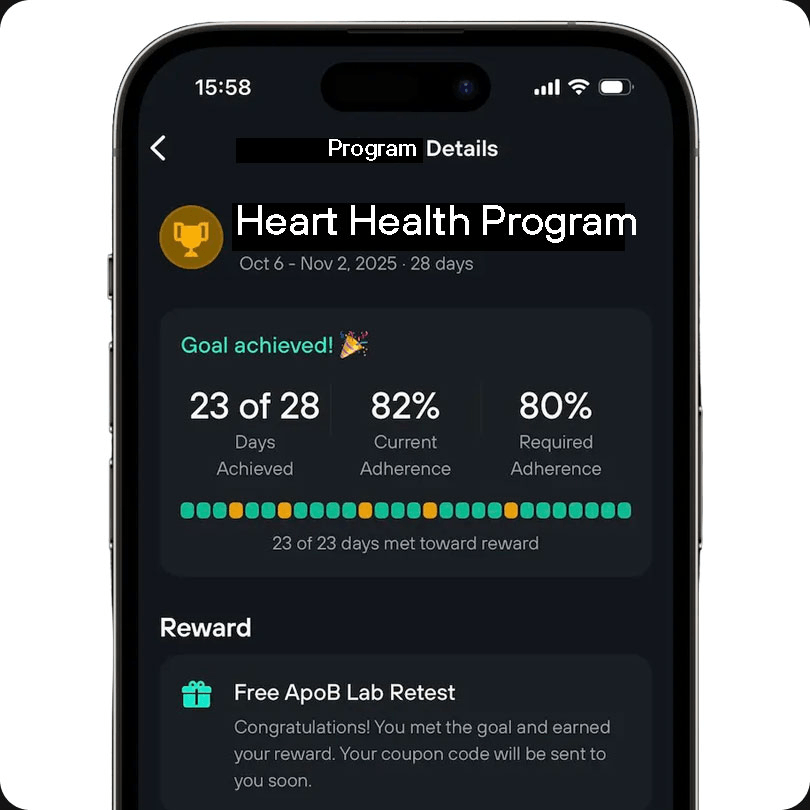
The Levels Heart Health program is a four-week guided plan with personalized targets for fiber, saturated fat, and net carbs—plus baseline labs and a complimentary retest when you stay on track.

Join the program →
Heart Health program in the Levels app: adherence tracking and free ApoB lab retest reward
Sign up for the Levels Newsletter