10 common questions about CGMs and glucose biosensors answered
Devices that monitor are a vital tool in understanding how your choices impact your metabolic health, but wearing one can be a new experience. Here are the basics.

1. What is a CGM or glucose biosensor?
A continuous glucose monitor (CGM) or glucose biosensor is a wearable device that gives you a continuous picture of fluctuations in your body’s primary energy source, glucose (i.e., blood sugar). Worn for up to two weeks at a time, these sensors take ongoing, frequent (~5 minutes) glucose measurements, so you can see how the things you do—like eat, exercise, and sleep—affect your metabolic health and connect that feedback to how you feel.
Continuous glucose monitors typically refer to the prescription-only devices that can be used by people with diabetes to dose insulin, while glucose biosensors are functionally the same, but refer to the new over-the-counter sensors designed for people without diabetes to monitor their blood sugar.
2. How do the sensors work?
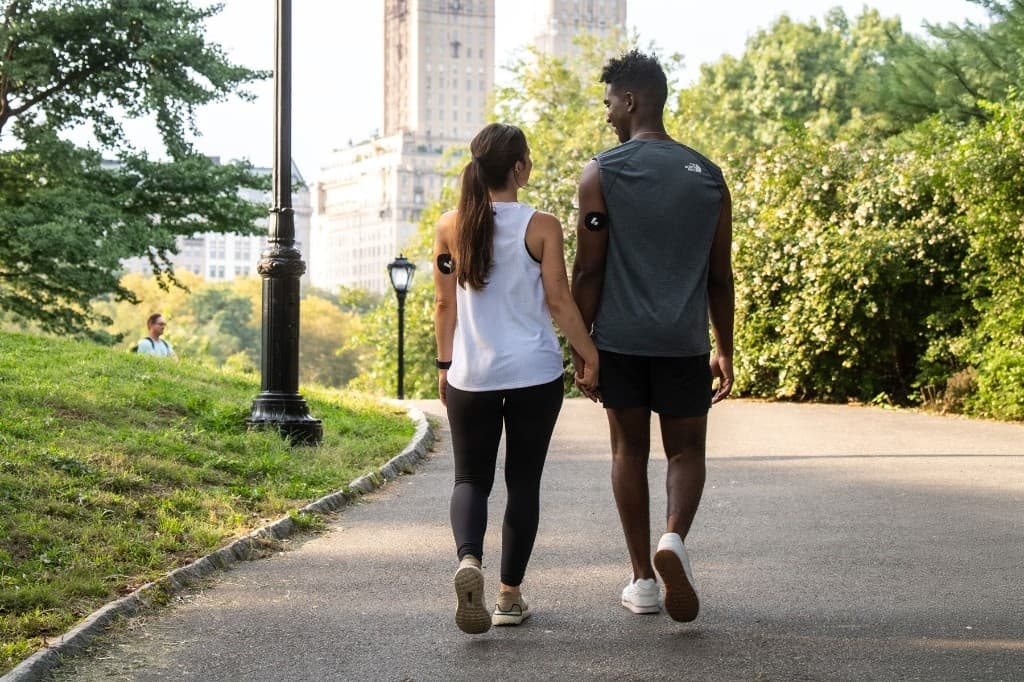
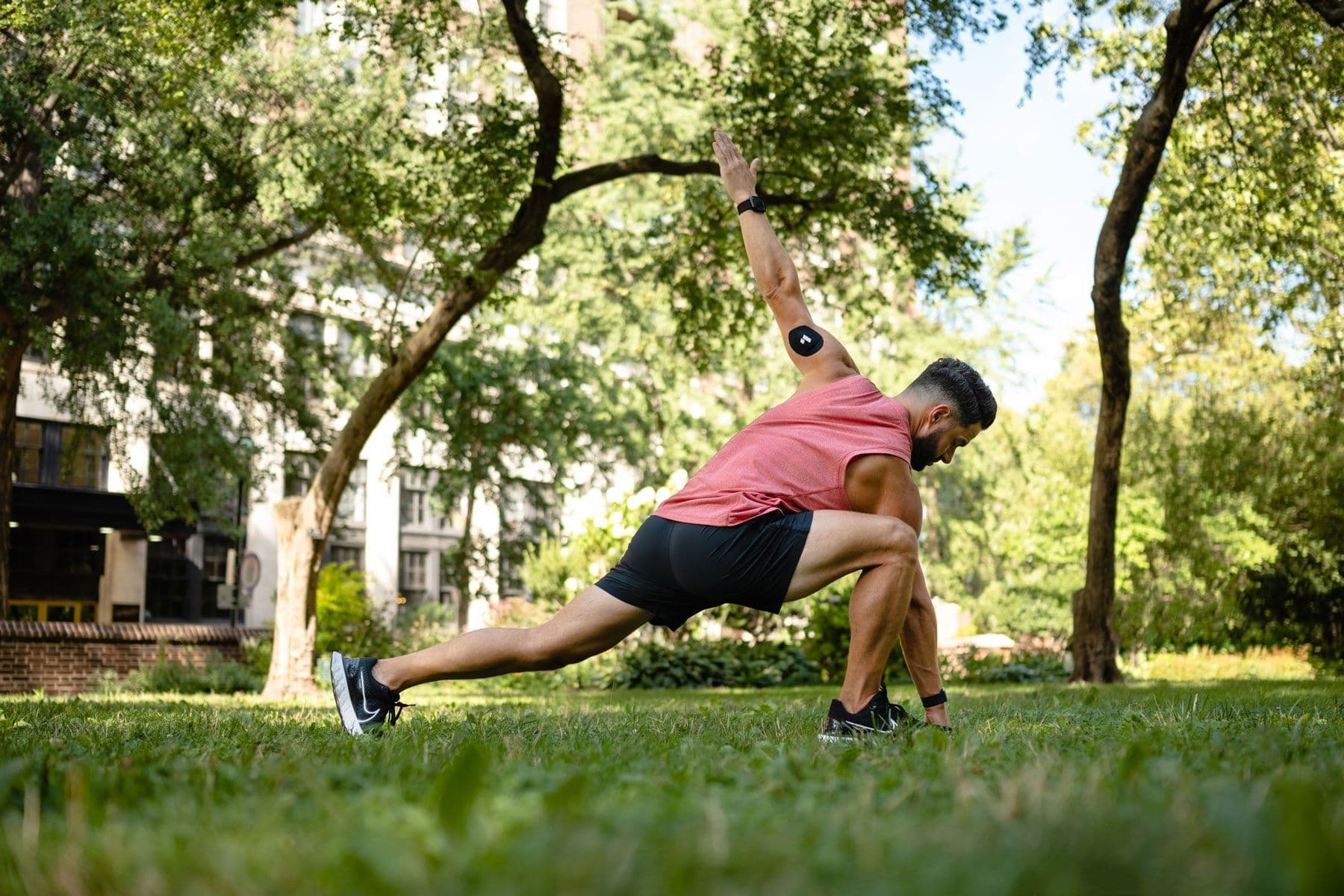
The devices are about the size of a stack of two quarters and stick to your skin (typically your stomach or tricep) with a strong adhesive. When you apply the sensor, a flexible filament only a few millimeters long and as thick as dental floss embeds just under your skin. Enzymes on the tip of the filament interact with glucose molecules in the fluid between your cells; this chemical reaction then produces an electrical current, the strength of which can be translated into a glucose concentration number you can see on your phone, usually expressed in milligrams per deciliter or mg/dL.

Image courtesy Abbott
3. What does the Levels app do?
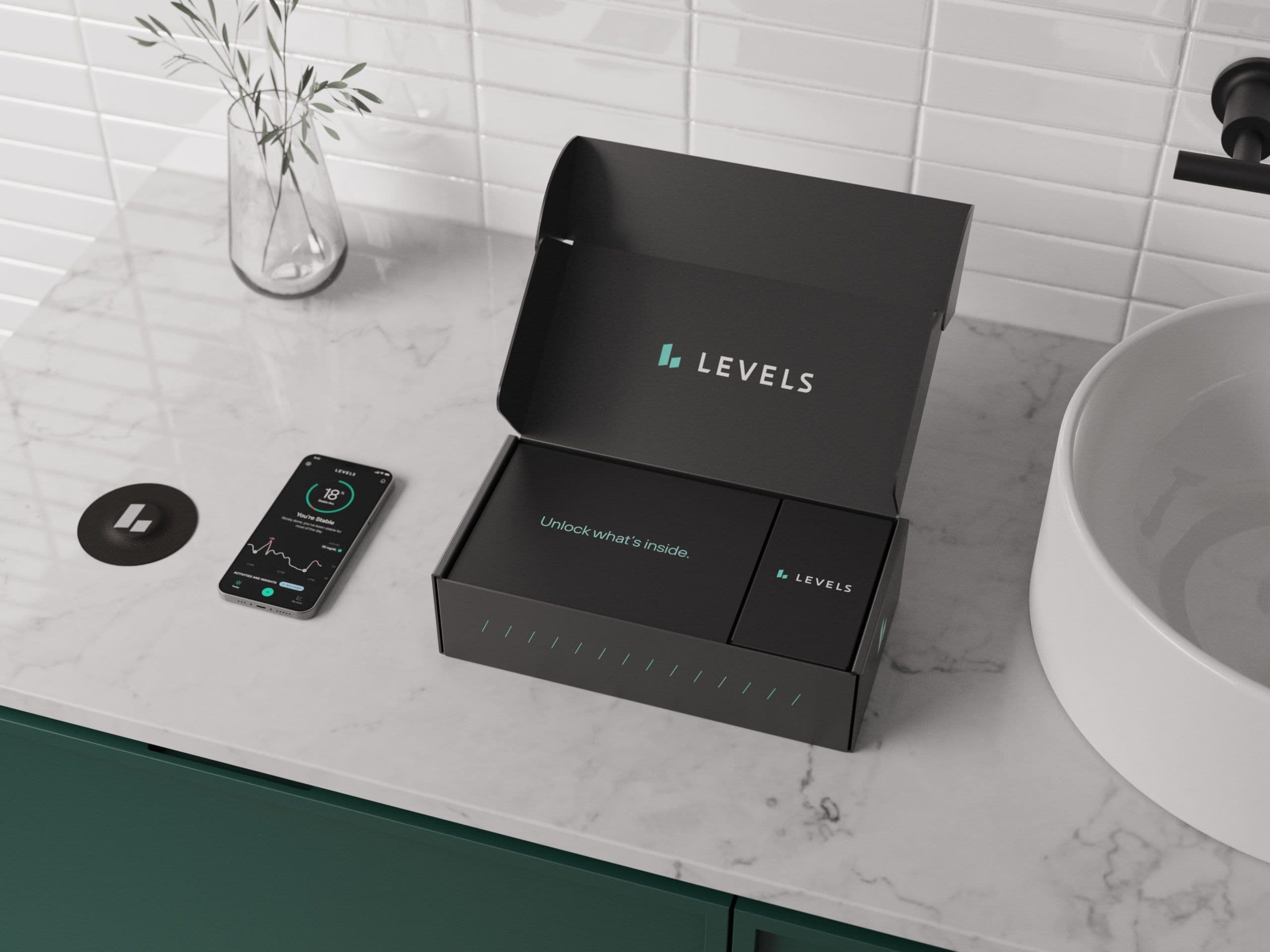
While CGMs and biosensors provide raw data, an app like Levels helps provide insight and guidance into those numbers so you can use them in assessing your diet and lifestyle choices. Here’s some of what you can do with the Levels app:
- Visualize your readings in the context of a target blood sugar range for a person without diabetes so you can see immediately if your glycemic variability is in an optimal band.
- See a full day’s glucose changes alongside meals, exercise, and sleep, so you can connect the changes you see in your glucose curve to behavior. Glucose responses happen over the course of hours, so a broader picture is more apparent.
- Track long-term glucose trends over weeks and months, seeing how many stable days you have strung together.
- Log your meals and get insights on how that meal impacted your blood sugar. It also reads exercise and sleep data from your phone so that you can put those glucose numbers in the context of your behaviors. This allows you to see, for instance, how a workout after a meal or a poor night’s sleep impacts your blood sugar.
- Receive suggestions and guidance based on your data and logs. If your morning oatmeal produces a big spike, for instance, the app will suggest oatmeal alternatives for breakfast.
4. How do I get a glucose biosensor?
These devices have until recently been prescription-only in the US , used primarily by people with Type 1 diabetes, who need to closely monitor their blood sugar to give themselves insulin. In September 2024, both Abbott and Dexcom introduced over-the-counter glucose biosensors. You can now order those biosensors directly from the manufacturer or from Levels, for as little as $89 for a month's worth of monitoring, and the device will ship directly to your home.
5. What can I learn from a glucose biosensor if I don’t have diabetes?
First, because glucose is a primary fuel source for our cells, how efficiently our body uses and processes it is vital to several areas of our health, from short-term energy and mood to long-term risk of chronic disease. Even if your annual labs put you in the healthy range, frequent blood sugar spikes and crashes can kick off changes in your body that are detrimental to health in the short and long run.
Additionally, how our bodies respond to the levers that impact glucose—diet, exercise, sleep, stress—is highly individual. Foods that may cause a sudden spike for you may only cause a gentle rise for me. We don’t yet entirely know why this is the case—genetics, microbiome, and other confounding factors may all play a role—but it’s evident in research and our member data. That’s why simply reading a carb count on a label or looking up a food’s glycemic index, while helpful, doesn’t tell the whole story of how that food will affect your health.
For example, you may find that the mid-morning energy slump is just a blood-sugar crash following the spike caused by your morning bagel. Or that your afternoon anxiety results from very high glucose from lunch.
Finally, while a glucose biosensor can’t diagnose specific conditions like diabetes, the data it provides can help inform conversations with your doctor.
6. Are the devices accurate?
Because these sensors measure glucose from the fluid between cells, they are less accurate than finger stick devices, which measure blood directly. People with diabetes often use a finger stick reading to help calibrate their CGM, which can increase accuracy. Glucose biosensors don't typically offer that calibration.
Practically speaking, if you’re using the devices for general health and wellness (and not to dose insulin), it’s best to think of the data as directional. Your numbers may vary across brands or even among different sensors from the same manufacturer, but studies have found that the readings are consistent enough to give useful feedback on your diet.
In short, the most valuable way to use a glucose biosensor is to focus on the trends in glucose values before and after meals, even if baseline readings are slightly different.
7. Are these devices just for athletes and biohackers?
A recent study showed that more than 93% of US adults have at least one marker of metabolic dysfunction. More than a third of adults have prediabetes, and 84% don’t even know it. High blood sugar is related to 8 of the top 10 leading causes of death in the US. So paying attention to metabolic health is not only for data-obsessed biohackers.
Levels members come from various backgrounds and arrive with different goals, health backgrounds, ages, and sizes.
Among the insights gained by our members:
- Mike Marcil reversed his Type 2 diabetes and lost more than 50 pounds after wearing a CGM. Betsy McLaughlin lost 80 pounds over two years wearing a CGM.
- Abby O’Connor and Sara Tickell learned that maintaining stable glucose helped control PCOS symptoms.
- Dave Phillips used his CGM to keep his body in optimal shape as he underwent cancer treatment.
- Sarah Coffin found that changing her diet with a CGM improved her sleep.
8. Do I need this much data?
Our co-founder, Josh Clemente (who previously worked in life-support systems for SpaceX), points out that the team monitoring a rocket has 10,000 data points about what’s happening inside and outside the rocket. Yet for our bodies, which are far more complex than the rocket, we have almost no data about what’s going on inside. We strongly believe that having access to data about your own body empowers you to take your health into your own hands and, on a system-wide level, can help shift us from treating illness only after it’s set in to living in a way that prevents illness in the first place. So we would love to see continuous data on much more than glucose in the future.
That said, this bio-observability is not inherently positive or negative. If we can use the data we gather to build our sense of interoception—or mindfulness about how we feel—and let it inform rather than dictate our choices, that’s helpful. What we want to avoid is being obsessive about any one metric or allowing it to degrade our mental health.
If you’re someone with a history of disordered eating or anxiety around food or exercise, we’d encourage you to talk with a professional before using a real-time feedback device like a glucose biosensor.
What Levels does—and why
Inside Levels
9. How long should I wear a glucose biosensor?
These devices typically last 10 to 14 days and Levels members buy a month’s worth at a time. We’ve found that the first month can offer significant learning. A typical first month may look like this:
- Week 1: Let the device calibrate (which can take a couple of days) and get accustomed to logging foods and watching the subsequent reaction.
- Week 2: Eat your regular diet and observe how your body responds.
- Week 3: Try some experiments, such as swapping your typical ingredients for lower-sugar alternatives or going for a walk after meals.
- Week 4: See if you can use all you’ve learned to maintain optimal glucose for a week.
Many people continuously wear the devices after the first month, either for ongoing accountability or to continue to experiment and learn. Others might use it every few months to check in on their habits.
Levels membership is intentionally designed to give you flexibility. We don’t really make our money selling you glucose devices, so we encourage you to find the frequency that works best for you.
It’s also worth noting that there are many, many things you can do to improve your metabolic health that don’t involve wearing a device, including eating nutrient-dense whole foods, exercising daily, getting enough sleep, and minimizing stress. We write extensively about these on our site, Metabolic Insights.
10. Does it hurt?
Not typically, and not as much as you might think.
It’s true that the applicator uses a needle to place the filament under your skin, but it happens so quickly that most people don’t even feel it. However, depending on placement, it’s possible to feel a pinch or even get minor bleeding when you first apply the device; very occasionally, you may feel soreness in the following days.
That said, glucose biosensors are incredibly safe, which is why they are sold over the counter and are approved for use in use by children as young as two years old.
More questions?
Reach out to our support team anytime at [email protected].

Take control of your health with expert guidance
Levels pairs real-time glucose data and comprehensive lab testing with clinician analysis and personalized support—everything you need to turn insights into real health improvements. Click here to get started with Levels.