What is a healthy body fat percentage, and why does it matter for metabolic health?
Researcher Dom D'Agostino, PhD, explains what this marker can reveal and how to keep yours in the ideal range.

We talk a lot about tracking glucose, an essential hallmark of metabolic health. But I think body fat percentage is equally important to measure and track—even more key than other things that get a lot of attention, like LDL cholesterol.
That's because body fat percentage is one of our most comprehensive biomarkers. Tracking the amount of body fat you have over time and which type of fat your adipose tissue is made up of, can predict risks of diabetes, cardiovascular disease, and premature death.
What's a healthy body fat percentage? That depends on your age, gender, fitness level, and how you carry the fat you have, which can be driven by genetics. Generally speaking, though, across all age ranges, a healthy body fat percentage for women is about 20 to 35 percent. For men, it's about 6 to 25 percent.
While a certain portion of your body fat percentage is determined by factors you can't control, like age, you can move your body composition in a metabolically healthier direction with targeted nutrition and exercise. And by measuring the directional change over time, you can see how your body fat percentage—and, by extension, your metabolic health—are improving.
Let's dive into adipose tissue to give you the skinny on body fat and its impact on metabolic health.
What is body fat percentage, and why does it matter?
Body fat percentage is a measure of your body composition that tells you what your weight is composed of—how much of your weight is made of fat mass versus bone and lean tissue. Your body fat percentage is the proportion of that body composition that is fat.
When that percentage is higher, the risk of certain diseases increases, even if overall body weight is "normal." In a 2018 study published in BMJ Open, scientists from Florida found that people who have a BMI classified as normal and a high body fat percentage are more likely to have prediabetes or Type 2 diabetes than people with the same BMI and lower body fat.
High levels of body fat (specifically fat mass index) also increase the risk of premature death. In a research review published in 2021, scientists found that having a high proportion of body fat—a little less than double the average amount—was associated with a 56 percent increase in the risk of death in the median of 14 years following the studies they reviewed.
The types of tissues that make up your non-fat mass (also called fat-free mass) significantly impact metabolic health and longevity. Tracking changes in bone density can help people monitor their risk of osteoporosis. Muscle tissue is associated with an improved insulin response: A 2011 analysis of data from more than 13,000 subjects found that for every 10 percent increase in muscle mass (adjusted for height), insulin resistance fell by 11 percent.
How do the different kinds of fat impact metabolic health?
Two different types of fat comprise your body fat percentage: subcutaneous fat, which is just under the skin, and visceral fat, which is deeper in the body's surrounding organs. We need some of both kinds, as they have essential functions in the body.
However, having too much visceral fat can have deleterious effects on metabolic health. Higher visceral fat levels are associated with biomarkers for insulin resistance and cardiovascular risks like higher LDL particle number and particles of a smaller, more dangerous size.
Some body fat scans—including DEXA scans, considered the "gold standard" for measuring body fat—can estimate how much of each type of fat you're carrying. The amount of visceral fat is usually expressed on the report not by percentage, but by mass and volume. Some studies suggest that having visceral fat volumes above 100 cm2 increases the risk of obesity-related disease, with volumes over 160 cm2 indicating high risk.
In general, excess visceral fat gathers around the waistline, while subcutaneous fat gathers on the hips, butt, and legs. This is one reason why waist circumference is also an important metric to determine metabolic health risks.
Subcutaneous fat
Subcutaneous fat is the layer of fat below the skin. This soft fat is the main reason why healthy body fat percentages differ for men and women: Subcutaneous fat deposits account for 92 to 95 percent of fat in women, compared to 80 to 90 percent of the fat in men. The higher level of subcutaneous fat in women is due to physiological, hormonal, and reproductive needs. The presence of estrogen drives females to distribute more subcutaneous fat to the hips and thighs.
People tend to think of subcutaneous fat as aesthetic, but it serves essential functions in the body: It provides energy and insulation, and it generally has a negligible effect on metabolic health. In fact, for women who are super lean, adding a little more subcutaneous fat can actually enhance insulin sensitivity: The creation of subcutaneous fat is driven, in part, by estrogen, but this fat also secretes the hormone.
Additionally, if women without healthy levels of fat exercise, the body senses an energy deficit. This creates a feedback loop where the adrenal glands and reproductive glands may reduce hormonal output. This is thought to be partly due to a lack of leptin, a chemical secreted by fat cells that triggers the "reproductive axis," a process that releases sex hormones. Without these hormones, exercise in this state can cause amenorrhea, a condition where these athletes will stop menstruating.
Visceral fat
If you've heard of visceral fat, you might think of it as "bad fat." But we need some of it. This type of fat is deeper in the body, where it serves as a cushion and insulation for our organs. It's also an important fuel source.
Visceral fat also contains certain types of immune cells that guard against infection and help our tissues function. One category of these cells, called macrophages, controls dietary fat uptake and digestion and removes dead fat cells from the body.
Visceral fat cells are more metabolically active than subcutaneous fat because they contain more mitochondria, the "powerhouse" organelles responsible for making the tissue more metabolically active.
The most significant impact of the metabolic activity triggered by visceral fat is on the production and secretion of hormones and inflammatory markers. When our visceral fat cells get bigger, meaning we have more visceral fat, the cells secrete more harmful, inflammatory cytokines such as tumor necrosis factor-a (TNF-a) and visfatin, a hormone associated with Type 2 diabetes.
Visceral fat also under-secretes beneficial hormones like adiponectin, a cytokine negatively correlated with cancer and cardiovascular disease, and leptin, a hormone associated with satiety.
The level of visceral fat that we have, whether low or high, significantly impacts our hormone production, especially when it is dysfunctional. And when our visceral fat cells get bigger, the fat becomes a more active endocrine organ, releasing more inflammatory cytokines into circulation.
When we have too much visceral fat, it builds up around the waist. This deep, hard fat contributes to insulin resistance, a condition where insulin doesn't clear blood sugar as efficiently, increasing the risk for diabetes. High levels of visceral fat are also associated with risks for certain types of cancer and Alzheimer's.
Excess visceral fat can also build up around or even in the liver (the latter is often referred to as intra-organ or intrahepatic fat), and can contribute to metabolic dysfunction-associated steatotic liver disease (MASLD), formerly known as non-alcoholic fatty liver disease. Studies have shown that when visceral fat accumulates, levels of alanine aminotransferase (ALT) increase. ALT is an important biomarker in the development of MASLD, which can lead to chronic liver inflammation, cirrhosis, liver cancer, and liver failure.
Can you control where your body stores or loses fat?
Where you store fat is partly impacted by your genetics. Some people naturally store more fat around their waists as visceral fat. When we store more fat here, waist circumference increases—and with that comes increased risk for cardiovascular disease. Studies, like this 2005 study that followed more than 27,000 men for 13 years, have found that waist circumference is a better predictor of diabetes risk than waist-to-hip ratio.
When you change your diet and start exercising, visceral fat is the first fat to go [more on how to do this below]. Subcutaneous fat holds onto its tissue very tightly. It takes a lot more metabolic intervention and sustained calorie deficit to burn off. But visceral fat has a rate of "fat flux" that's two to three times greater, so you'll lose more of this fat first, which will quickly promote beneficial changes in metabolic health.
How is body fat percentage measured?
The gold standard for measuring body fat is dual-energy x-ray absorptiometry, more commonly called a DEXA or DXA scan. This type of scan is done lying face up on a table for 10 to 20 minutes, as an arm scans over your body using a low level of radiation. DEXA scans are both accurate, measuring with a margin of error of 1 to 2 percent, and precise, meaning the measurements will be comparable to each other over time. DEXA scans also show how much visceral fat you have, expressed as volume and mass, but this number is not quite as accurate as the overall body fat percentage. I have a DEXA scan done once per year, spending about $75-100 each time.
Some other common tests for body composition include:
Bioelectrical impedance analysis (BIA)
This type of measurement passes electrical current through the body and uses the resistance (or impedance) of the jolt with information about height, weight, and age to estimate body composition. This is done on a scale with metal pads on the feet and on hand grips, and is available in many gyms under the brand name InBody. Studies have shown that BIA has higher margins of error compared to DEXA. In our courses, we teach students that the margin of error for these devices is 3 to 8 percent.
Calipers
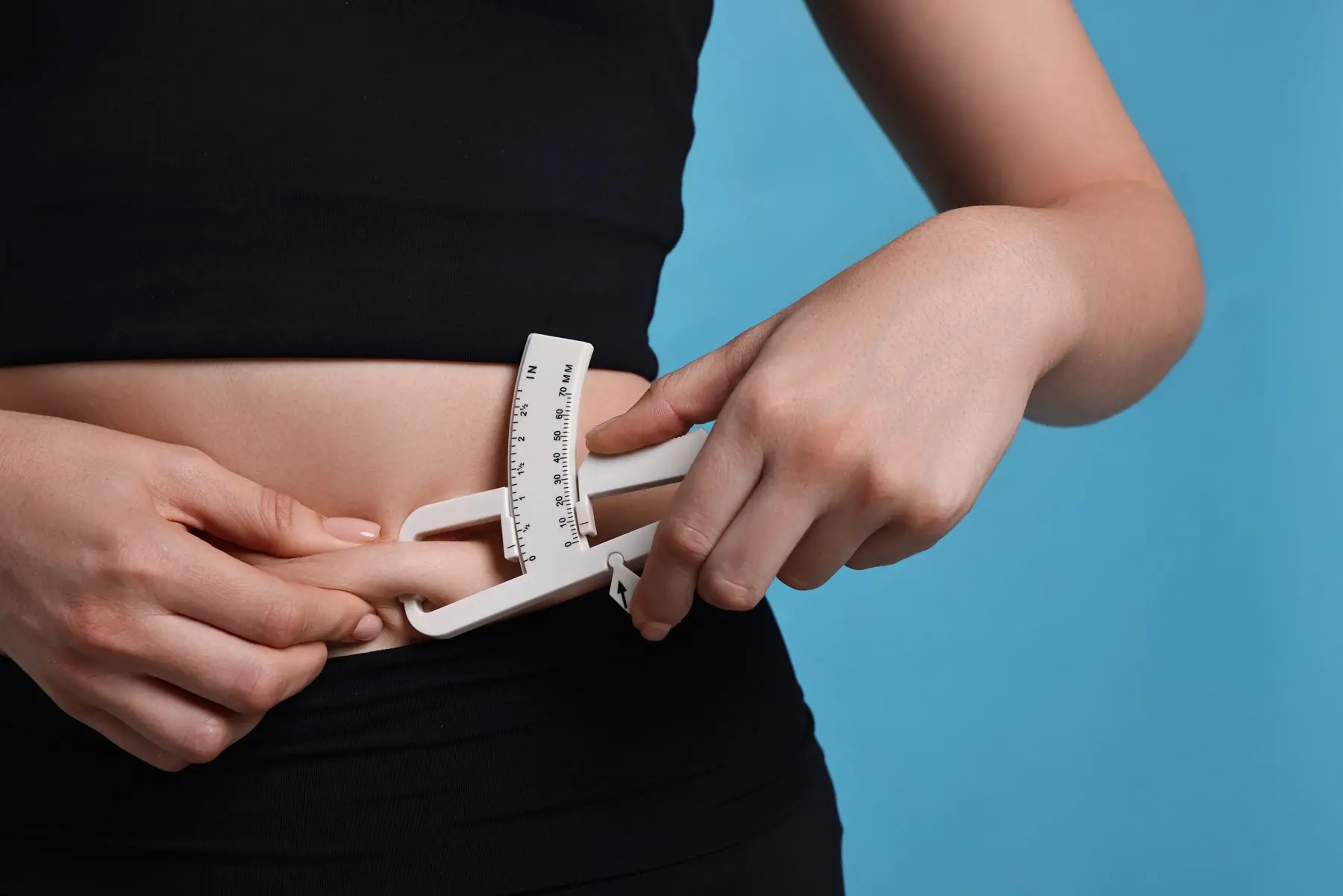
These devices clip skin folds at spots around the body, measuring how much can be "pinched" at various points to determine how much fat is in the body. In one study with trained technicians, skinfold measurements were taken at three different locations, and the measurements were an average of 6 percent different from DEXA for men and 8 percent different for females. While calipers are inexpensive and accessible, the error involved can be significant based on the calipers' quality and inconsistency in measuring due to a lack of training. One drawback: Calipers are only measuring subcutaneous fat. They can't offer visceral fat estimates.
Bod Pod
This measurement involves sitting inside a white bubble with a glass window for about three minutes. Using air displacement, the Bod Pod measures your body composition. While it's relatively accurate for people with normal weight, it's not as accurate as DEXA for underweight and heavier participants. In one study, the method overestimated body fat in underweight BMI participants by as much as 13 percent and underestimated body fat percentage in heavier participants. My experience with this device is that it grossly overestimated my body fat (relative to DEXA).
Other tests, like magnetic resonance imaging (MRI) and hydrostatic tests, can also measure body composition and are often used in a research setting but are pricey. Or you can create a reasonably accurate baseline at home for free. Online body fat calculators that use a formula from the U.S. Navy claim to have a margin of error of 3.5 percent in either direction and require just a few inputs: your age, weight, sex, height, and measurements of your waist and neck. Even reference photo galleries showing different body shapes at various body fat percentages are useful for estimating.
No matter which method you choose, use the measurement as a baseline. Then work to improve that over time while also monitoring other biomarkers of metabolic health, like lipid profile and glycemic variability.
What is a healthy body fat percentage by age?
A "healthy" body fat percentage isn't the same for everyone. Sex matters: Women have more subcutaneous fat and proportionally less muscle than men. As a result, women have proportionally more fat as a percentage of body composition, so their "healthy" ranges tend to be higher.
Age also matters. As we get older, we lose muscle mass (a process called sarcopenia) as well as bone mass. As these things atrophy, the percentage of the body that can be fat increases slightly.
That said, in general, a healthy body fat percentage is:
- Men age 18 to 50: 6 to 20 percent
- Men age 50+: 6 to 25 percent
- Women age 18 to 50: 20 to 30 percent
- Women age 50+: 20 to 35 percent
These numbers aren't absolute, of course: I know some female athletes who trend as low as 14 to 18 percent while still maintaining their health and without having amenorrhea.
How can you support a healthy body fat percentage and optimal metabolic health?
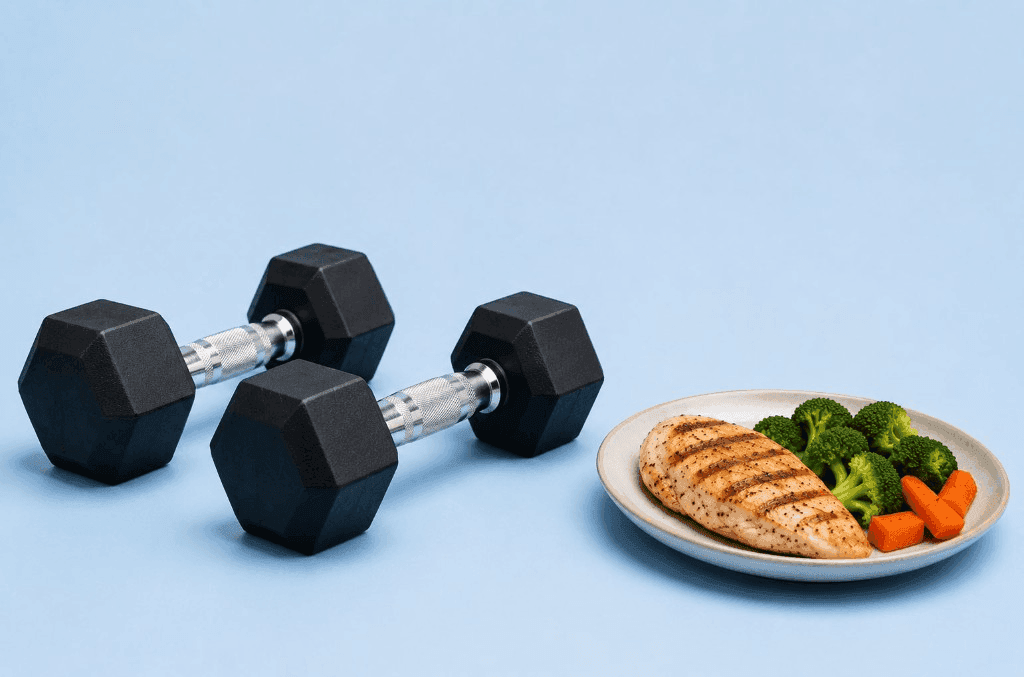
If you want a healthy body fat percentage, start with your diet. The biggest levers you can pull are to increase protein intake and, in conjunction, moderate carbohydrates by reducing sugar, starch, and ultra-processed foods. To increase satiety, also choose fiber-rich foods for the carbs you do eat.
Increasing protein intake can reduce body fat even if you aren't losing weight. In a small 2010 study, scientists divided subjects into two groups: One group increased their protein intake by 11 per day, while the other group did not change protein intake and instead took a carbohydrate and fat supplement to match calories. These groups didn't change their diets in other ways, didn't change their activity levels, and didn't try to lose weight. Still, after three months, the protein group reduced their body fat percentage by an average of 1 percent.
If you are trying to lose weight, adding protein will help you spare skeletal muscle and lose fat instead. You can also save more of your skeletal muscle by creating a calorie deficit that is no more than 20 percent of the total calories you need each day. So, if you require 2,000 calories at your current weight and activity level to maintain your weight, eat at least 1,600 calories daily while trying to lose weight.
Exercise will also help improve body composition. All kinds of exercise positively impact how much visceral fat is stored around your middle. Studies have found that moderate-intensity cardio, HIIT, and strength training all reduce visceral fat. In one study that compared the effects of strength training, aerobic work, and a combination of both while losing weight, all three strategies reduced visceral fat. However, in this case, a combination of aerobic and strength exercise was the most effective.
My recommendation is to do some resistance or weight-bearing exercise. This doesn't have to be deadlifts or lifting heavy weights. It can be bodyweight exercises like pushups, chin-ups, and calisthenics. It can be yoga or pilates. Rucking is a great way to add weight-bearing to cardio: Throwing on a heavy pack and going for a walk two or three times per week. (Check out the 2024 Levels Guide to Exercise and Metabolic Health for simple exercise ideas.)
Resistance exercise like this also improves bone density, which is especially important for women as they age: In late perimenopause and the first years of menopause, women can lose 5-10 percent of their bone density. Strength training, though, can stave off this loss: Multiple longitudinal studies have found that older women who engaged in strength training programs could improve bone density by 1-3 percent.
Adding muscle, even in the presence of visceral fat, can improve metabolic health. In one study, scientists found that among people with overweight or obesity, those with the highest amount of muscle had 45 percent better insulin sensitivity than participants with the lowest levels of muscle.
Conclusion
In summary, body fat percentage is a key marker of metabolic health. Healthy body fat percentage varies by age, gender, and genetics, with recommended ranges of 6-25% for men and 20-35% for women. Excess visceral fat increases insulin resistance, cardiovascular risks, and inflammation. DEXA scans and bioelectrical impedance (e.g., InBody) are both valuable tools for tracking body fat, including visceral fat, longitudinally. Building and maintaining muscle, especially as you age, will help you maintain a healthy body fat percentage and will likely also improve all other biomarkers of metabolic health. Strategies to optimize body composition include higher protein intake, strength training, reducing processed carbohydrates, and engaging in both aerobic and resistance exercises.

See how to improve your body composition
Levels pairs real-time glucose data and comprehensive lab testing with clinician analysis and personalized support—everything you need to turn insights into real health improvements. Click here to get started with Levels.