The 2026 Levels Guide to Bone Health
As you age, your skeleton becomes vulnerable to diseases like osteoporosis and osteoarthritis, and deterioration can occur earlier than expected. Here’s how to strengthen and fortify your bones throughout life.


Bones do more than provide your body structure. They're involved in blood cell production and hold our body's inventory of certain minerals necessary for physiological functions, including nerve transmission and energy.
Loss accelerates around menopause in women and later in men, but bones remain responsive to mechanical loading. Bone mineral density peaks by about age 20 in women and 24 in men. After that, bone mass holds steady until around age 40 to 50, when it starts to decline, leaving you more vulnerable to osteoporosis, a skeletal disease characterized by compromised bone strength. At that point in life, you may also have to contend with the wear and tear of osteoarthritis. This makes the decades in your 30s to 60s critical for long-term bone health.
Get more deep-dives like this delivered to your inbox
Sign up to make sure you see our latest articles, as well as recipes and discounts
The good news is that you can take action today to help mitigate these effects. The right mix of exercise, nutrition, and lifestyle choices can fortify bone, prevent breakdown, and help safeguard against fractures, which are often associated with decreased longevity and impact quality of life in older adults.
Here's everything you need to know about bone health.
Why does bone health matter?
Though we often think about the skeleton as being a bunch of (well-organized) bones, it's considered an organ. In addition to providing a structural framework and allowing us to move, bones:
- Protect soft organs like the heart and brain from injury.
- Maintain a reserve of minerals like calcium and phosphate, ready to be released back into the body as needed for nerve transmission, blood vessel function, energy production and storage, and more.
- Play a role in "extraskeletal functions," such as immunity, energy metabolism, and brain health.
- Contain bone marrow, a spongy tissue that makes the components of blood.
Bone is a highly dynamic tissue. There is a constant balance between breaking down old, damaged bone and creating new bone, a process called bone remodeling.
Bone mass (or bone mineral density, BMD) refers to the concentration of minerals (mainly calcium and phosphorus) in the bone. During our youth, we build bone until we reach peak bone mass, or maximum bone size and strength. Although data varies, research suggests we hit this milestone in our early 20s.
After that, bones continue to undergo a remodeling process, and bone mass remains stable for a few decades. However, after age 50, BMD starts to decline, increasing the risk for osteopenia (less-than-normal bone mass that's not quite osteoporosis-level) and osteoporosis (disease of low bone mass).
Genetics plays a significant role in determining each person's BMD, accounting for up to 70 percent of the differences between people's bone masses. Women and non-Hispanic white or Asian people are more vulnerable to bone diseases, but lifestyle factors like diet, body weight, exercise, medications, and hormonal health also influence skeletal health. Despite your genetics, your actions can make you more or less prone to bone problems.
Bone tests and what the results mean
Dual-energy x-ray absorptiometry (DEXA or DXA) is the gold standard lab scan to determine bone density, diagnose osteopenia and osteoporosis, and predict fracture risk. The results give you a T-score and a Z-score:
- T-score compares your bone density with a healthy young adult of the same sex. It's most commonly used in people 50 and older.
- -1.0 or higher = normal bone density
- Between -1.0 and -2.5 = low bone density (osteopenia)
- -2.5 or less = osteoporosis
- Z-score compares your bone density with others of your age, weight, sex, and ethnicity. It's most commonly used in premenopausal women, men younger than 50, and children. Results of -2.0 or less indicate low bone mineral density.
Low bone mass and osteoarthritis are more common than you think
Nearly one in three adults over 50 has lost some amount of bone density, and about 33 million Americans have osteoarthritis (OA).
Although both can occur simultaneously, each is a distinct disease: Osteoporosis is low bone mass, and OA is degenerative joint disease, where the cartilage that cushions joints wears away. Because of these effects, both bone conditions often impact quality of life.
Osteoporosis
Forty-three percent of adults aged 50 and older have lower-than-normal bone mass, a.k.a. osteopenia. Once you reach this point, if bone breakdown continues to outpace bone formation, you may join the one in five women and one in 20 men aged 50 and older who have osteoporosis. This disease leaves you more vulnerable to chronic pain and fractures that contribute to disability and mortality.
Women and men can develop osteopenia or osteoporosis due to natural changes with age, as bone growth slows over time:
- In women, menopause is strongly associated with bone loss due to declining estrogen, which normally helps regulate bone remodeling. Hormone therapy (including supplemental estrogen or estrogen plus progestin, the synthetic form of progesterone) may help curtail this, as estrogen encourages bone formation and slows bone breakdown (bone resorption). This treatment for menopause symptoms has also been found to improve BMD in the lumbar spine and protect against osteopenia in postmenopausal women.
- Men are more protected against osteoporosis because they achieve a higher peak bone mineral density, their bones are larger (providing greater bone-building mechanical resistance), and they have less bone loss with age. Their later puberty (compared to women) allows for a longer bone-building period and later timing of peak bone mass, resulting in longer and wider bones.
For both sexes, lifestyle factors, such as smoking or sedentary behaviors, speed up bone degradation. It's also possible to develop early-onset osteoporosis, defined as osteoporosis earlier than age 50, when a person reaches low peak bone mass. This often occurs due to chronic disease during youth, such as rheumatoid arthritis, inflammatory bowel disorder, nutritional deficiencies (anorexia, celiac disease, cystic fibrosis), and hormonal disorders (thyroid disease). These diseases cause a range of problems that affect bone growth, including malnourishment, systemic inflammation, low body weight, and corticosteroid use.
Osteoarthritis
Osteoarthritis (OA) is the most common form of arthritis (about 528 million people worldwide have OA) and a leading cause of disability in the United States. Damage to tissues that protect and cushion joints---namely, cartilage, tendons, ligaments, and synovium---affects the surrounding bone and promotes the production of matrix-degrading enzymes and inflammatory proteins that further fuel degeneration.
- Age: Several changes happen with age, including increased inflammation (driven by reduced muscle mass and increased fat mass), and cartilage and ligament degeneration. Additionally, mitochondrial dysfunction, oxidative stress, and reduced autophagy (cell cleanup) in cartilage cells make these cells more likely to break down and die.
- Being female: Loss of estrogen and progesterone in menopause may promote cell aging that causes cartilage degeneration.
- Obesity: Excess weight increases force on joints, causing strain, and chronic inflammation in obesity speeds up joint tissue breakdown.
- Trauma or injury to the joint: Injury to cartilage damages cells responsible for healthy cartilage growth and triggers inflammation that further erodes the joint.
- Muscle weakness: Accelerates joint inflammation, causing joint degeneration.
If you develop OA, you may notice sore, stiff joints; problems in range of motion; "clicking" or "cracking" when you bend the joint; swelling; and pain.
How nutrition affects bone health
Many of us have heard that calcium and vitamin D are essential for skeletal health. Our bones store most of our body's calcium, which makes bones hard and strong, and vitamin D promotes calcium absorption. In addition to these crucial nutrients, we also need protein and fiber for optimal bone health.
Calcium
Calcium is the most abundant mineral in the body, and 98 percent of it is stored in the bones, where it remains until it needs to be shuttled elsewhere to maintain health. In addition to making up bones and teeth, calcium is used for blood vessel, muscle, nerve, and hormone functions.
We don't absorb all of the calcium we consume, for several reasons:
- Some foods, like spinach and legumes, contain compounds called oxalic acid and phytic acid. In the body, these form salts that bind to calcium, affecting absorption. For example, you absorb only about 5 percent of the calcium in spinach (compared to about 30% for dairy products). Overall, absorption isn't something to stress about as long as you eat a varied diet.
- Our bodies can only absorb about 500 to 600 milligrams (mg) of calcium at a time.
- Low vitamin D levels make it harder for the body to absorb calcium (more on this in the next section).
- Certain medications impact calcium absorption.
- Age decreases our ability to absorb calcium. In women, estrogen enhances the intestines' responsiveness to vitamin D, facilitating calcium absorption. Estrogen loss in menopause disrupts this process. For everyone, dietary habits may change with age, resulting in a lower calcium intake, and medications may also impact calcium absorption. This is why calcium needs increase with age.
Aim for the following daily intake:
- Men ages 19 to 70: 1,000 mg
- Men ages 70+: 1,200 mg
- Women ages 19 to 50, including those breastfeeding or pregnant: 1,000 mg
- Women ages 51+: 1,200 mg
You can find calcium in the following foods:
- Plain low-fat yogurt: 415 mg per 8-oz serving
- Mozzarella: 333 per 1.5-oz serving
- Sardines: 325 mg per 3-oz serving
- Soymilk (fortified): 299 mg per 1-cup serving
- Whole milk: 276 mg per 1-cup serving
- Firm tofu (with calcium sulfate): 253 per ½-cup serving
- Cottage cheese: 138 mg per 1-cup serving
- Boiled spinach: 123 mg per ½-cup serving
- Kale, cooked: 94 mg per 1-cup serving
- Chia seeds: 76 mg per 1-Tbsp serving
It's preferred to get your calcium from food, since foods contain various beneficial nutrients. Still, your healthcare provider may recommend a supplement if you can't get sufficient calcium through your diet, you have a bone disease like osteoporosis, or you have another condition that negatively impacts calcium and phosphorus levels, like hypoparathyroidism.
Taking up to 1,000 to 1,200 mg of supplemental calcium (along with vitamin D to improve absorption) daily is generally considered safe. To maximize absorption, break this up into two 500-mg doses throughout the day. Taking 2,000 mg or more per day can lead to constipation, indigestion, nausea, and vomiting.
Vitamin D
Vitamin D regulates calcium absorption in the intestine. Without enough D (which is actually a hormone), your body absorbs just 10 to 15 percent of the calcium you consume. The liver converts D into the metabolite calcidiol, which the kidneys then convert into calcitriol. Calcitriol binds to vitamin D receptors in the intestines, producing proteins that help transport calcium into the bloodstream, where bones, nerves, and muscles can use it.
Vitamin D is used by both osteoblasts (cells that form bones) and osteoclasts (cells that break down bones) to maintain healthy bone growth and remodeling. Additionally, the body has vitamin D receptors all over. This nutrient affects brain development, mood, heart health, muscles, skin and hair, and immunity, among other functions.
Vitamin D can come from a limited number of foods and be produced by our skin in response to sunlight. Sunscreen may affect vitamin D absorption, though there is some evidence that this doesn't significantly affect D levels. Still, focusing on food intake and possible supplementation may be best if you're worried about skin cancer from sun exposure.
Food sources of D include:
- Fatty fish like trout and salmon: 570 to 645 IU per 3-oz cooked serving
- Cod liver oil: 1,360 IU per 1-Tbsp serving
- Beef liver: 42 IU per 3-oz cooked serving
- Eggs: 44 IU per scrambled egg
- Cheddar cheese: 17 IU per 1.5-oz serving
- Some mushrooms specially grown under UV light: 366 IU per ½-cup raw serving (sliced)
- Some fortified non-dairy milks: 100 to 144 IU per 1-cup serving
Vitamin D deficiency is common, especially if you eat a limited diet or live in a Northern climate where sun exposure is low much of the year. One study on more than 70,000 Americans found that about 25 percent had severe or moderate vitamin D deficiency, while 41 percent had insufficiency.
If blood work reveals you're low, supplementing with D3 is more effective than D2. It can help raise blood levels to the acceptable 50 nanomoles per liter (nmol/L) in people with a BMI in the normal weight range. People with obesity may require more vitamin D3 to achieve the same blood levels because of sequestration in body fat.
Recommended total D intake from food and supplements is 600 international units (IU) for adults up to 70 years old. Over age 70, aim for 800 IU. However, some experts recommend at least 1,500 to 2,000 IU per day (but less than a maximum of 4,000 IU per day) to support overall health.
Protein
Protein makes up about half of your bone volume and one-third of its mass. Collagen (the most abundant protein in the body), non-collagen proteins, and minerals (calcium, phosphorus) form the bone matrix, a hard tissue that surrounds bone cells, creating strength and structure.
Muscle mass and bone health often go hand in hand, as muscles exert a pulling force on bones, strengthening them in the process. One indirect reason why consuming adequate protein is beneficial for bones is that protein stimulates the production of insulin-like growth factor-1 (IGF-1), a growth hormone that promotes muscle mass and strength and the uptake of calcium and phosphate from the intestines. Protein also regulates the parathyroid hormone, a hormone that controls calcium levels in the blood.
There's evidence that the frequent recommendation to aim for the higher side of protein intake benefits higher bone mineral density when combined with adequate calcium and vitamin D. Levels recommends consuming 1.2 to 2 grams of protein per kilogram of body weight every day, or 1.2 to 1.6 g/kg per day for older adults.
As for what type of protein to consume, fermented dairy is particularly good because it contains protein and calcium, and possibly due to the probiotics or prebiotics they contain. Some data indicate that consuming more plant-based proteins and less animal proteins could speed up bone resorption. This is a risk factor for skeletal health because this means the body is breaking down more bone than it's making, causing a net loss. In the study, plant eaters consumed about 38 percent less calcium and 34 percent less vitamin D compared to meat eaters, and this is one possible cause of bone loss. Still, that doesn't mean eschewing plants in general---consuming adequate fiber is also part of a bone-preserving diet, and taking D and/or calcium supplements may benefit vegetarians and vegans.
Fiber
Fiber is among the most essential nutrients for intestinal health, and emerging research shows that a healthy gut significantly affects bone health. According to the gut-bone axis concept, the gut microbiota---the trillions of bacteria, fungi, viruses, and other microorganisms that live in the intestines---may influence bone metabolism in various positive ways. Specifically, it produces metabolites like short-chain fatty acids (SCFA) that trigger the secretion of bone-supportive IGF-1. On the other hand, an imbalanced microbiome may cause adverse effects, such as reducing calcium absorption and immune system function.
Observational research correlates consuming less than five servings of fruit and vegetables a day with hip fracture, while the Mediterranean diet (which is rich in plant foods) is linked to lower rates of osteoporosis. The x-factor among these may be fiber, which provides prebiotics that feed the good bacteria (probiotics) and support this cascade of bone-strengthening processes like SCFA production.
Some research suggests the Lactobacillus reuteri 6475 strain of probiotics may be associated with slower bone loss. Though the researchers didn't identify the mechanism, one theory is that this strain has anti-inflammatory properties. That's important since inflammation may stimulate osteoclasts (cells involved in bone resorption), leading to bone loss.
Additionally, a study on healthy, early postmenopausal women found that taking several Lactobacillus strains for a year provided a "close to complete protection" against lumbar spine bone loss compared to taking a placebo. Different strains of probiotics may target proteins that regulate bone cells and maintain their strength, but this needs further research.
Other lifestyle factors to support bones
The right kind of stress (physical activity) benefits bones, while the wrong type of stress (smoking, excessive alcohol consumption) impairs bones. Here's what to keep in mind.
Exercise
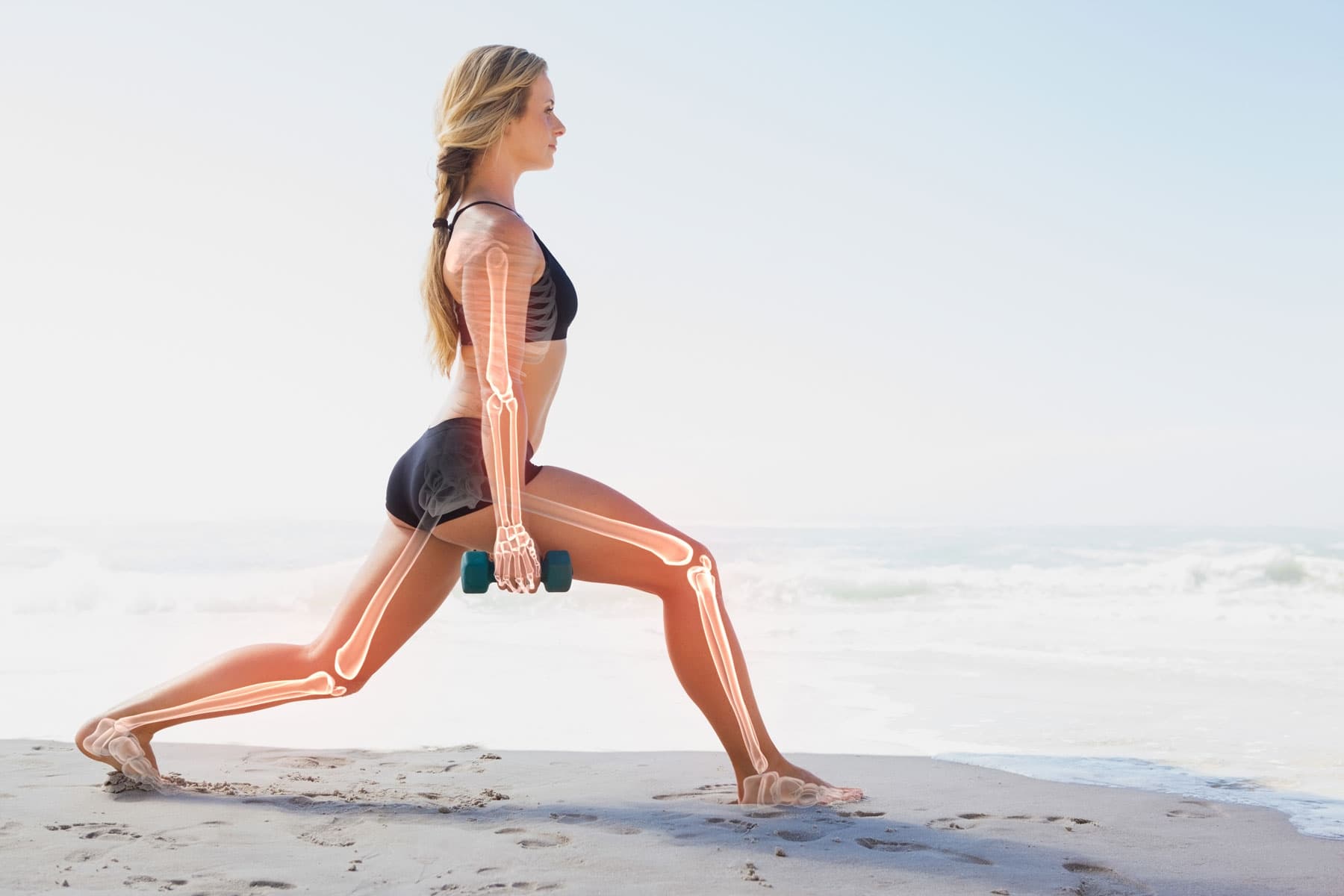
A combination of resistance training and weight-bearing aerobic exercise provides the stimulus needed for strong bones. Physical activity's mechanical loading and stress trigger osteocytes (a type of bone cell) to send signals to osteoblasts and osteoclasts to break down old bone and build new bone tissue. Additionally, inflammatory proteins---including IL-1, IL-6, and TNFα---promote bone resorption (breakdown), and exercise decreases inflammation.
Various resistance training protocols have been shown to increase BMD, though most call for three sets of 8 to 12 reps of each exercise performed at 60 to 85 percent of your one-rep max (the amount you can lift safely for a single exercise). For example, a meta-analysis of 14 studies found that a progressive resistance training program (where you gradually increase how much weight you lift as you grow stronger) improved lower-body strength and bone mineral density by about 3 percent in the femur and hip in older adults. Impact work, like jumping or bounding, can help bone strength. Finally, balance training can help prevent falls.
For aerobic exercise, the American Academy of Orthopaedic Surgeons recommends 30 minutes of weight-bearing activity like brisk walking, hiking, racket sports like tennis, stair climbing, or a team sport like basketball, at least four days per week. In one study, 12 weeks of aerobic exercise significantly improved T-score and bone mineral density in women with osteopenia or osteoporosis, as well as those without either condition. The study authors say these findings are similar to other studies on aerobic exercise.
Smoking
Quitting smoking helps reverse your fracture risk. Smoking or nicotine use disrupts the balance between bone breakdown and rebuilding: Osteoclasts, or cells that break down bone, increase in activity, while osteoblasts, or cells that form new bone, decrease. This leads to bone breaking down faster than it's built, ultimately weakening your skeletal system and increasing vulnerability to fracture.
Vaping may also impair the function of these bone cells, research suggests. And people who are heavy marijuana smokers are also more likely to have low bone mineral density. This may have to do with the fact that heavy cannabis users tend to have lower BMIs, and being underweight is a risk factor for fracture.
Drinking
If you drink alcohol, stick to the recommended one to two drinks per day or less. Excessive drinking may make your skeleton more vulnerable to weakness and fracture. In a meta-analysis, consuming three drinks per day correlated with a 33 percent higher risk of hip fracture compared to teetotalers. Having four drinks per day increased the risk by 59 percent. Excessive alcohol inhibits the function of osteoblasts, reduces calcium absorption, and dysregulates hormones that play a role in bone health. This has a detrimental effect on bone architecture, thinning the sturdy outer layer and reducing bone volume.
Secondary causes and medications that impact bone health
Beyond natural aging and lifestyle factors, certain medical conditions and medications can accelerate bone loss, making it important to work with your healthcare provider if you have risk factors.
Medical conditions that weaken bones include:
- Hyperthyroidism and hyperparathyroidism: Disrupt calcium regulation
- Hypogonadism or low testosterone: Reduce bone-building hormones
- Cushing's syndrome: Causes excess cortisol that breaks down bone
- Chronic kidney disease: Affects calcium and phosphorus metabolism
- Celiac disease: Impairs nutrient absorption
- Anorexia: Causes nutritional deficiencies and hormonal disruption
Common medications that can impact bone density include:
- Glucocorticoids like prednisone: Suppress bone formation when used long-term
- Proton pump inhibitors (PPIs): May reduce calcium absorption
- Selective serotonin reuptake inhibitors (SSRIs): Potentially affect bone metabolism
- Depot medroxyprogesterone acetate: Reduces estrogen levels
If you take any of these medications or have these conditions, discuss bone health monitoring and protective strategies with your doctor, as early intervention can help preserve your skeletal strength.
Bottom Line
You'll reach peak bone mineral density by your early to mid-20s. After you reach your 40s to 50s, bone mass begins to decline due to a combination of the natural aging process and unhealthy lifestyle factors. But you can fortify your bones and protect what you have.
Aim to get the recommended amounts of calcium, vitamin D, protein, and fiber in your diet; regularly challenge your body with weight-bearing and resistance exercises that stimulate bone growth; and avoid smoking and excessive drinking. These actions can reduce the risk of diseases like osteoporosis, allowing you to continue living the active life that you enjoy for years to come.

Take control of your health with expert guidance
Levels pairs real-time glucose data and comprehensive lab testing with clinician analysis and personalized support—everything you need to turn insights into real health improvements. Click here to get started with Levels.