The quick guide to ApoB, and why it may matter more than LDL
ApoB directly measures the number of atherogenic particles in your blood—and may be the strongest single predictor of cardiovascular risk. Here’s why it matters and how to lower it.

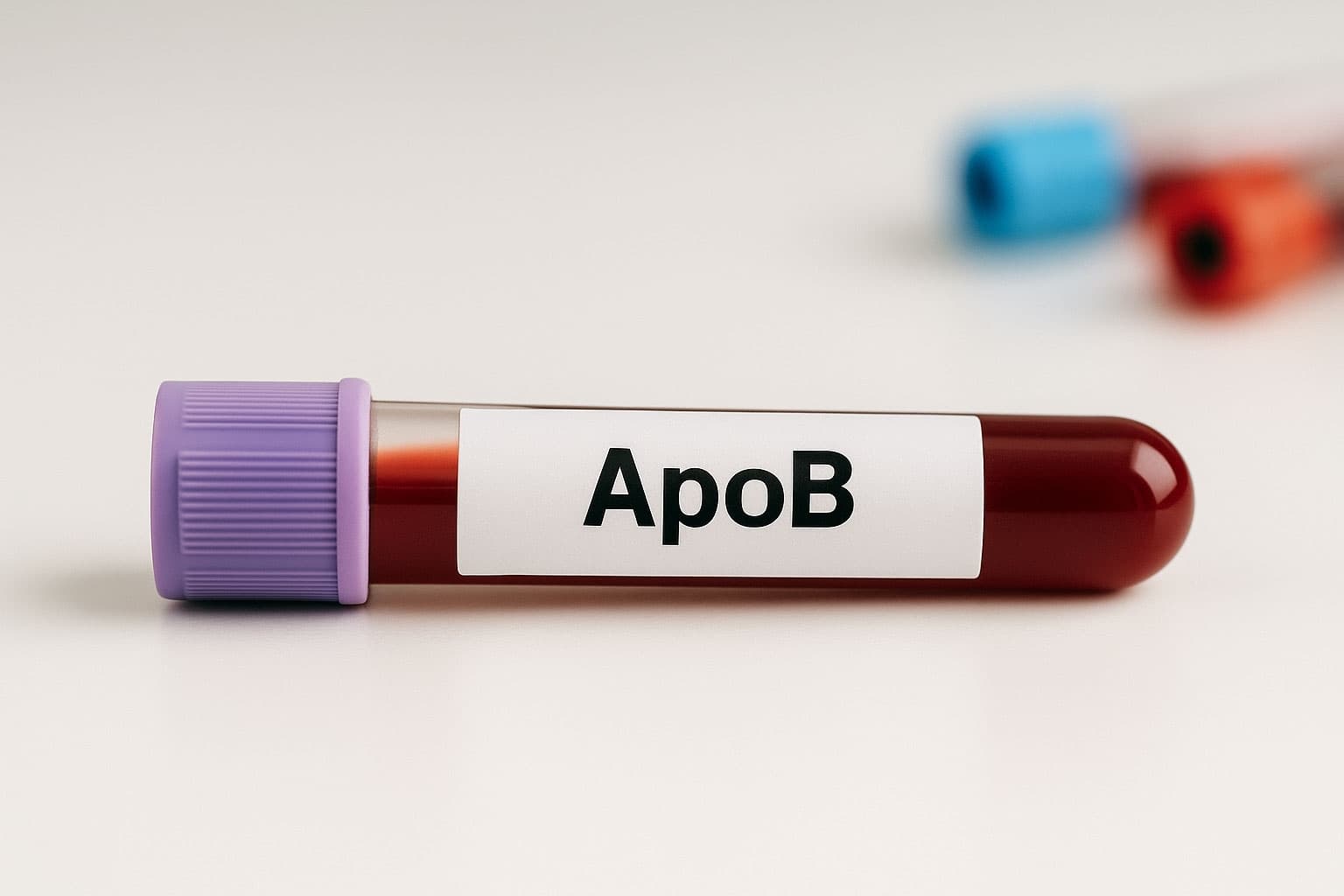
Apolipoprotein B (ApoB) is a protein that helps transport cholesterol and triglycerides through your bloodstream. Each potentially harmful lipoprotein particle---like LDL, VLDL, IDL, and lipoprotein(a)---contains exactly one ApoB molecule. That makes ApoB a direct count of how many atherogenic particles are circulating in your blood.
What makes ApoB particularly valuable is that elevated levels are a stronger predictor of cardiovascular disease risk than LDL cholesterol alone, because it reflects particle number rather than just cholesterol quantity.
Free lab interpretation
Already have labs?
Get a free interpretation grounded in Levels biomarker expertise and informed by our dataset of over 1.5 billion health data points.
Upload your labs freeHave lab results you’re curious about?
In under 60 seconds, we’ll explain what your result may mean—and what to do next.
Step 1: Choose the Marker You Want to Understand
Which result do you want help interpreting?
What Does ApoB Do in the Body?
ApoB is the structural protein on the surface of several lipoproteins that carry fats through the bloodstream. Since each LDL, VLDL, and similar particle contains exactly one ApoB molecule, measuring ApoB tells you the total number of atherogenic particles. This number is more directly tied to plaque formation in arteries than LDL cholesterol measurements alone.
What's a Healthy ApoB Level?
There are no official guidelines for optimal ApoB levels, but most experts recommend:
- Optimal: <90 mg/dL
- Borderline high: 90-99 mg/dL
- High risk: ≥100 mg/dL
Even borderline levels may signal elevated risk---especially in people with insulin resistance or those with normal LDL-C but high particle count.
Why ApoB Is a Better Risk Marker Than LDL
Two people can have identical LDL-C levels but vastly different ApoB numbers. One might have large, fluffy LDL particles (fewer in number), while the other has many small, dense particles. Only the latter poses high cardiovascular risk---but LDL-C alone can't tell the difference.
ApoB captures this crucial distinction, especially in people with:
- Metabolic syndrome
- Type 2 diabetes
- High triglycerides
- "Normal" cholesterol but elevated risk
How to Lower ApoB Without Medication
- Reduce saturated fat - Instead favor healthy fats like olive oil, nuts, fatty fish
- Cut added sugars and refined carbs - These drive VLDL particle production
- Eat more fiber-rich foods - Soluble fiber reduces ApoB-containing particles
- Exercise regularly - Aim for 150+ minutes of moderate cardio weekly plus resistance training
- Lose excess weight - Especially visceral fat
- Limit alcohol and quit smoking
When to Consider Medications or Supplements
Always consult with your doctor before starting any medications or supplements.
Medications:
- Statins - May lower ApoB by 30-50%
- PCSK9 inhibitors - Potential additional drop of 50-60%
- Ezetimibe - Reduces cholesterol absorption, can lower ApoB 15-20%
Supplements:
- Berberine, red yeast rice, fish oil - Potential modest natural reductions (not FDA-regulated)
Common Questions
Why is my ApoB high if my LDL is normal?
You may have many small LDL particles---ApoB captures particle count, not just cholesterol quantity.
Do I need to fast for an ApoB test?
No. ApoB is stable regardless of fasting, though fasting is often recommended for consistency with other lipid tests.
Can I lower ApoB through diet alone?
Yes, especially if elevations are modest. Diet and exercise are first-line strategies, but higher-risk cases may require medication.
The Bottom Line
ApoB provides a more accurate picture of cardiovascular risk than traditional cholesterol tests by measuring the actual number of harmful particles in your bloodstream. For people with metabolic conditions or discordant cholesterol results, ApoB testing can reveal hidden cardiovascular risk and guide more targeted treatment approaches.
More Articles on ApoB
Why ApoB may be a better cholesterol marker
ApoB reveals more about heart health than traditional cholesterol tests—but most people haven’t heard of it. Here’s why that's changing.

How to reduce ApoB
A step-by-step guide to reducing ApoB levels through diet and lifestyle changes

Test and improve your ApoB levels
Levels members can test their ApoB levels through Levels Labs, and then use the Levels app to help improve levels by logging meals and setting exercise goals. Click here to learn more about Levels.