How clinics use labs, food logs, and CGM together to personalize care
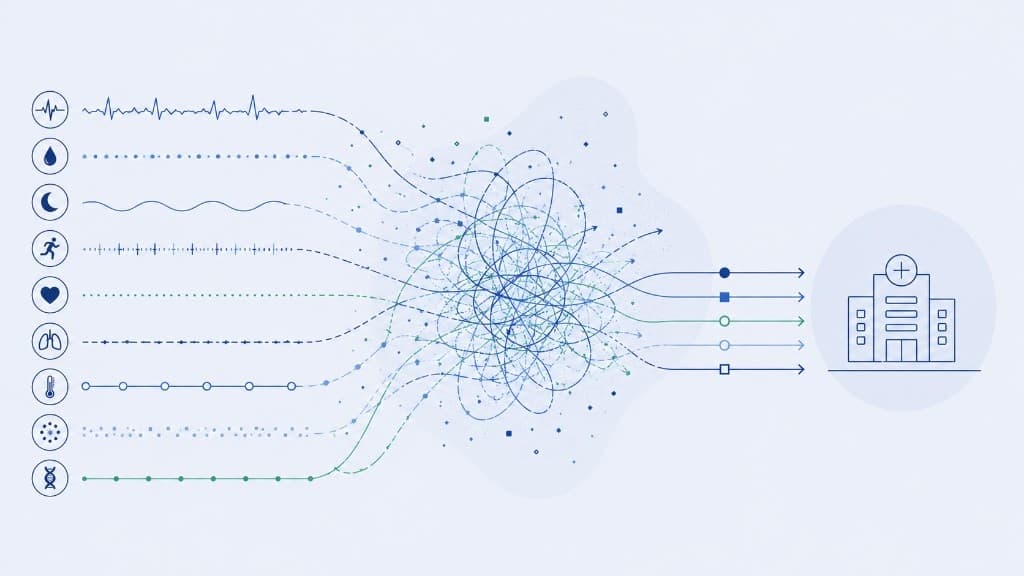
The most effective metabolic health programs don't treat labs, meals, and glucose as separate data streams—they unify them in one system so clinicians can see the full loop and act faster.

Functional medicine clinics have always understood that metabolic health requires more than bloodwork. But until recently, the tools for integrating lab results, continuous glucose monitoring (CGM), and real-world food and lifestyle data have been fragmented, manual, and hard to scale.
Patients juggle separate apps for CGM, food tracking, and lab portals. Clinicians piece together PDFs, screenshots, and notes. Time that should go toward treatment planning instead goes toward data assembly.
The clinics seeing the strongest metabolic health outcomes have moved to a unified workflow: one app for patients to track meals and glucose in real time, and one practitioner dashboard that ties lab trends, CGM metrics, and lifestyle patterns together in a single view. That integration is what makes care truly personalized—and scalable.
The problem with fragmented data
When labs, continuous glucose monitors, and meal logs live in separate systems, clinical decision-making slows down.
A typical pre-visit workflow might look like:
- Review lab results from a PDF the patient emailed
- Log in to a separate CGM portal (or ask the patient to screenshot their app)
- Cross-reference handwritten or texted food logs
- Manually connect the dots: Which meals drove glucose spikes? How did changes in sleep or stress correlate with lab trends?
This approach works for motivated practitioners with small panels, but it doesn't scale. And critically, it delays insights—often by weeks—because the data isn't unified in real time.

Learn more about Levels Pro
Extend care beyond the exam room with Levels Pro, the metabolic health operating system that unifies CGM, labs, food logs, and lifestyle data into a single, clinician‑ready view. If you are ready to practice truly proactive, personalized, preventative medicine, partner with Levels and start building measurable cardiometabolic outcomes at scale. Click here to learn more about Levels for practitioners.
What unified data enables
When labs, CGM data, and food logs flow into a single system, pattern recognition becomes immediate.
Example 1: Connecting breakfast composition to HbA1c trends
A 48-year-old patient with prediabetes (HbA1c 5.9%) reports "eating healthier," but repeat labs show no improvement. In a unified practitioner dashboard like Levels Pro, the pattern is clear:
- Morning glucose spikes above 140 mg/dL most days
- Food logs show "healthy" breakfasts: oatmeal with fruit, whole-grain toast with peanut butter, smoothies with banana and honey
- Post-breakfast walks help slightly, but spikes remain large
The intervention: shift to a protein-forward breakfast (eggs, Greek yogurt, or a savory option) and recheck glucose trends in two weeks. The patient sees real-time feedback in the Levels app, and the clinician tracks adherence and outcomes through the Levels Pro dashboard—no need to wait for the next quarterly HbA1c.
Example 2: Linking lipid panels to meal timing and variability
A patient's lipid panel shows elevated triglycerides (180 mg/dL) and low HDL. Dietary recall is vague: "I don't eat a lot of carbs."
CGM and food log data reveal:
- Late-night snacking (9–10 p.m.) drives overnight glucose spikes
- High glycemic variability throughout the day
- Frequent "grazing" on crackers, dried fruit, and protein bars
The intervention: consolidate eating into a tighter window (stop eating by 7 p.m.), reduce snacking frequency, and track glucose stability. When triglycerides are rechecked in 8–12 weeks, the improvement is measurable—and the patient understands why it worked because they saw their glucose respond in real time.
How a unified workflow changes clinical sessions
Instead of spending 15 minutes of a 30-minute visit reviewing disconnected data, clinicians using a unified system can:
-
Pre-visit prep (done by staff or AI):
- Levels Pro dashboard shows CGM summary: time in range, variability, spike trends
- Food logs are linked to glucose curves, so high-impact meals are already flagged
- Recent lab uploads are visible alongside glucose trends over the same period
- AI-generated summaries surface the top 3–5 patterns
-
In-session focus:
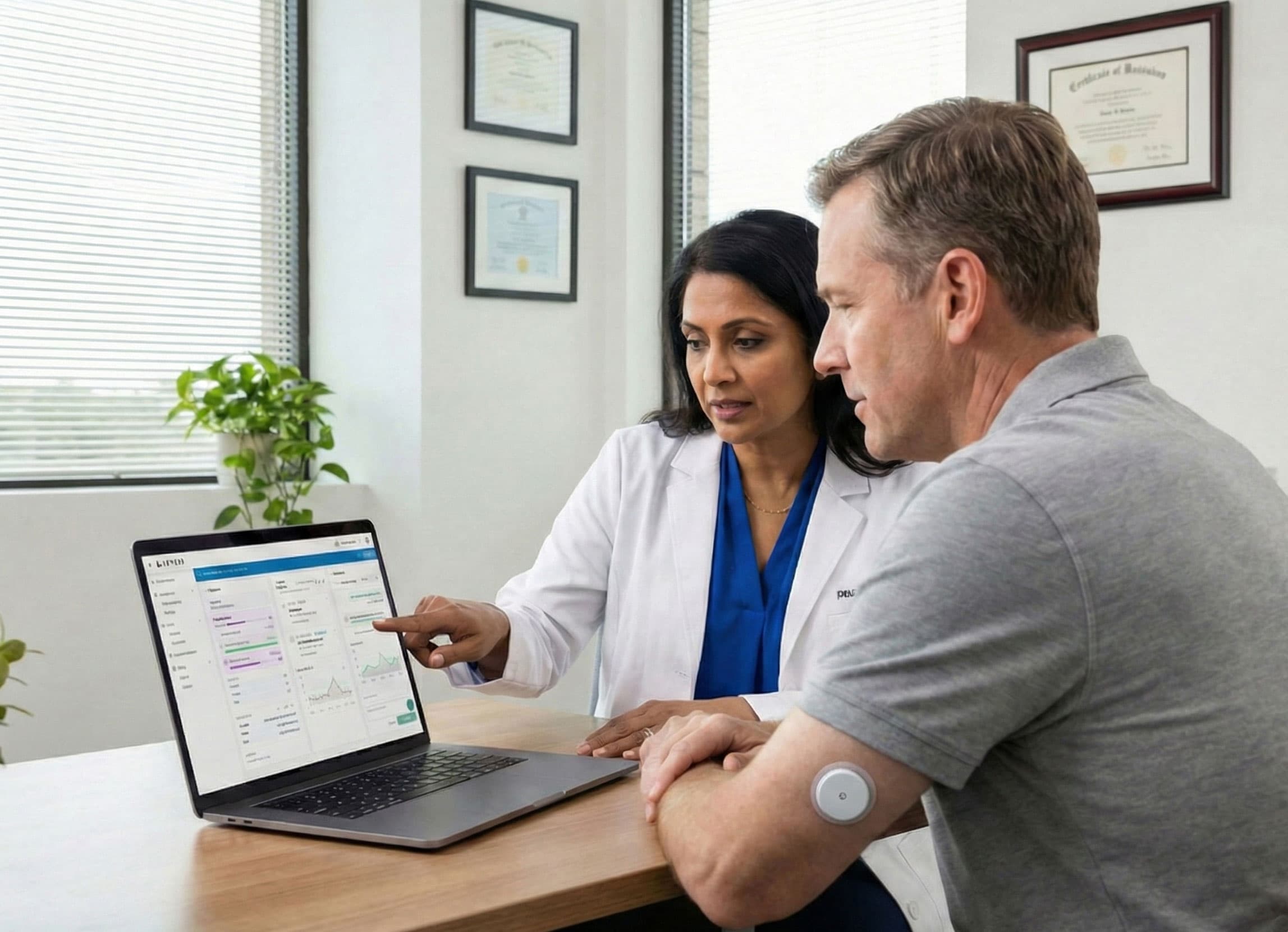
- Clinician and patient review the dashboard together, seeing exactly how specific meals, sleep, or stress events affected glucose
- Interventions are precise: "Your glucose spikes after pasta dinners but stays stable with stir-fry—let's build around that pattern"
- New goals are set based on real data, not general guidelines
-
Between-visit monitoring:
- Coaches or nutritionists check the dashboard weekly, flag concerning patterns, and send low-lift messages or adjust plans
- Patients stay engaged through real-time app feedback, reducing the need for frequent check-ins
What to track in a unified system
The key is not just having the data, but having it structured so patterns are obvious.
From labs:
- Fasting glucose, HbA1c, fasting insulin
- Lipids (triglycerides, HDL, ApoB)
- Inflammatory markers (hsCRP), liver enzymes
From CGM:
- Time in range (target: >70% in 70–110 mg/dL)
- Glycemic variability (standard deviation, coefficient of variation)
- Spike frequency, size, and recovery time
- Overnight glucose patterns
From food and lifestyle logs:
- Meal composition, timing, and portion size linked to glucose responses
- Sleep duration and quality
- Exercise type and timing
- Stress or illness events
From patient reports:
- Energy, mood, cravings, focus
- Program adherence and satisfaction
When all of this lives in one place—one app for patients (Levels), one dashboard for clinicians (Levels Pro)—care becomes proactive, data-driven, and deeply personalized.
Why integration scales better than fragmentation
Functional medicine practices that rely on fragmented tools often hit a scalability ceiling: adding more CGM patients means more manual data assembly, more staff time, and more clinician burnout.
Unified systems like Levels/Levels Pro remove that friction:
- Enrollment, CGM fulfillment, and onboarding are automated
- Data flows into a single dashboard automatically
- AI summaries reduce pre-visit prep time
- Clear roles (admin handles logistics, coaches monitor trends, clinicians interpret and adjust treatment) prevent bottlenecks
The result: clinics can grow metabolic health programs without proportionally growing administrative overhead.
Unified data, personalized care
When labs, continuous glucose monitoring, and food logs are integrated—not fragmented—clinicians can finally do what they trained to do: interpret patterns, design interventions, and guide behavior change. The data assembly happens automatically, insights surface faster, and patients see the connection between their choices and their metabolic health in real time.
That's how modern functional medicine practices turn continuous glucose monitors into scalable, outcomes-driven metabolic health programs.