How to integrate glucose monitors into a functional medicine practice
A practical framework for turning continuous glucose monitors into a scalable metabolic health program—built around one patient app, one practitioner dashboard, and clear team roles that make the data clinically useful instead of overwhelming.

Most functional medicine clinics already believe in continuous glucose monitoring (CGM). The challenge is not if CGMs work, but how to integrate them into a repeatable, low‑friction workflow that fits your existing functional medicine practice.
When CGMs are deployed as one‑off experiments---through a mix of manufacturer apps, spreadsheets, and disconnected food logs---they create operational burden without clear, measurable outcomes. The clinics that see real impact treat CGMs as part of a structured metabolic health program, built around a single patient app and a practitioner dashboard that unifies glucose, food, and lifestyle data in one place.
Step 1: Define Where CGMs Live in Your Care Model
Start by clarifying exactly where continuous glucose monitors fit into your care pathways. Instead of "patients who might benefit," define the programs where CGM is standard of care.
High‑yield use cases include:
- Metabolic reset or weight‑loss programs
- Insulin resistance, prediabetes, or Type 2 diabetes management
- High cardiometabolic risk (elevated lipids, blood pressure, fatty liver)
- Chronic fatigue, brain fog, or energy instability tied to glucose swings
For these cohorts, make CGM part of a defined protocol. For example: "All 12‑week metabolic health programs include at least one 28‑day CGM cycle with structured food and lifestyle tracking." This turns CGM from a gadget into a consistent element of your functional medicine treatment plan.
Step 2: Give Patients One App as Their Metabolic Health "Home Base"
Patients are far more likely to stay engaged if they have one app that does it all:
- Connects to the continuous glucose monitor
- Captures food logging (photos, quick descriptions, or macros)
- Pulls in lifestyle data like sleep, steps, and workouts
- Translates raw data into clear metrics (meal scores, glucose stability scores, habit streaks)
A unified app lets patients see the full loop: what they ate, how they moved or slept, and how their blood sugar responded in real time. That immediate biofeedback is what drives behavior change between visits without requiring daily manual outreach from your team.

Learn more about Levels Pro
Extend care beyond the exam room with Levels Pro, the metabolic health operating system that unifies CGM, labs, food logs, and lifestyle data into a single, clinician‑ready view. If you are ready to practice truly proactive, personalized, preventative medicine, partner with Levels and start building measurable cardiometabolic outcomes at scale. Click here to learn more about Levels for practitioners.
The Levels app is designed to be this daily home base, pairing CGM data with food logs, lifestyle tracking, and AI‑powered metabolic insights.
Step 3: Use a Practitioner Dashboard to Centralize CGM and Lifestyle Data
On the clinic side, the equivalent of one app is a unified practitioner dashboard. Instead of flipping between CGM portals, PDF labs, and notes, your clinical team needs:
- A central roster of patients using CGMs
- At‑a‑glance CGM metrics: time in range, variability, spikes, and overnight patterns
- Direct links from glucose events to specific meals, sleep, and activity
- AI‑generated summaries that surface the most important patterns before each visit
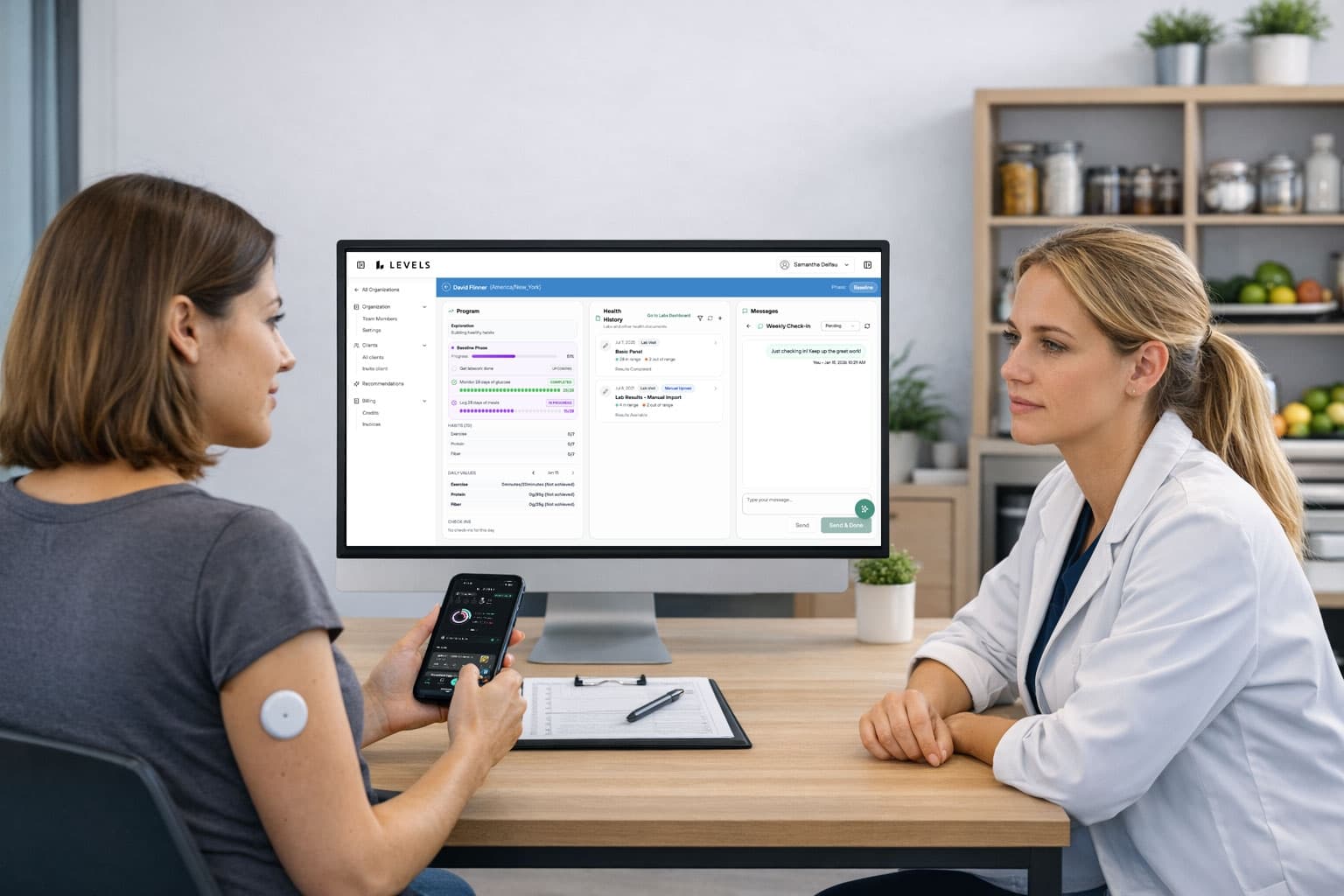
Levels Pro is built as a metabolic health operating system for functional medicine and integrative clinics. It combines continuous glucose data, comprehensive labs, food logs, and lifestyle trends in one clinician view, so sessions can focus on strategy and treatment decisions, not raw data review.
Step 4: Standardize a Repeatable CGM Program
Once the infrastructure is in place, turn CGM use into a structured program rather than a one‑time experiment.
A simple CGM workflow for a functional medicine clinic might include:
- Enrollment and onboarding
- Identify eligible patients during consults or follow‑ups.
- Enroll them in your CGM program, order sensors, and send clear setup instructions for the app and continuous glucose monitor.
- Guided tracking phase (2--4 weeks)
- Patients wear the CGM, log meals, and tag key habits like movement, sleep, and stress.
- The app provides real‑time feedback, meal scores, and habit suggestions so patients can run guided experiments (e.g., different breakfasts, post‑meal walks, earlier dinners).
- Clinical review and plan adjustment
- Before the follow‑up visit, a coach or RN reviews the Levels Pro practitioner dashboard, flags patterns, and drafts a brief summary.
- The clinician uses that summary and the dashboard in session to connect CGM trends to symptoms, adjust nutrition, labs, supplements, and training plans, and set new goals.
- Ongoing cycles or graduation
- Some patients complete a single CGM cycle; others repeat cycles as part of longer cardiometabolic or weight‑management programs.
- Either way, the same app and dashboard anchor each step, so the workflow is repeatable and scalable.
Step 5: Protect Clinician Time With Clear Team Roles
To prevent CGM integration from overwhelming your practice, assign specific responsibilities:
- Admin staff: manage enrollment, CGM orders, and basic tech questions.
- Health coaches / nutritionists: monitor dashboards between visits, tag notable trends, and send low‑lift messages or education.
- Clinicians: focus on interpretation and treatment decisions during scheduled visits, using concise practitioner dashboard views rather than raw data streams.
Because Levels Pro handles onboarding, fulfillment, and unifies patient data, your team can extend care beyond the exam room without adding another disconnected system to manage.
Step 6: Track Outcomes From Your CGM Program
Finally, treat CGM not just as a patient engagement tool, but as a way to drive and document better outcomes.
Track:
- Changes in key lab markers (fasting glucose, HbA1c, lipids, insulin)
- Improvements in CGM metrics (time in range, glycemic variability, frequency and size of spikes)
- Patient‑reported changes in energy, appetite, sleep, and mood
- Program adherence, completion rates, and recurring revenue from bundled CGM programs
When all of this data flows through a single app for patients and a single Levels Pro practitioner dashboard for your team, continuous glucose monitoring becomes a core part of your functional medicine practice---supporting proactive, personalized, preventative care at scale.