The gut-bone axis: How the microbiome influences bone health
Your gut bacteria do far more than digest food—they help regulate the inflammatory signals that determine whether your bones are building up or breaking down. Here’s what the science says about the gut-bone connection, and what you can do about it.

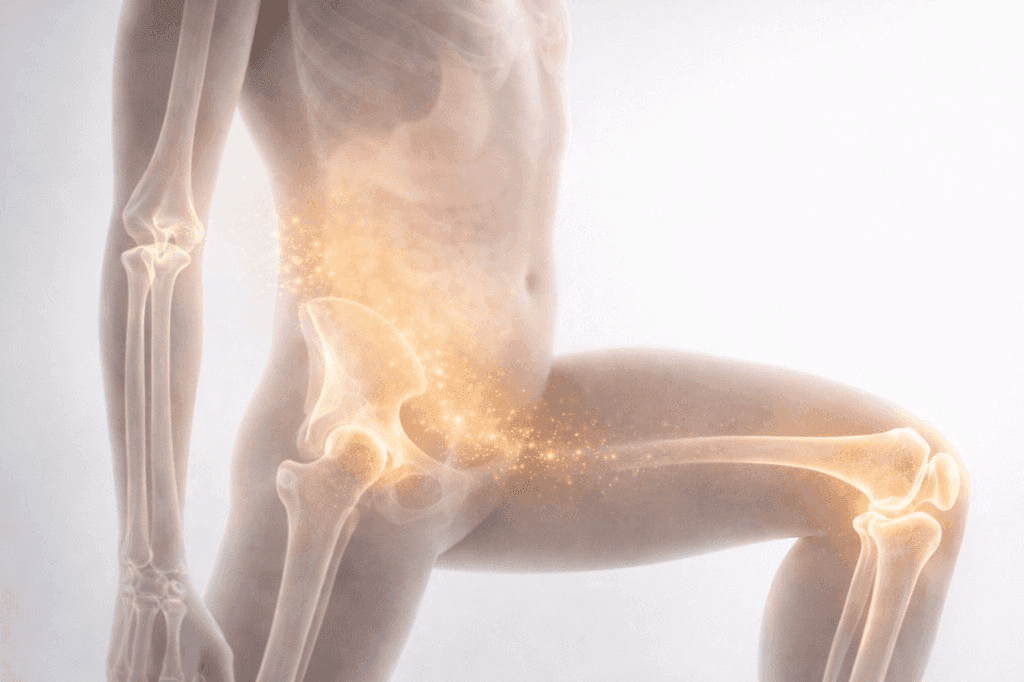
Most people think of bone as a solid, unchanging scaffold, but it is made of active, living tissue, like any organ in the body. It is constantly rebuilding itself: specialized cells called osteoblasts lay down new bone, while others called osteoclasts break down old bone. In young adults, these two processes stay roughly in balance, but they can gradually get more out of sync as we age. When that balance tips toward too much breakdown, you lose bone density—slowly, silently, and often without any symptoms until a fracture happens.
What tips that balance? Scientists and physicians previously had an incomplete picture of what drives bone loss, but a growing body of research now points to a surprising factor: the trillions of microorganisms living in your gut.
Scientists call this connection the gut-bone axis, and it’s reshaping how we understand bone loss and what we can do about it.
Bone density follows a modifiable pattern throughout life
Changes in bone density are influenced by hormones, inflammation, and modifiable lifestyle factors such as physical activity, nutrition, and smoking. Most of our bone mass is built up during adolescence and reaches its peak in early adulthood. Bone density then gradually decreases as we age, with women experiencing an accelerated period of bone loss during and after the menopause transition. Women can lose as much as 10% of their bone mass in the decade surrounding the final menstrual period.
This aging- and menopause-associated bone loss greatly increases the risk of fractures, and the consequences are very real. Women over 50 have an estimated 46% lifetime risk of a fracture related to low bone mass. Alarmingly, hip fractures carry a 5- to 8-times increased risk of death in the first three months post-fracture and substantially lessen the independence and quality of life for survivors. Yet bone density screening typically doesn’t begin until age 65, leaving a gap between when bone loss starts and when it’s measured, and allowing silent deterioration to go undetected. Understanding the biological drivers of bone loss—including the role of the gut microbiome—matters precisely because it opens the door to earlier, more proactive strategies to protect our bones throughout life. Dietary and lifestyle modifications that reduce chronic inflammation can help maintain the balance of bone remodeling and preserve bone mass as we age.
The inflammation connection: How immune signals drive bone breakdown
Bone remodeling is tightly linked to the immune system, and inflammation drives this connection. In women, estrogen normally helps keep certain pro-inflammatory pathways in check. When estrogen levels fall during menopause, the immune landscape shifts, and the body ramps up production of immune signals that prompt osteoclasts to break down bone faster. In fact, some osteoporosis drugs work by blocking these signals.
Inflammation doesn’t come only from hormonal changes, though. Body fat—particularly the deep fat surrounding your organs (visceral fat)—can elevate these same inflammatory signals. That chronic, low-grade inflammation can promote the activity of bone-resorbing cells and bone loss. This connection has real-world consequences. For example, people with low muscle mass and high body fat have been shown to have a higher risk of developing osteoporosis.
Enter the microbiome: Evidence for a gut-bone axis
Since inflammation drives bone loss and the gut microbiome powerfully regulates immune function, the microbiome can influence bone health.
The most striking early evidence came from mice raised in plastic bubbles, with no microbiome whatsoever. Under normal conditions, a lack of estrogen in female mice leads to bone loss, just like in humans. However, in the microbe-free mice, researchers saw essentially no bone loss. Importantly, when the researchers established a microbiome in these “bubble” mice, they became susceptible to bone loss again. These findings reframe the conventional understanding: postmenopausal bone loss is not simply a consequence of losing estrogen. It is a consequence of estrogen loss in the presence of a gut microbiome that amplifies inflammatory signals.
From mice to humans: What do we know?
A key question is whether the gut-bone connection observed so convincingly in animal models also operates in humans. Researchers analyzed gut microbiome and high-resolution bone imaging data from participants in two large, independent clinical studies. They tested whether levels of specific gut bacteria were associated with measures of bone density, internal bone structure, and bone strength.
When researchers analyzed these two studies together, several patterns emerged. Greater abundance of certain bacterial groups, such as Akkermansia, was associated with lower bone density in this study. In contrast, a higher abundance of others, including Faecalibacterium, was associated with greater bone density. These associations held up across both cohorts and across multiple bone sites.
The researchers also found that specific metabolic functions of gut bacteria—not just the presence or absence of species—were linked to bone measures. For example, the bacterial pathway that encodes for the production of histidine (an amino acid) as well as purines and pyrimidines (components of DNA) was associated with greater bone area in the tibia. These findings suggest that what the bacteria do may matter as much as which species are there.
Together, these studies provide evidence that the gut-bone axis is at work in humans and animal models. It’s important to note, however, that these clinical findings show an association rather than a causal relationship. Interventional clinical studies are still needed to conclusively demonstrate that changes in the microbiome cause inflammation and bone loss, rather than merely being consequences.
How gut microbes influence bone
The gut microbiome doesn’t interact with bone directly. Its influence is mediated through at least three interconnected mechanisms, each of which shapes the inflammatory signals that control whether bone is built up or broken down.
Maintaining the gut barrier
The lining of your intestine is a wall that separates the contents of your gut—including bacteria and their byproducts—from the rest of your body. This barrier is held together by specialized proteins called tight junctions that control what passes through.
When this barrier is intact, only intended nutrients cross into the bloodstream. However, when it becomes “leaky,” bacterial fragments and other unwanted molecules can slip through, triggering inflammation. Research has shown that estrogen loss specifically weakens tight junction proteins, increasing gut permeability and allowing more inflammatory triggers into the bloodstream.
This matters for bone because immune cells that produce inflammatory, bone-resorbing signals reside right below the gut lining, and increased gut permeability can elevate inflammatory signals throughout the body.
Shaping immune cell behavior
The gut houses the body's largest concentration of immune cells, and the microbiome is a primary driver of how those immune cells develop and behave. In the context of bone, the key immune players are two groups of T cells: Th17 cells, a potent source of inflammatory signals, and regulatory T cells (Tregs) that help reduce inflammation.
Depending on which bacteria are present, the gut microbiome can direct the expansion of different types of immune cells, the inflammatory signals they produce, and ultimately the balance between bone build-up and breakdown.
Producing short-chain fatty acids
Gut bacteria break down dietary fiber to produce molecules called short-chain fatty acids (SCFAs). These molecules have well-documented anti-inflammatory properties: they help maintain the gut barrier, support the development of immune cells that suppress rather than promote inflammation, and can directly dial down bone-resorbing osteoclast activity.
When the gut microbiome is depleted of SCFA-producing bacteria—as can happen with a low-fiber, highly processed diet—this protective capacity diminishes, potentially tipping the balance toward bone loss.
What this means for you: Supporting bone health through the microbiome
The gut microbiome regulates inflammatory signals that drive bone loss, and supporting a healthy microbiome is an important part of maintaining bone health as we age. Here are evidence-informed strategies that address the gut-bone connection:
Prioritize dietary fiber and gut microbiome diversity
Fiber-rich foods—vegetables, legumes, whole grains, nuts, seeds, and fruit—feed the gut bacteria that produce anti-inflammatory molecules and support a healthy gut lining. A high-fiber diet is associated with greater microbiome diversity, which, in turn, can support a more balanced immune environment. A diet low in fiber and high in processed foods does the opposite: it shifts the microbiome toward a composition linked to increased gut leakiness and inflammation.
Address chronic inflammation through body composition
Body fat is a key driver of inflammation. Strategies that manage body fat and visceral fat, including maintaining a diet high in protein and fiber and low in sugar, as well as getting adequate physical activity—especially weight-bearing exercise—may reduce inflammation and have downstream benefits for bone health.
Consider targeted probiotics
Not all probiotics are the same. Studies on the gut-bone axis have shown that certain probiotic strains can prevent bone loss by strengthening the gut barrier, reducing the production of inflammatory signaling, and shifting gut immune cell populations. For example, certain Lactobacillus probiotics can prevent menopause-related bone loss in mice by decreasing inflammation. Probiotic strains that are backed by scientific evidence may represent a good addition to your bone health plan.
The bottom line
The gut-bone axis is one of the most important emerging concepts in bone research. The evidence—from mouse models and human clinical studies—converges on a consistent picture: the gut microbiome actively regulates bone remodeling, and its influence works through inflammatory pathways.
Bone health is more complex—and more actionable—than the traditional playbook suggests. The microbiome is a modifiable factor. Your dietary choices, your metabolic health, and, increasingly, targeted probiotic interventions can shape the gut environment, which, in turn, influences your skeleton.
We’re still in the early chapters of understanding this connection. But the evidence increasingly suggests that gut health may be one useful lever for supporting bone health, alongside established strategies such as resistance exercise, adequate protein, calcium, vitamin D, and osteoporosis screening when indicated.
Dr. Mark Charbonneau, Vice President of Research and Development at Sōlaria Biō, wrote this article, with editing and fact-checking from Levels. Levels has no other relationship with Sōlaria, and receives no revenue on any purchases from Sōlaria. Sōlaria’s flagship product, Bōndia, is a synbiotic medical food composed of four proprietary plant-sourced probiotic strains plus prebiotic fibers, designed to target gut-mediated inflammation that drives bone loss.
About Sōlaria Biō: Sōlaria Biō is a biotechnology company based in Waltham, MA, that’s committed to advancing the future of aging and measurably improving collective health outcomes. The company has built a best-in-class strain catalog of bacterial and fungal diversity isolated from fresh fruits and vegetables, a database of their genomes, and a computational platform to mine them to develop medical foods. Sōlaria Biō incorporates the highest level of scientific rigor into every aspect of its process, validating products in robust randomized, placebo-controlled clinical food trials to create novel solutions for managing inflammatory diseases. To learn more, please visit solaria.bio.