From the CEO: September 2025
My ApoB strategy and other things I'm thinking about.

Three things on my mind this month
1. My ApoB strategy
As I mentioned last month, I'm pretty focused on reducing my cardiovascular risk. One of my goals was to lower my ApoB with only lifestyle changes, so we built an improvement program that I was able to test for six weeks, along with a handful of other Levels members. The results were better than I had hoped—I reduced my ApoB from 98 mg/dL to 73.
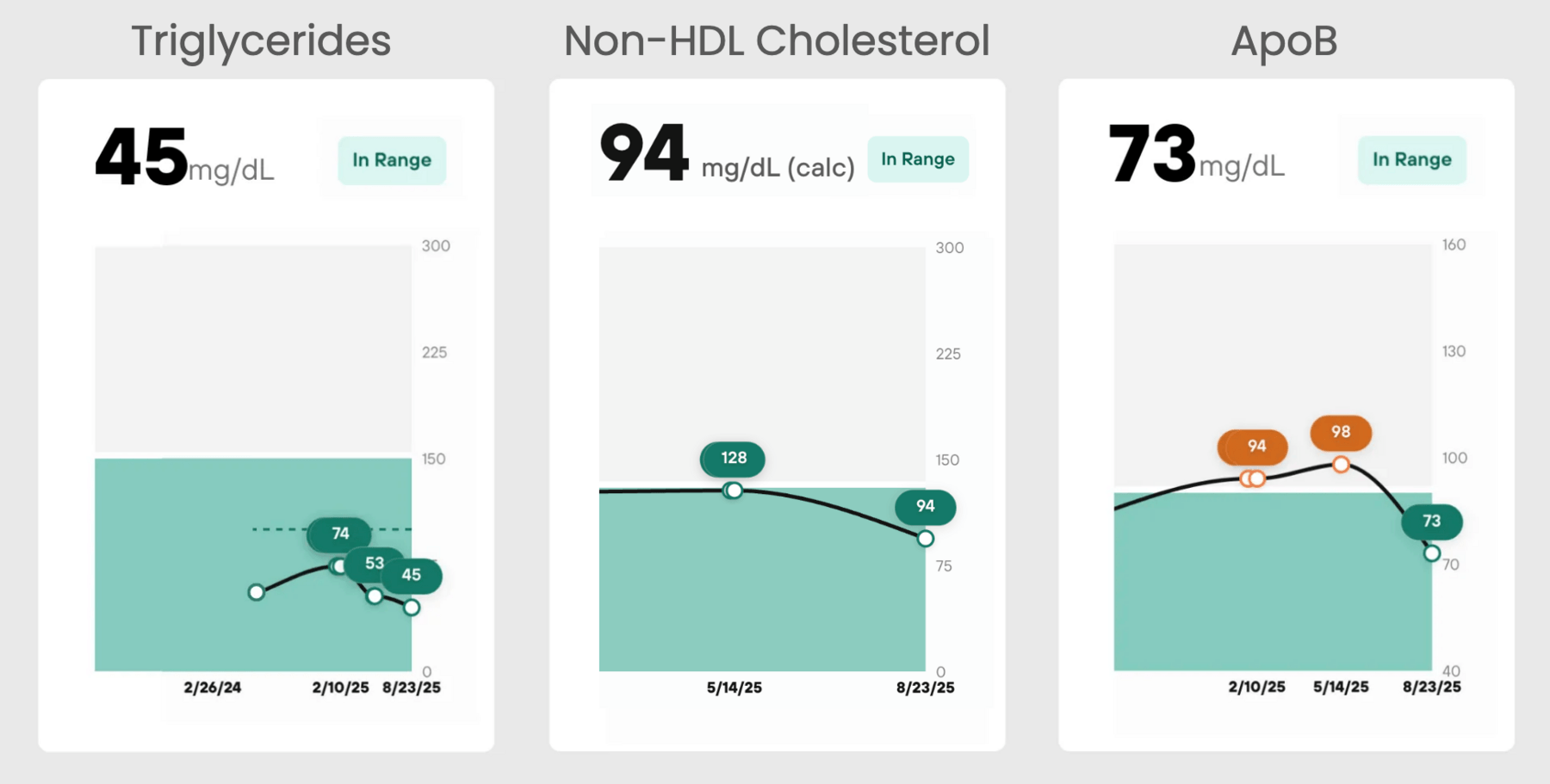
The best part is I didn't do anything crazy—it was mostly just focus and consistency. My routine:
Nutrition:
- Logged nearly everything I ate in the Levels app. I focused on consistency of logging over perfect accuracy of the logs (I wasn't carrying a food scale around). If you haven't tried food/macro tracking, it is a) eye-opening, b) way easier than it sounds, c) a key and under-appreciated component of your health record.
- Used the Habit Loops feature in the Levels app to hit daily targets: saturated fat under 10% of calories (~25g for me), 40g+ of fiber, and >1g protein per lb bodyweight (primarily from lean animal sources)
Supplements:
- 15g whole psyllium husk every morning (not powder or pills). I mix this into a yogurt bowl (let me know if you want the recipe—I warn you it's not fancy :)
- EPA/DHA fish oil
- 10,000 IU Nattokinase. Several low-dose studies have shown that this enzyme improves blood pressure more so than cholesterol. However, this study observed an impressive improvement in lipids (and arterial plaque) at a higher dose.
Exercise: No change—I work out 3–5 times per week, a mix of weights and running/rucking.
Sleep: Not great on average (I have mild sleep apnea and a 5-month-old). I've gotten many requests about this, so we're integrating the protocol I did into Levels. In a test group of our members, 60% saw significant lipid improvements in just 4 weeks.
Measuring frequently and being consistent with lifestyle targets are just really powerful tools for changing biomarkers. (See this separate analysis where we found that 80% of Levels members with an out-of-range biomarker saw improvement over time.) This and other programs will be available through Levels Complete, which we're launching soon (if you want to try it early, reply to this email). I'm really excited about it!
2. Cognitive disease and Alzheimer's research
Cognitive disease is another area that takes a lot of lives, including in my family, and it feels like real treatment or prevention may be close. A recent study I'm excited about found that people with lower levels of lithium—a naturally occurring element found in trace amounts in the brain—were more likely to have Alzheimer's. And in mouse models, it looked like supplementing a specific form, lithium orotate (LiO), could be preventative. This would be really exciting because LiO is an absurdly cheap and readily available compound.
The flip side is that "cheap and available" means there is less incentive for companies to invest in human studies, which we need to confirm the results and develop safety and dosing evidence. Either way, Alzheimer's research is starting to feel hopeful again after a long plateau of dead ends and outright fraud.
3. Product recommendation: Espresso machine and filters
I love my espresso machine (so much) and pull multiple shots per day, but espresso is unfiltered coffee, which might raise cholesterol. I've started using these espresso paper filters. Super easy: they drop right into the portafilter, keep grounds out of the cup and have no impact on flavor (your palate may vary).
Follow me on X here. Other than Levels, I have no affiliation with any of the products mentioned or linked above—I'm just a satisfied customer.
—Josh

Take control of your health with expert guidance
Levels pairs real-time glucose data and comprehensive lab testing with clinician analysis and personalized support—everything you need to turn insights into real health improvements. Click here to get started with Levels.