From the CEO: February 2026
Quarterly bloodwork results, new AI research on CGM data, and a snack recommendation.

Three things on my mind this month
1. My quarterly Levels Comprehensive bloodwork panel
I got my quarterly Levels Comprehensive bloodwork panel last week. My May 2025 panel was the worst I've ever had. This one was the best. All changes were achieved through lifestyle: nutrition, exercise, and supplementation.
CHOLESTEROL:
Three consecutive quarters of sustained ApoB improvement with zero medication. I'm genuinely shocked by the effectiveness of the changes I've made.
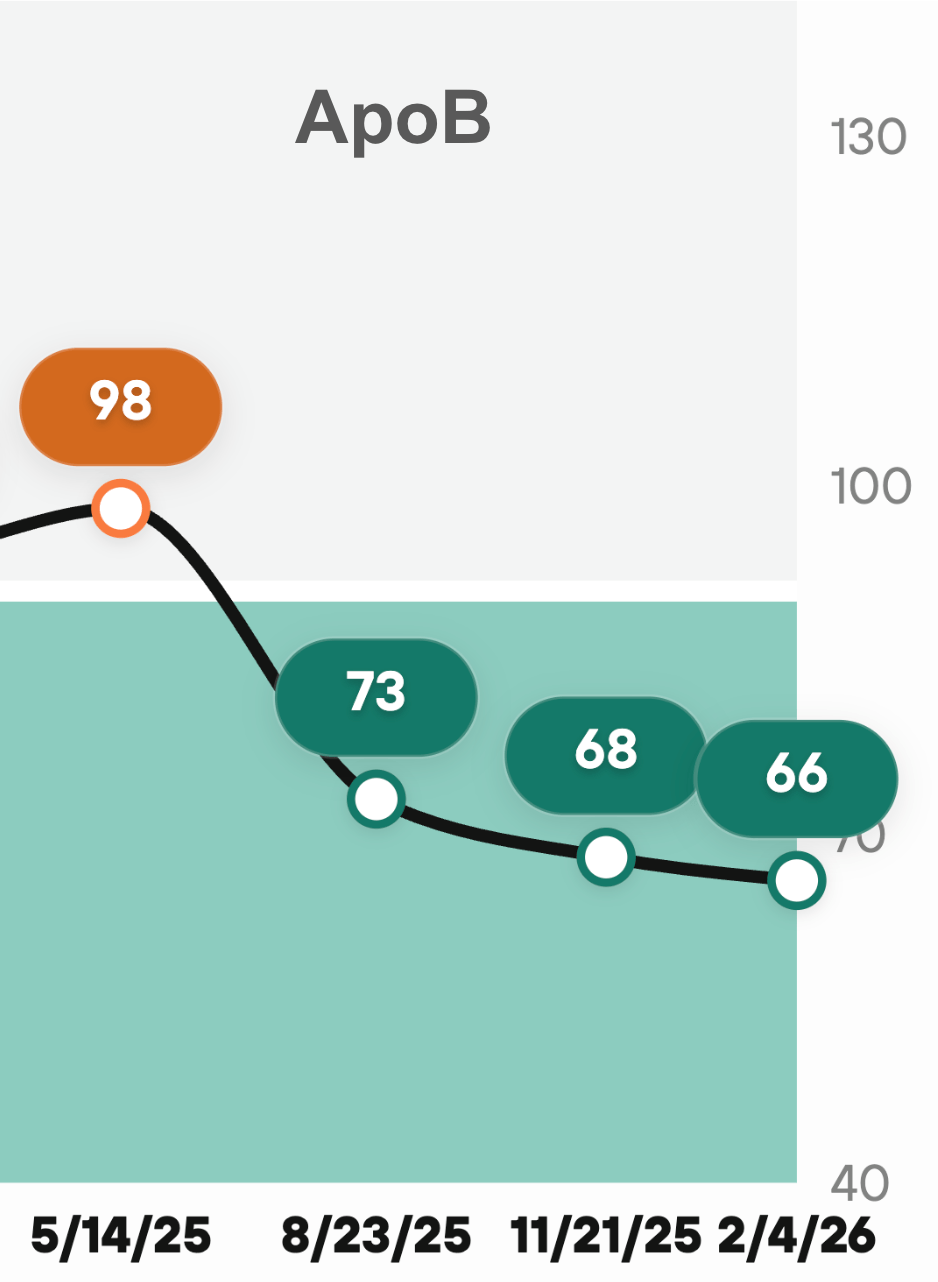
What I'm doing: My heart health stack has been remarkably simple:
- 35g+ fiber daily — mostly from psyllium husk mixed into a morning yogurt bowl, plus vegetables and legumes throughout the day
- Saturated fat under 10% of calories — roughly 25g/day for me
- Toku Nattokinase (10,800 FU) — a high-dose enzyme with emerging evidence for lipid improvement and potential plaque reduction. (Get 20% off with code LEVELS20.)
This is the best my lipid panel has ever been. If you want to get on this lipid optimizer train with me, sign up for Levels and join the Heart Health program—it's now available in the app.
GLUCOSE:
I've successfully reversed a year-long slide. As I've mentioned previously, the birth of my son has badly disrupted my sleep, and along with it, my fasting glucose. A major reason I started Levels was that my own blood sugar runs quite high, and I wanted to do something about it.
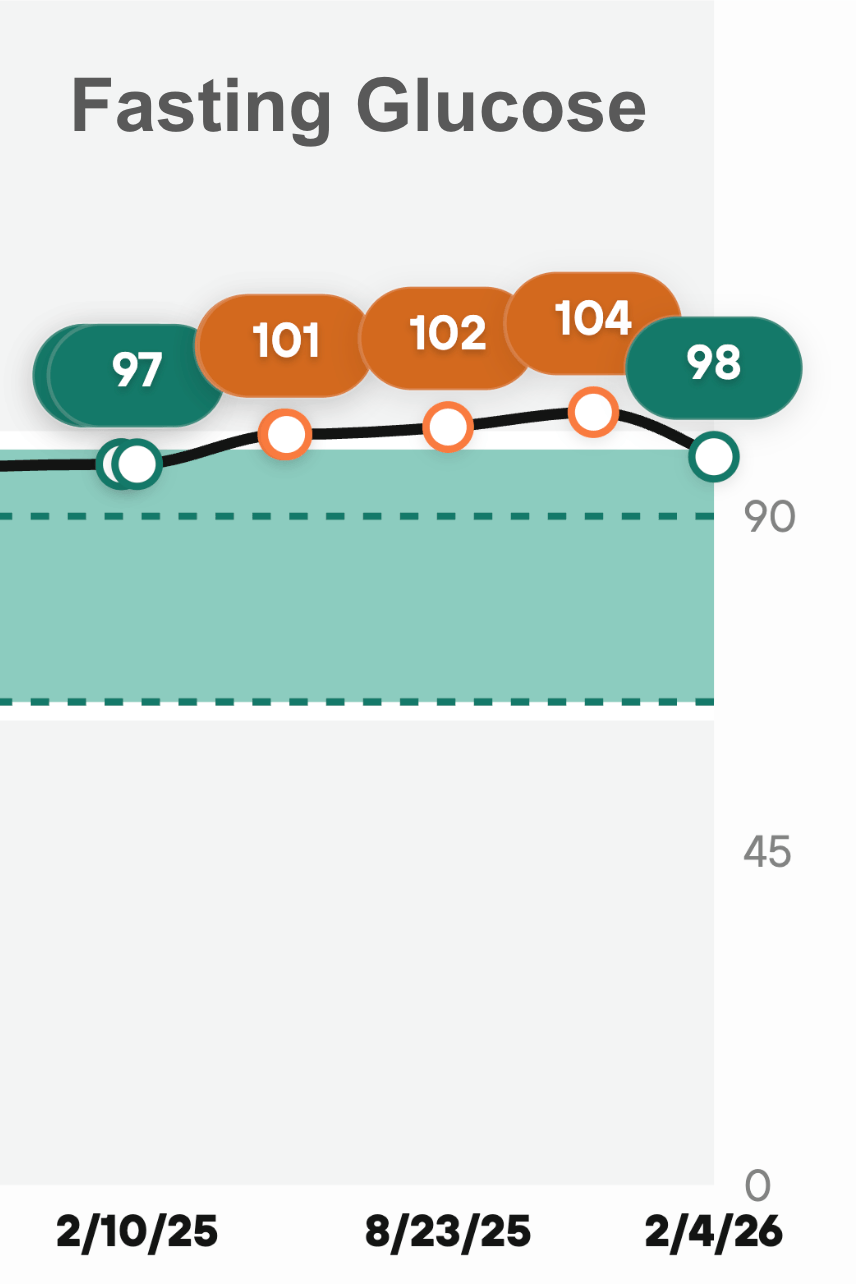
What I'm doing: I've been focusing on this through a supplementation routine of 1g of Vitamin C (successful), attempting to control carbs in the evenings (not very successful), consistent exercise, and getting the baby to sleep better (increasingly successful 😄). These efforts seem to be paying off—a ~6% improvement. I'm going to keep doubling down here and intend to get down into the low 90s.
IRON:
My iron saturation has been climbing over the years, and came back at 54% this time. This is common in men—without a regular mechanism for iron loss, iron accumulates in our bodies and organs over time. A saturation above 45% is flagged because excess iron acts as an oxidant, driving inflammation and potentially accelerating cardiovascular and liver damage.
What I'm doing: I'm donating blood this afternoon. It's the most direct and effective way to lower iron stores—each donation removes roughly 250mg of iron. Your body then draws on stored iron (ferritin) to replace it, effectively eliminating the excess without causing anemia. It's a simple intervention, and it has the added benefit of helping someone else.
2. New research: An AI model trained on CGM data predicts disease better than standard blood tests
In this paper, just published in Nature, researchers built a "foundation model" called GluFormer, trained on over 10 million glucose measurements from 10k+ people without diabetes. They wanted to see the predictive value of training an AI on the dynamics of a glucose signal—the shape of the spikes, recovery to baseline, what happens overnight—instead of reducing CGM data down to a single number like average glucose.
The results are very interesting. In one cohort followed for 11 years, the model identified people at elevated risk of diabetes and cardiovascular death far more effectively than HbA1c. The 25% of people the model predicted should have the highest risk contained 66% of people who had in fact developed diabetes and 69% of cardiovascular deaths. (The lowest predicted risk quartile contained 7% and 0%, respectively.) Doing the same prediction based solely on HbA1c showed no significant correlation.
Even more interesting: when researchers added dietary logging data into the model, prediction accuracy jumped dramatically. This is exactly the thesis behind Levels: your glucose data alone is powerful, but combining it with food logs unlocks a fundamentally deeper understanding of your metabolic health. Every time you log a meal in Levels, you see how your body responds, and you're building exactly this kind of personalized dataset.
There are legitimate technical critiques of the paper, but the directional finding is what matters here: CGM data, especially when combined with lifestyle factors, contains more predictive information about your health state than any snapshot blood test can capture.
3. Food rec: Ella's Flats Sweet Minis
I'm big on crunch, and Ella's Flats Sweet Minis have become a go-to snack for me. They're crunchy, semi-sweet with no added sugar, and have a lot of omega-3s, protein (5g), and fiber (5g) per 28g serving. I have a handful or so every day and sometimes crunch them up over my yogurt bowl for granola vibes.
Follow me on X here. Other than Levels, I have no affiliation with any of the products mentioned or linked above—I'm just a satisfied customer.
—Josh

Take control of your health with expert guidance
Levels pairs real-time glucose data and comprehensive lab testing with clinician analysis and personalized support—everything you need to turn insights into real health improvements. Click here to get started with Levels.