Why food logs fail when they're not connected to glucose and lifestyle data
Isolated food logs document meals, but they don't explain metabolic responses. When food, continuous glucose monitoring, sleep, and activity live on the same timeline, patterns emerge that drive real behavior change—and clinicians can coach with context instead of guesswork.

Food logging has been a cornerstone of nutrition coaching for decades. Patients write down what they eat, clinicians review the logs, and recommendations follow. But food logs in isolation—disconnected from glucose responses, sleep quality, stress levels, and activity—provide incomplete information. A meal that causes a glucose spike on a low-sleep, high-stress day may not spike when the patient is well-rested and active.
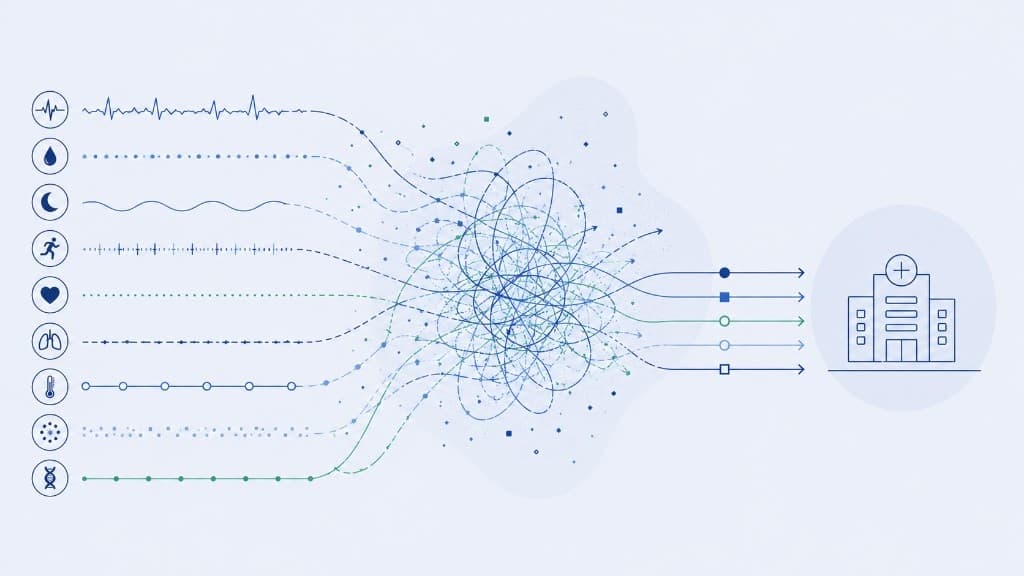
For metabolic health coaching, the unit of analysis isn't the meal—it's the meal in context. When food logs live on the same timeline as continuous glucose monitoring, sleep data, and movement, clinicians can identify the real drivers of metabolic dysfunction and patients can see how all the variables interact. Isolated food logs document behavior. Unified timelines explain outcomes.
The problem with food logs in isolation
When food logs are collected separately from glucose and lifestyle data:
- Cause and effect are invisible: You see what the patient ate, but you don't see the glucose response, so you can't distinguish between meals that work and meals that don't.
- Context is missing: A high-carb dinner might spike glucose one night but not another. Without sleep, stress, and activity data on the same timeline, you can't explain why.
- Patterns are harder to find: Reviewing food logs in a spreadsheet and CGM traces in a manufacturer app requires manual cross-referencing. This slows pattern recognition and increases the chance of missing key insights.
- Patient feedback is delayed: When patients log food in one app and check glucose in another, they don't see the connection in real time. Behavior change is slower because the feedback loop is broken.
Food logs that sit in isolation are data artifacts. Food logs integrated with glucose and lifestyle signals become clinical insight.
Why context matters: sleep, stress, and activity modify glucose responses
Glucose responses to the same meal vary based on physiological context:
- Sleep deprivation impairs glucose control: A patient who sleeps five hours may see a 40 mg/dL spike from a meal that causes only a 20 mg/dL rise after eight hours of sleep.
- Stress drives glucose variability: Cortisol elevates fasting glucose and amplifies post-meal spikes. A stressful work day changes how the body responds to dinner.
- Activity timing matters: A 15-minute walk after a meal can reduce the glucose spike by 30%. Sedentary days show larger, longer spikes from the same food.
- Meal timing interacts with circadian rhythm: Carb tolerance is higher in the morning than late at night. The same snack at 10am and 10pm produces different glucose responses.
When food logs, continuous glucose monitoring, sleep, and activity live on separate timelines, clinicians miss these interactions. When they're unified, the patterns become obvious.

Learn more about Levels Pro
Extend care beyond the exam room with Levels Pro, the metabolic health operating system that unifies CGM, labs, food logs, and lifestyle data into a single, clinician‑ready view. If you are ready to practice truly proactive, personalized, preventative medicine, partner with Levels and start building measurable cardiometabolic outcomes at scale. Click here to learn more about Levels for practitioners.
What a unified timeline looks like
A unified metabolic health timeline consolidates all signals in one view:
For patients (in the Levels app):
- Log a meal with a photo and timestamp.
- See the glucose response overlaid on the same screen.
- View sleep quality from the previous night and steps taken that day.
- Get immediate feedback: "Your glucose response to this meal was stable. Contributing factors: 8 hours of sleep last night and a 20-minute walk this morning."
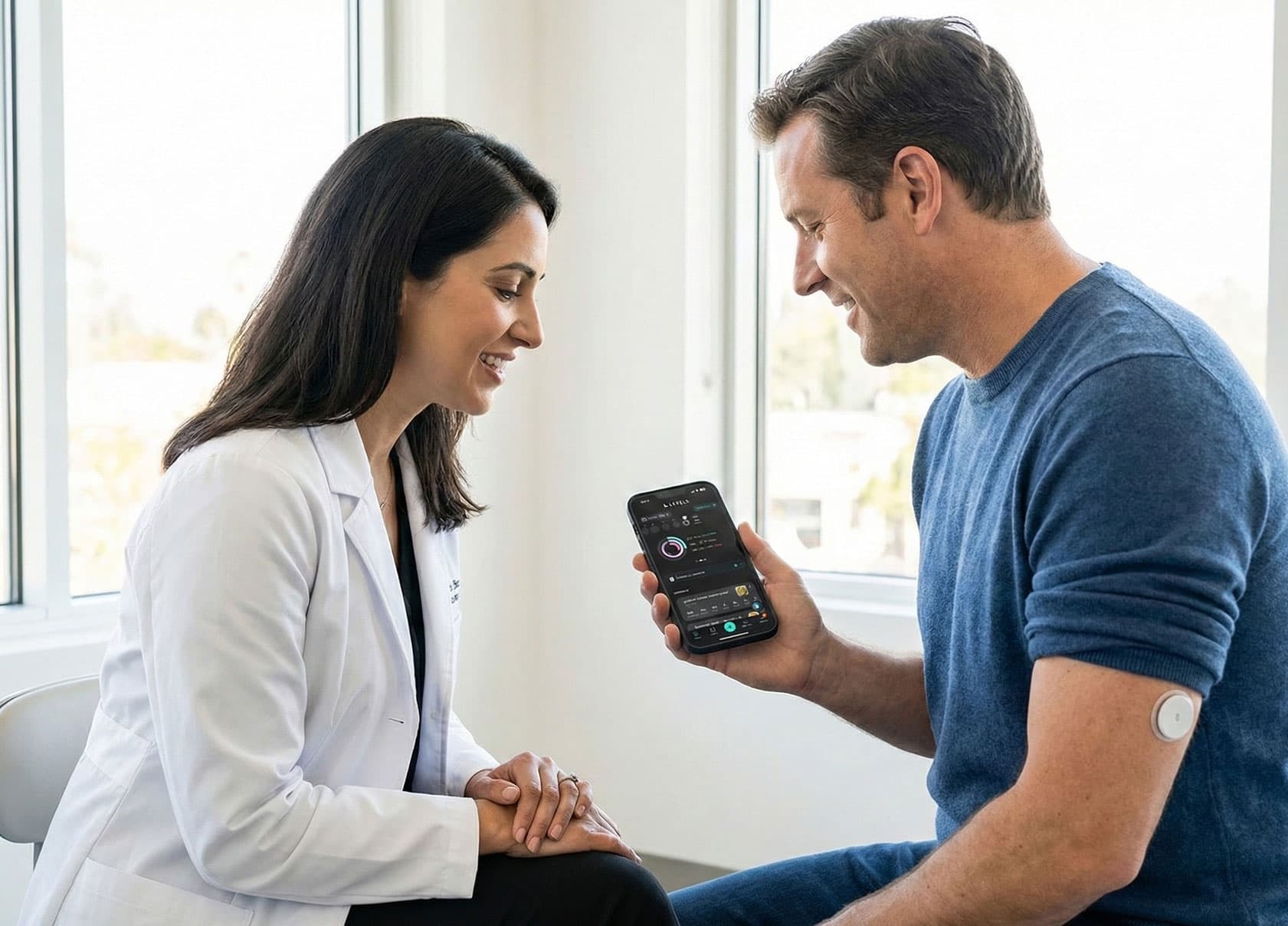
For clinicians (in Levels Pro):
- Review a single timeline per patient showing:
- Meals (photos, macros, timestamps)
- Continuous glucose monitoring trace
- Sleep duration and quality
- Activity (steps, workouts)
- Identify patterns instantly: "Evening glucose spikes are worse on nights following poor sleep" or "Post-meal walks consistently reduce glucose variability by 25%."
- Use AI-generated summaries to surface key insights before each session: "Sleep improved this week (average 7.5 hours vs. 6.2 hours last week). Glucose control improved in parallel. Main driver: better sleep hygiene."
When all signals live on one timeline, cause-and-effect relationships emerge without manual detective work.
How Levels unifies food, glucose, sleep, and activity
The Levels app and Levels Pro were built on the principle that metabolic health data must be unified to be useful:
Patient side (Levels app):
- Connects to the continuous glucose monitor for real-time glucose data.
- Captures food logs with photos, descriptions, or macros.
- Integrates with wearables (Apple Health, Google Fit) to pull sleep and activity automatically.
- Displays everything on one timeline with immediate feedback and pattern recognition.
Clinician side (Levels Pro):
- Shows the same unified timeline: meals, glucose, sleep, activity, and stress signals in one view.
- Enables multi-patient roster views so you can spot trends across your panel.
- Provides AI-powered summaries that identify which lifestyle factors are driving glucose patterns for each patient.
Because Levels consolidates all metabolic health signals in one system, clinicians spend sessions interpreting and guiding—not reconstructing timelines from disconnected apps.
What this enables: holistic metabolic coaching
When food logs are connected to glucose and lifestyle data on one timeline:
- Faster insights: Spot multi-variable patterns ("sleep + meal timing + activity") in minutes instead of hours.
- Personalized interventions: Move beyond generic advice ("eat less sugar") to specific, context-aware recommendations ("your glucose control improves when you prioritize 7+ hours of sleep and eat dinner before 7pm").
- Better patient engagement: Patients see how all the pieces fit together in real time, which makes behavior change feel achievable instead of overwhelming.
- Scalable programs: Unified timelines reduce pre-session prep time from 30 minutes per patient to 5 minutes, so you can manage larger panels without burning out.
From isolated logs to integrated insight
Food logs document meals. Integrated timelines explain metabolic responses. When food, continuous glucose monitoring, sleep, and activity live on the same timeline—both in the patient app and in the practitioner dashboard—patterns emerge that drive lasting behavior change and clinicians can coach with context instead of guesswork.
Levels is built for integrated metabolic health care: one app for patients to track everything in context, one dashboard (Levels Pro) for clinicians to review with full visibility, and a unified system that turns disconnected data into actionable insight.