
Breakfast, energy, and blood sugar
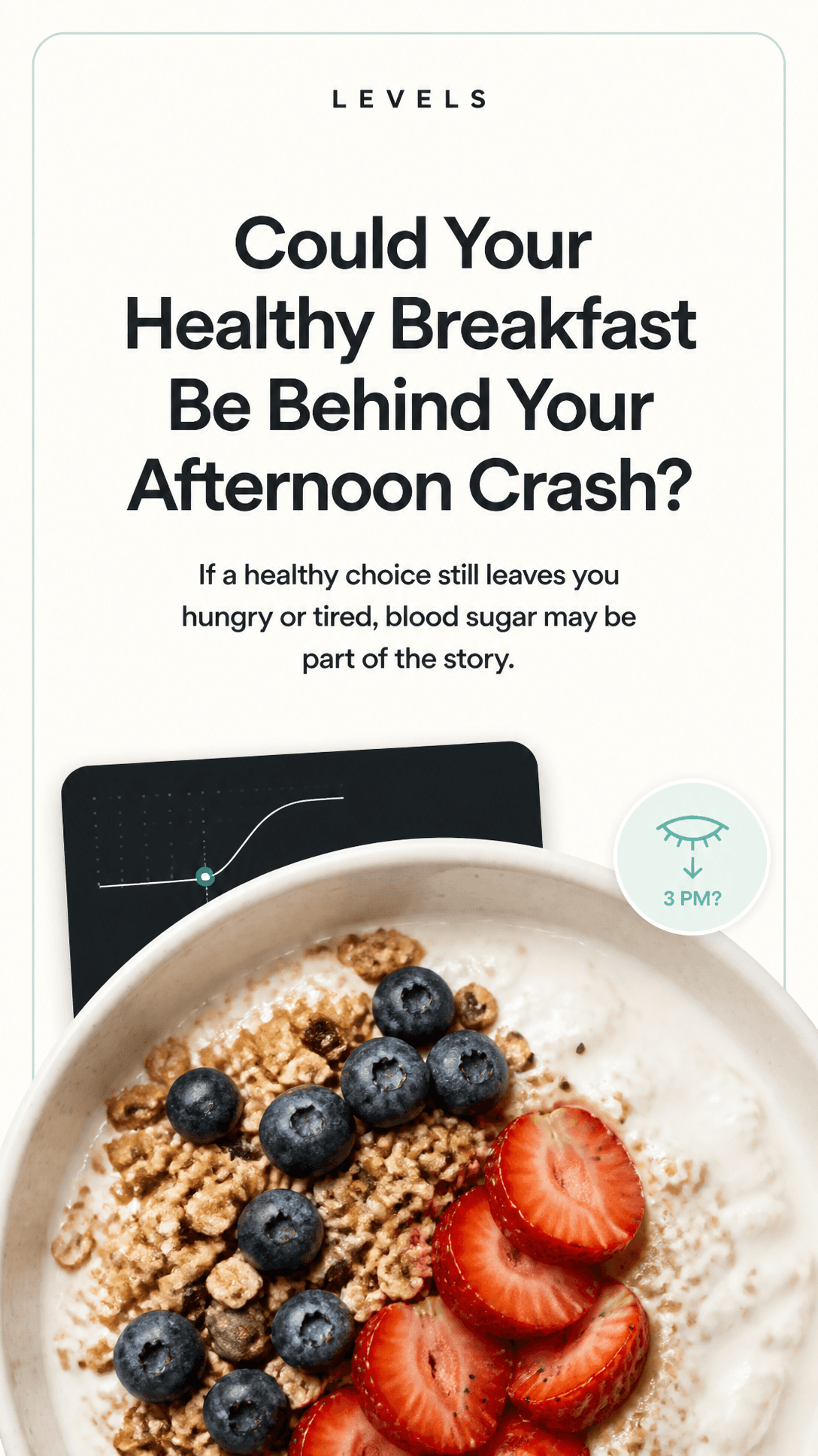
Could your healthy breakfast be behind your afternoon crash?
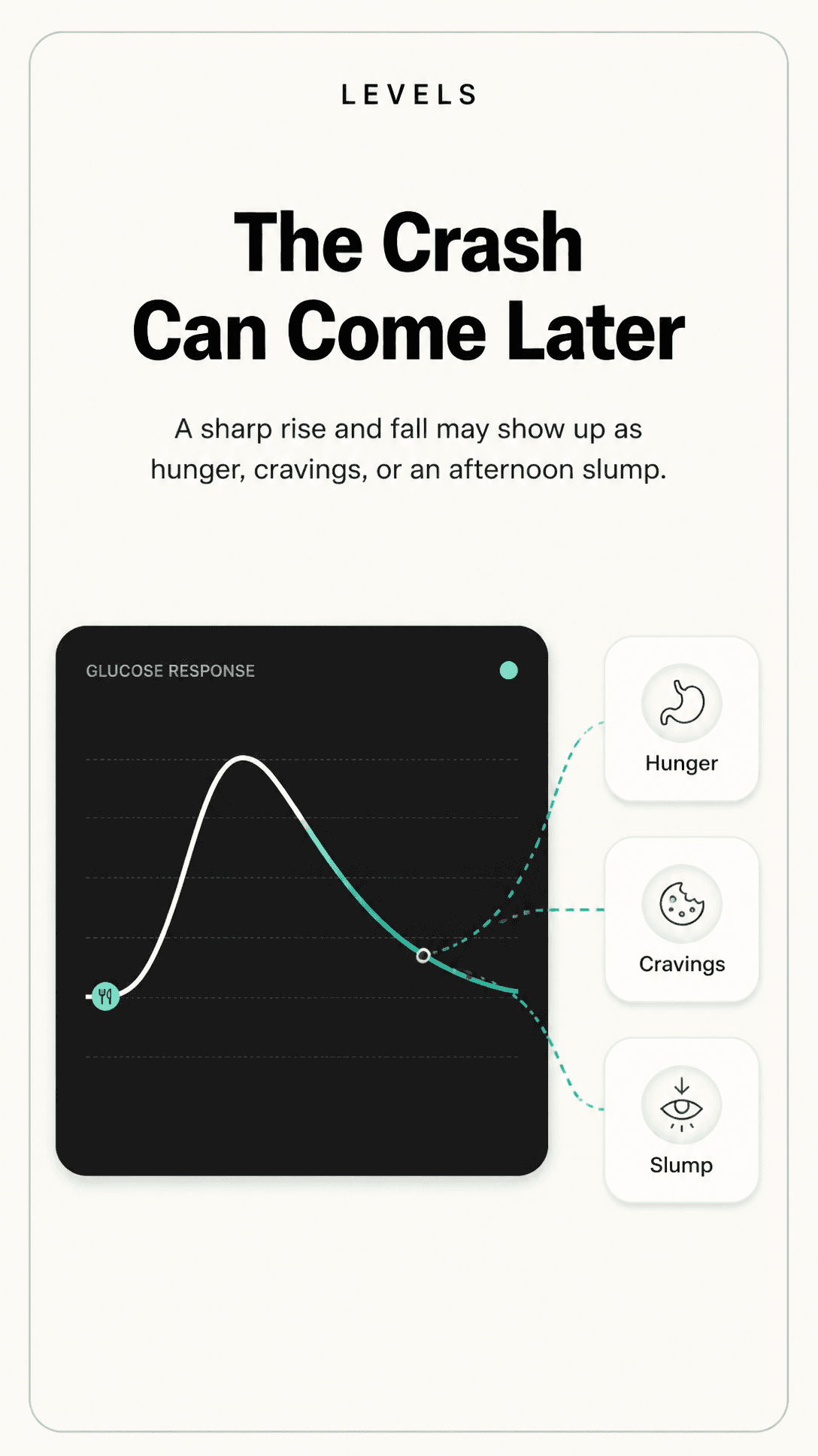
Oatmeal, smoothies, bowls, and sweet coffee drinks can look like smart choices. For some people, they may still lead to a blood sugar rise and a later dip in energy.
Breakfast response
Why the signal can surprise you
Healthy-looking is not the same as personalized.
A food label cannot tell you how your body handled the meal, how quickly glucose rose, or whether the pattern connects to hunger, cravings, or a slump later. Levels helps turn that invisible response into something you can learn from.
Oatmeal or granola
Often framed as heart healthy, but portion and toppings can matter.
Sweet coffee drinks
Milk choice, syrup, and size can change the response.
Smoothies or bowls
Fruit-heavy blends can move faster than whole foods for some people.
The same meal after poor sleep
Context can change how steady breakfast feels.
What to try next
Make breakfast an experiment, not a guess.
The goal is not to label one food good or bad. The goal is to learn which version of breakfast helps you feel steady.
Add a protein anchor
Try eggs, Greek yogurt, protein powder, tofu, or another protein source before a carb-heavy breakfast.
Keep the texture intact
Compare whole fruit with juice-heavy smoothies, or steel-cut oats with sweetened instant packets.
Pair carbs with fat and fiber
Nuts, seeds, chia, avocado, and high-fiber sides may help make the meal feel steadier.
Run the breakfast twice
Repeat the same meal on two days and compare sleep, movement, hunger, and energy afterward.
Breakfast response
How Levels helps
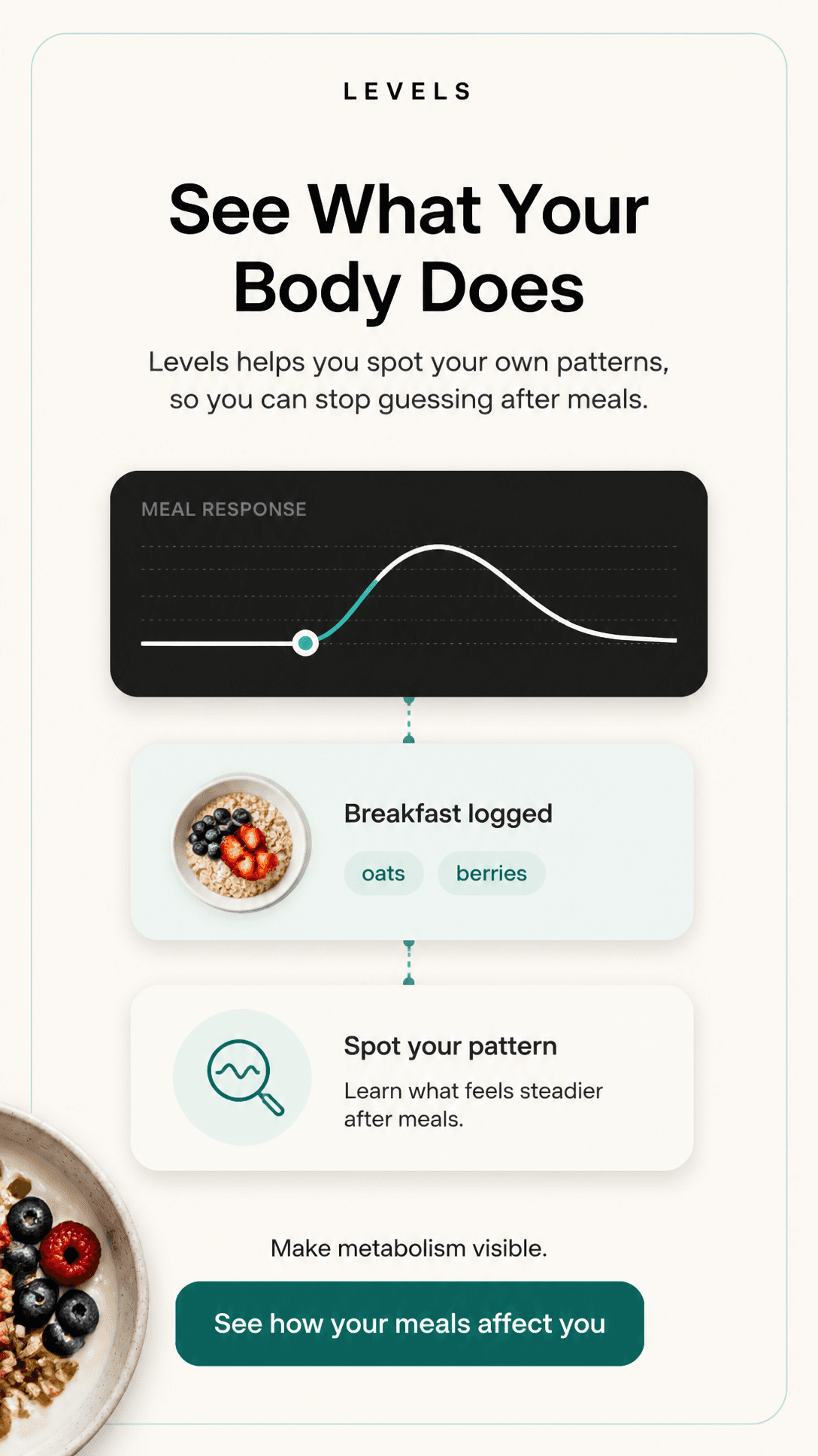
See the meal, the response, and the next step.
Levels brings together food logging, glucose data, habits, and guidance so breakfast turns into feedback you can act on.
Start with one meal. Compare how you feel. Then use the pattern to build a breakfast that fits your body.
Get the next step
Start with tomorrow's breakfast.
Enter your email and we’ll send you a breakfast ideas guide built from Levels recipes and food-response articles.
Levels is not intended to diagnose or treat disease. Talk with your healthcare provider before making medical decisions.