The 2026 Levels Guide to blood iron tests
Too much or too little of this mineral can lead to fatigue, brain fog, and impaired metabolic health, but you need specific screenings to assess your levels properly.

Iron is an essential mineral---it plays a role in everything from energy production to muscle metabolism, brain development, and immune function. Recent U.S. survey data suggest that about 14% of adults have absolute iron deficiency, and about 15% have functional iron deficiency (definitions vary). These deficiencies can lead to fatigue, shortness of breath, and anemia. Over the long run, it can raise the risk for infections and heart issues.
On the flipside, 16 million Americans have some degree of iron overload, which can also cause health issues. Too-high levels of iron are linked to metabolic problems, such as Type 2 diabetes, as well as conditions like cirrhosis. Researchers have also investigated links between iron dysregulation and neurodegenerative disease, but causality is not established.
See how Levels can help improve your iron.
- See ferritin, transferrin, and iron saturation in context
- Pair the Levels app with a Comprehensive retest panel that includes your full iron panel
- Reassess to see your progress
Get a free interpretation grounded in Levels biomarker expertise and informed by our dataset of over 1.5 billion health data points.
Upload your labs freeFree lab interpretation
Already have labs?
Get a free interpretation grounded in Levels biomarker expertise and informed by our dataset of over 1.5 billion health data points.
Upload your labs freeSymptoms of these iron imbalances are often vague, including fatigue, weakness, and dizziness. The best way to understand where your iron levels stand is a blood test. Read on to learn how our body uses iron, as well as the common tests to check your levels, how to interpret your results, and what to do if your markers come back out of range.
How is iron used in the body?
Your body can't produce iron. It must be absorbed from food or supplements through the small intestine and then released into the bloodstream. The hormone hepcidin, produced by the liver, regulates this process. When iron levels are high, hepcidin blocks absorption. When iron is low, or the body needs more (such as during growth or after blood loss), hepcidin drops, allowing more iron to be absorbed.
The type of iron you consume, and other dietary factors, influence absorption. Our bodies absorb animal-based heme iron more easily than plant-based non-heme iron, and while vitamin C boosts iron absorption, calcium, tea, and certain medications can inhibit it.
Once iron reaches the bloodstream, it binds to a protein called transferrin, which transports it throughout the body to where it's needed. Most iron is delivered to bone marrow, where it's used to make hemoglobin. This protein in red blood cells transports oxygen from the lungs to the rest of the body. A smaller amount of iron goes to other cells that use the mineral for essential functions like energy production and DNA synthesis.
Any extra iron is mainly stored in a protein called ferritin, which is found in the liver, spleen, and bone marrow. Having high ferritin levels often indicates that your body is storing excess iron. When iron levels are too high, it can accumulate in organs like the heart, pancreas, and joints, potentially leading to serious damage like arthritis or liver problems. Iron overload can promote oxidative stress and organ damage, which can contribute to metabolic complications, including diabetes.
When your body is low in iron, it responds by reducing hepcidin. This allows the small intestine to absorb more iron from food. It also signals ferritin to release its stored iron into the bloodstream. But if your iron stores are already depleted, there's not enough iron to release. The result is iron-deficiency anemia.
Tests to help you understand your body's iron status
To fully comprehend your iron levels, you must look at more than just how much iron is in your blood. Other supporting markers lend insight into your iron stores, how well your body transports iron, and your body's iron-carrying capacity. This comprehensive picture can reveal an iron deficiency even if your blood iron levels appear normal.
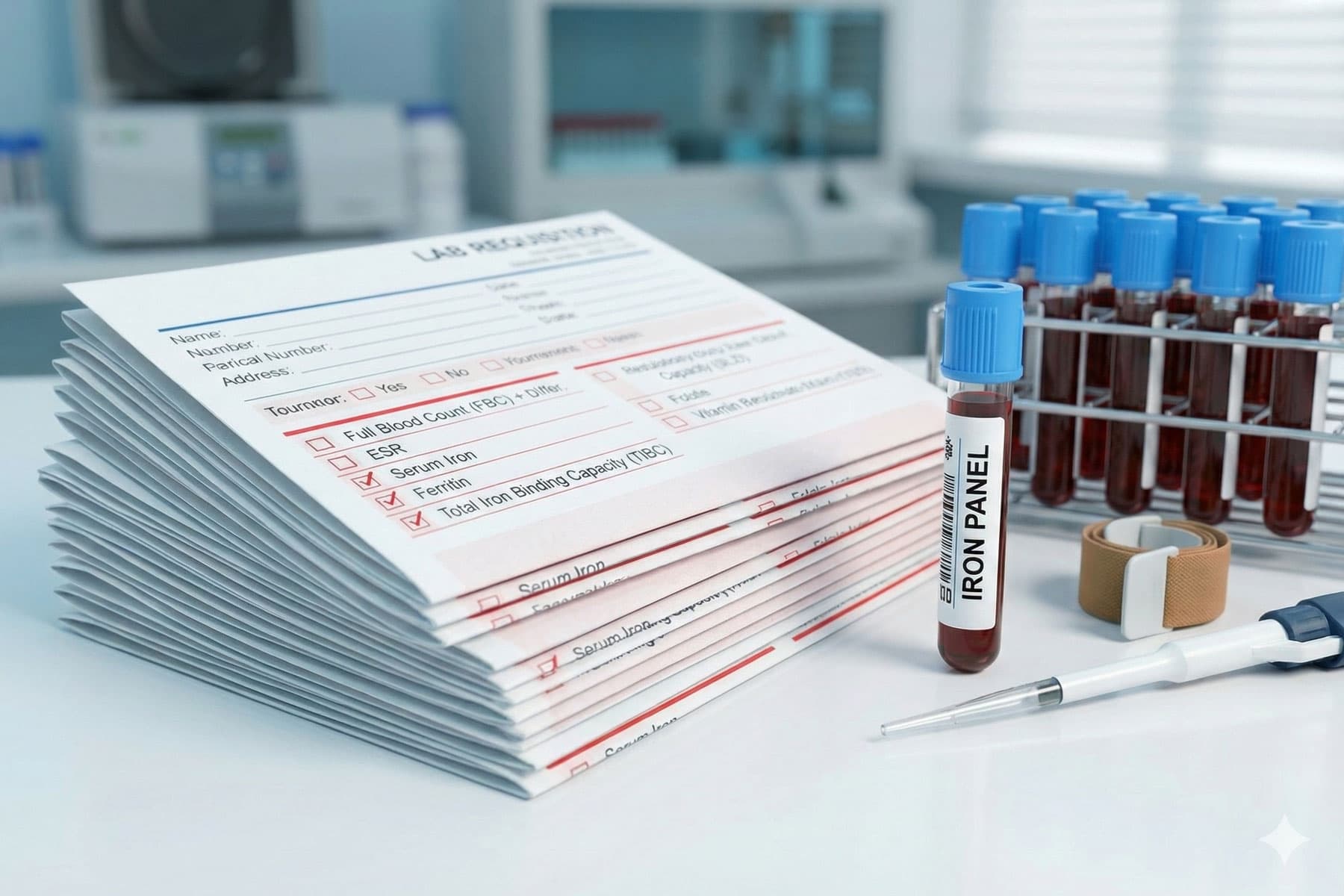
Most doctors order the panel of blood work below to check iron. Many providers recommend testing in the morning, when iron levels tend to be highest. Certain medications and foods can interfere with test results, so you may be told to fast for 8 to 12 hours before the test and avoid certain medications and supplements.
Here's what you need to know about iron tests.
Serum iron
This test simply measures the amount of iron circulating in your blood at a specific moment. However, serum iron naturally rises and falls throughout the day with your circadian rhythm, and is influenced by diet, medications, and conditions like pregnancy. This makes it a less reliable marker of iron status on its own. Hence, most providers order additional tests in this list to more accurately determine your iron levels and any underlying conditions.
The normal range for serum iron test differs by sex:
- Women: 35 to 145 micrograms per deciliter (mcg/dL)
- Men: 50 to 150 mcg/dL
A low serum iron result may indicate iron-deficient anemia, a blood disorder where insufficient iron leads to a lack of healthy red blood cells. You may feel exhausted, think sluggishly, and get sick more often. Your heart may have to work harder to pump enough oxygen-rich red blood cells throughout the body. This can set the stage for heart murmurs and even heart failure.
You can also have iron deficiency without anemia due to chronic blood loss, iron-binding medicines like proton pump inhibitors, or any condition that affects iron absorption (such as celiac disease and Crohn's disease). This also may also lead to fatigue, weakness, and shortness of breath, and raise your risk for anemia.
A high serum iron test indicates that you have too much iron circulating in your blood at the time of the test. A temporary change---such as a recent sickness, heavy period, or an iron supplement---may swing your serum iron levels out of the normal range. Your doctor may want to retest your levels to see if they remain elevated.
Ferritin
Ferritin protein levels correlate with your body's iron stores. Compared to serum iron, which fluctuates, ferritin provides a more stable indicator of your overall iron status, making it particularly useful for detecting iron deficiency or overload over time.
The normal range for ferritin is:
- 30 to 300 nanograms per milliliter (ng/mL)
Low ferritin levels suggest low iron stores and iron-deficiency anemia. If you also have a normal serum iron test, you may be in the early stages of anemia: Your body has used most of its iron reserves but still has enough to circulate in the body.
A high ferritin result may be the result of hemochromatosis (when your body absorbs and stores excess iron), liver disease, and other conditions that lead to too much iron in the blood. Chronic inflammation or inflammatory diseases, such as those caused by obesity or certain cancers, can also raise ferritin as part of a protective response: Your body stores iron to prevent microbes and other invaders from using it to grow. As a result, you can have high ferritin with a normal serum iron level.
Transferrin
Transferrin is the primary protein that binds to iron and transports it through the body. This test can help doctors distinguish the underlying cause of abnormal iron levels.
The normal range for transferrin is:
- 250 to 450 mcg/dL
Low transferrin results are best interpreted along with serum iron and ferritin levels:
- A low transferrin result combined with high serum iron and/or ferritin levels can suggest an iron overload. You have more iron than transferrin to transport it.
- Low transferrin along with low serum iron and/or ferritin often means there's an underlying problem with transferrin production. Your liver may be underproducing transferrin, or you may have a protein deficiency (remember, transferrin is a protein). This can also signal a chronic condition, such as cancer or an autoimmune disease, which increases hepcidin levels. This hormone blocks iron absorption and puts it into storage, reducing the amount of transferrin needed to transport it.
On the flipside, high transferrin may suggest iron-deficiency anemia. When the body lacks serum and stored iron, the liver produces more transferrin to increase the transport of what's available.
Total iron-binding capacity (TIBC)
TIBC measures the maximum amount of iron that iron-binding blood proteins---mainly transferrin---can carry. If transferrin is the fleet of trucks that move iron, TIBC is the total cargo space across all of them.
Because each transferrin molecule has a fixed number of binding sites, TIBC usually tracks with transferrin levels. But they don't always move in lockstep: in liver disease, malnutrition, or inflammation, the body produces fewer transferrin molecules, which lowers TIBC even if iron itself isn't elevated. In other words, a low TIBC doesn't necessarily mean the trucks are overloaded---it can mean there just aren't many trucks on the road.
However, since TIBC closely correlates with transferrin levels, doctors sometimes order only one of these tests.
TIBC differs from unsaturated iron-binding capacity (UIBC), which measures unused transferrin---that is, the part that isn't currently bound to iron.
The normal range for TIBC is:
- 250 to 450 micrograms per deciliter (mcg/dL)
A low TIBC test needs to be interpreted with serum iron test results:
- Low TIBC with high blood iron levels suggests less transferrin is available to transport iron, so you have an iron overload.
- Low TIBC and low blood iron may be a sign of infection, inflammation, liver problems, or poor nutrition.
A high TIBC means your body has transferrin that's waiting to bind with iron. This usually means you have low iron levels and is a sign of iron-deficiency anemia.
Serum transferrin saturation (STS)
Serum transferrin saturation shows how much of your iron-carrying capacity is actually being used. While TIBC tells you the size of the fleet (how much iron could be carried), STS tells you how full those trucks are. It's calculated by dividing serum iron by TIBC, then multiplying by 100.
The normal range for STS is:
- 20 to 50%
Low STS: Few of the available trucks are loaded. This usually means there isn't enough iron around, as in iron-deficiency anemia, chronic blood loss, or poor absorption (celiac disease, GI surgery, inflammatory bowel disease). Inflammation can also lower STS because iron is being sequestered away from transferrin.
High STS: Most of the trucks are already full. This points toward iron overload, which can happen with too many supplements or transfusions, hereditary hemochromatosis, or some liver diseases.
What's next if your iron levels are too high or too low?
Discuss any test results with your healthcare provider, who can comprehensively interpret your biomarkers, considering your age, symptoms, and health history, as well as any additional tests and the lab used. Your doctor may make a diagnosis or order further tests first. If repeat blood tests confirm abnormal results, your doctor will work with you to determine the underlying cause and prescribe an appropriate treatment plan.
Blood test results that indicate low iron may mean you have:
- Iron-deficiency anemia: This condition is often treated with iron supplements and eating more iron-rich foods, such as meat, seafood, beans, and dark leafy greens. In more serious cases, it may require intravenous iron. Some people only need one infusion, while others require one a month for up to six months.
- Chronic disease anemia: Inflammatory diseases, kidney problems, and certain cancers can interfere with your ability to absorb iron. Your doctors will treat the underlying issue. You may need iron supplements or, in severe cases, a blood transfusion to raise iron levels.
Blood test results that indicate high iron could be a sign of:
- Hereditary hemochromatosis: This genetic disorder causes you to absorb too much iron from the foods you eat. It's usually treated with phlebotomy, in which blood is regularly removed (similar to donating blood) to clear excess iron. If phlebotomy isn't an option because of other health issues, such as a heart complication, your doctor may recommend iron chelation therapy. These oral medicines bind to and remove iron through your urine.
- Excessive iron intake: You may be getting too much from supplements or iron-rich foods. You can work with your doctor or a registered dietitian to determine how to scale back your consumption.
- Liver disease: Liver damage may impair transferrin production and affect iron absorption. Along with reducing dietary iron intake, you may need phlebotomy or iron chelation therapy.

Learn more about your iron levels
Levels pairs real-time glucose data and comprehensive lab testing with clinician analysis and personalized support—everything you need to turn insights into real health improvements. Click here to get started with Levels.