The 2026 Levels Guide to microplastics and their impact on metabolic health
Preliminary research suggests that the particles may increase inflammation and oxidative stress. They’re impossible to avoid, but minimizing exposure may help.


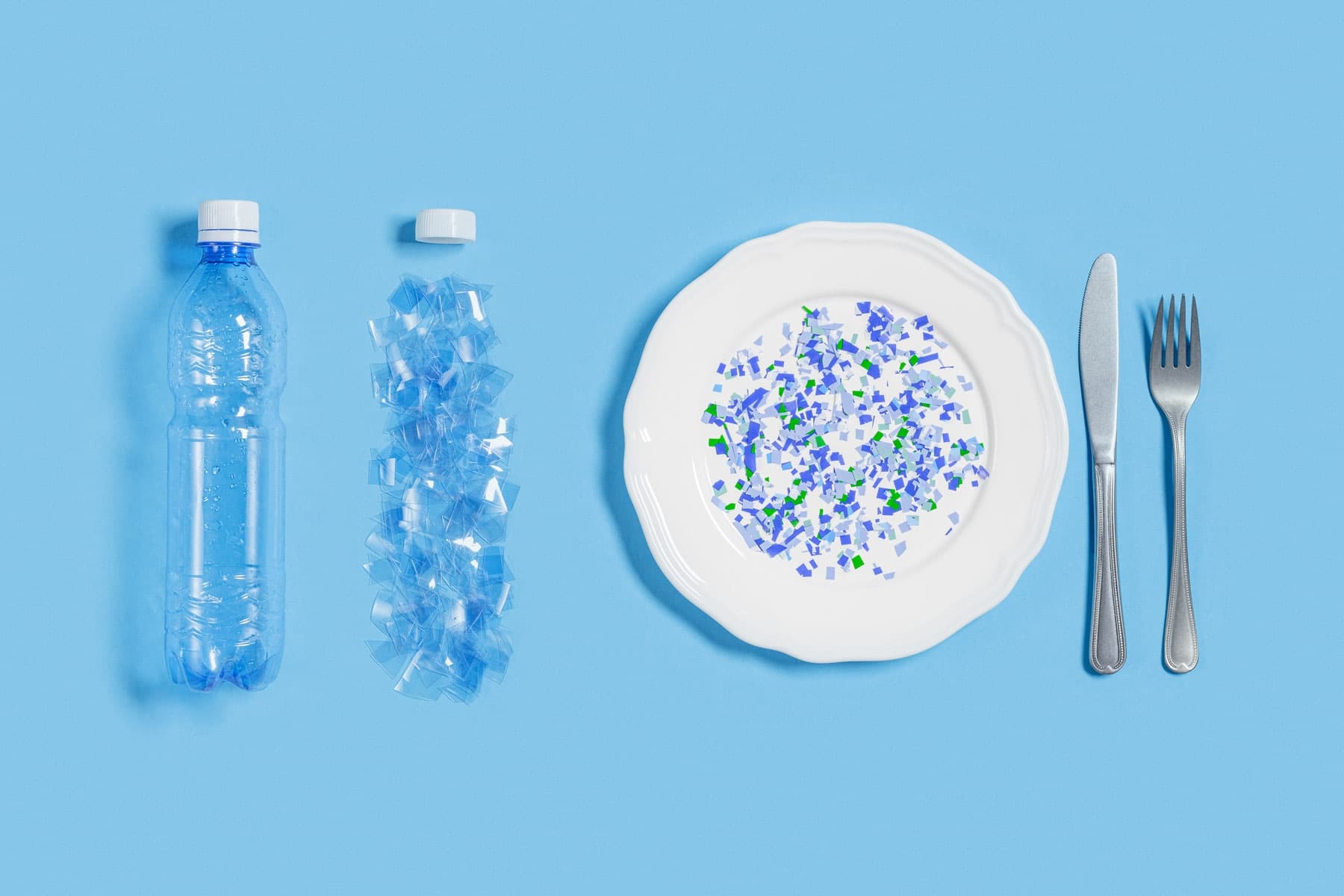
You'd likely never put a credit card on a plate and say, "Dinner's served!" Yet, according to widespread media reports of an analysis by the University of Newcastle in Australia, most of us unknowingly consume the equivalent of up to a credit card's worth of plastic a week.
Though other researchers have questioned the University of Newcastle's data, they broadly agree that humans ingest these tiny plastic particles in increasing amounts, mainly through the food we eat, the water we drink, and the air we inhale.
Get more deep-dives like this delivered to your inbox
Sign up to make sure you see our latest articles, as well as recipes and discounts
The overall impact of microplastics on human health is not entirely clear. The research on the long-term health effects of microplastics is just beginning to emerge. Experiments involving animals or cells in the lab suggest that the potential effects of microplastics may include an increase in inflammation and oxidative stress throughout the body. However, it's not known whether the human body reacts to the ingestion of microplastics in the same way as animals do. Nor do scientists know whether there's a "safe" dose. Here's what you need to know about microplastics, their health impacts, and how to reduce your exposure.
What are microplastics?
When most people think of plastic, they think of macroplastics like grocery bags and water bottles---things they can easily see and touch. These bigger objects break down into smaller and smaller bits, often collectively called "microplastics." There are, in fact, three distinct categories of tiny plastics, but the sizes that define each category vary. Here's a general range:
- Mesoplastic: 1-2 millimeters (.19 inches) to 2.5 centimeters (.98 inches)
- Microplastic: 1 micrometer (.000039 inches) to 4.9 millimeters (.19 inches)
- Nanoplastic: <1 micrometer (.000039 inches)
You can see mesoplastics and some microplastics. Even if you accidentally ingested these larger particles, they are too large to seep through the intestinal wall, so they'd likely pass right through you. It's the much smaller plastic particles that concern many of today's scientists. Nanoplastics are one-seventieth the size of one human hair or smaller, and too small to see without a microscope. These microscopic pieces of plastic can sneak past the lungs and digestive tract and into human cells.
Where do microplastics come from?
Some of these smaller plastics start as grocery bags, straws, cutlery, water bottles, or food packaging. Once discarded, these items get worn down by the sun, water, friction, and heat. The plastic breaks apart and sheds, eventually disintegrating into smaller and smaller pieces.
Other microplastics come from a wide variety of products that most people wouldn't consider plastic. There are tiny amounts of plastic in tea bags, paint, lipstick, sunblock, clothing made from synthetic fibers (polyester, nylon, acrylic, to name a few), personal care products.%20Toothpaste), medications, diapers, and insect spray, among countless other products.
Sometimes, we ingest them directly. For example, from drinking water or food. In many other cases, they wash off our bodies or clothing during the rinse cycle, eventually ending up in our food and water. What goes down the drain eventually ends up in a sewage treatment plant. That water then flows into local waterways, notes the National Oceanic and Atmospheric Administration, and enters the food chain. In waterways, fish swallow these microplastic particles, which accumulate in various tissues in marine organisms, some of which we eventually consume. On land, farm animals gulp down microplastics in drinking water and ingest them from munching on grass grown in plastic-contaminated soil or plastic-contaminated animal feed. When we eat the flesh from these animals, the plastics end up inside us.
Plastics can also waft into the air during garbage incineration, which accounts for roughly 12% of plastic disposal. When you drive, you leave an invisible stream of tire dust in the air behind you. This plastic-containing dust can then rain down onto the ground, seeping into farm soil and further contaminating bodies of water.
No wonder tiny and microscopic plastic particles have been detected in natural environments everywhere, from the snow in Antarctica to the Great Lakes to the soil.) that nourishes and fertilizes crops.
Microplastics and the food chain
Pesticides can be encapsulated in microplastics and interact with them. Even organic produce isn't immune, especially if a farmer has fertilized crops with sewage sludge, the semi-solid muck left over after a sewage treatment plant filters and treats the plastic-contaminated water from our toilets, dishwashers, washing machines, and sinks. These plastic bits can persist for years. One study, for example, found microplastics remained in the soil for three decades after the final application of sewage sludge.
Research conflicts regarding whether plastic from soil can make its way into the plants we eat. Researchers hypothesized in some studies that plants sucked soil plastics up through their roots and into their cells. When researchers purchased produce from several supermarkets and thoroughly washed and peeled it, these plastics remained. However, other research seems to indicate that at least some sizes of soil-based plastics are too large to infiltrate plants' roots.
The plastic pollution of our food supply is widespread. Researchers analyzed 16 different animal and plant proteins---including seafood, chicken, steak, pork chops, and tofu---available for sale at two supermarkets and a grocer in Portland, Oregon. They found microplastics in 88 percent of the tested samples. One sirloin steak contained a stunning 91 rubber particles that were 45 micrometers (.00177 inches) or larger. Other researchers have detected microplastics in beer, honey, table salt, and milk. In total, it's thought that the average person eats 39,000 to 52,000 plastic particles per year.
Even if you found a way to avoid microplastics from dietary exposure, the particles could enter your body in other ways. For example, microplastics are present in household dust, so you likely inhale some every time you breathe---estimates vary, but could be 97-170 airborne microplastics daily. Finally, though this is speculative, nanoplastics may also seep through the skin when you apply leave-on skincare products such as sunscreen and lotion.
What are the impacts of microplastics on the body?
Once inside our bodies, micro- and nanoplastics seep into our cells. Researchers have detected these plastics in blood, lung tissue, stool, placenta, breast milk, the heart, brain, and more. Once these plastics have made their way to these tissues, they largely stay put, further accumulating over time.
It's not clear whether or how much this plastic accumulation affects health. According to the Food and Drug Administration and World Health Organization, we may not consume enough microplastics from food to influence health for the worse. There's a concept in toxicology known as "the dose makes the poison." According to this principle, too much of nearly anything, even water, can eventually become toxic. Conversely, in minuscule amounts, many of the substances we think of as toxic could potentially be rendered harmless. For example, apple seeds contain a chemical that breaks down into cyanide, a poison. However, if you accidentally swallow one seed, you won't ingest enough cyanide to harm your health. In the case of microplastics, says the FDA, current research has yet to link typical human exposure to plastic to adverse effects on health.
Scientific research on the physical effects of microplastics
A growing number of scientists have been sounding the alarm, saying that there's enough data from animal and cell culture studies to warrant concern, especially because some researchers hypothesize that they accumulate in the body, especially the brain and the liver, over time. According to this body of research, micro- and nanoplastics may disturb cellular chemistry and biological processes, increasing the levels of reactive oxygen species or free radicals, unstable molecules that tend to damage other cells, DNA, proteins, and fats. Some researchers think that these changes may increase the risk of some cancers.
In addition, plastic's sharp edges may scrape or poke holes into cell membranes, damaging cells and tissues. Some chemicals in plastics---such as phthalates and bisphenol A (BPA)---may mimic and alter the effectiveness of hormones like estrogen.
Collectively, these and other harmful effects may increase the risk of a cascade of health issues, ranging from infertility and cancer to heart disease and obesity. Finally, some types of black plastic products are made from recycled materials that, according to one study, may contain small amounts of flame retardants, which, like BPA, may disrupt the endocrine system.
Research is only beginning to put those theories to the test. Most of what scientists know comes from work done in animals, such as zebrafish and mice, and in cells grown in the lab. This preliminary non-human research indicates that the presence of micro- and nanoplastics may lead to the following adverse effects throughout the body:
- In the gut, plastics may inflame intestinal tissue, damage the intestinal barrier, and alter the gut microbiome. This potentially raises the risk for metabolic disorders such as Type 2 diabetes and colon cancer.
- In the lungs, they may lead to long-term inflammation, fibrosis, and possibly chronic obstructive pulmonary disease (COPD).
- In blood vessels, microplastics may increase the risk of blood clots
- In brains, microplastics inflame tissues and may be associated with the development of dementia.
- Microplastics are made of chemicals that have been shown to be obesogenic, meaning they can drive obesity mechanistically.
All of this said, it's unclear how the above results translate to human health. Animal research uses microplastic doses much higher than what a typical human is thought to ingest. For human research, epidemiological studies that follow people over time are expensive and challenging, especially since humans don't know how much plastic they eat. Microplastics are also a relatively new problem, with plastic production rising about 300-fold since the 1950s.
Because of these issues, much of the human research has looked at people prone to chronic exposure to microplastics through their work. For example, one 2008 study determined that workers at a plastics plant were significantly more likely to die prematurely than the general population. They were also more likely to be diagnosed with cancer and heart disease.
Finally, when researchers removed plaque from the arteries of 257 people diagnosed with carotid artery disease, they found polyethylene, a common plastic, in roughly half of the study participants. (The researchers looked for clues in patients' homes to understand why some had so much more plastic in their carotids than others. However, they came up empty.) Over three years, these people were 4.5 times more likely to experience a heart attack, stroke, or death than people who didn't have detectable polyethylene in their artery plaque.
Another study determined that people who'd experienced strokes were more likely to have plastic plaque buildup in their carotids than were people who hadn't had a stroke. The preliminary results were presented at an American Heart Association conference in April 2025 and have not yet undergone peer review or been published by a journal.
"The use of plastics is likely detrimental from an individual and societal perspective," says Sanjay Rajagopalan, MD, director of the Cardiovascular Research Institute at Case Western Reserve University and one of the authors of one of the studies mentioned previously. "The societal use is damning."
How can I limit my microplastic exposure?
Since microplastics are just about everywhere---including your food and the air you breathe---you can't altogether avoid them. A more effective solution would take place on the societal level to reduce the amount of microplastics in waterways, soil, and food. For example, Dr. Rajagopalan recommends banning single-use plastics.
Until then, Dr. Rajagopalan says taking individual steps to reduce microplastic exposure may be as important as consuming a heart-healthy diet and exercising. Here, you'll find simple swaps and lifestyle habits that can reduce microplastic exposure.
1. Remove food from plastic packaging before heating
Research has found that heating releases more plastic into food than refrigeration or room-temperature storage. For example, just three minutes of microwaving can cause nanoplastic particles to leach into food. So, if you enjoy frozen dinners and other convenience foods, remove them from their plastic tray or packaging before cooking. When microwaving, for example, place the food on a dinner plate or microwave-safe glass container. The same applies to "boil in a bag" and "steam in a bag" products.
2. Filter tap water
The typical water filtration device can remove at least some of the plastics from your tap water. However, some water filters work more effectively than others. You want a filter with a physical treatment barrier, such as a membrane or microfilter, to trap particles as small as 1 micron. Activated carbon, ion exchange, and reverse osmosis systems don't work as effectively, according to the results of one study. Look for a device that's NSF American National Standards Institute-certified (NSF/ANSI). Although the standards don't attest to microplastics specifically, it does mean that the filter has been third-party tested in a lab to filter the sizes it claims to.
Additionally, filtered water is a better bet than bottled. The plastic from the bottle and its cap can seep into the water, especially if left out in the heat. According to one study, the average bottle of water contains a quarter of a million nanoplastic particles---much more than the amount typically found in tap water. So, when you're going to be away from home, to avoid microplastics in drinking water as much as possible, tote filtered water in a glass or steel bottle rather than purchasing bottled water.
3. Eat more minimally processed whole foods
Minimally processed whole plant foods---like fruits, veggies, nuts, seeds, and legumes---are much less likely to be packaged in plastic or contaminated with microplastics during manufacturing. In research, highly processed animal proteins---breaded shrimp, for example---have tested far higher for plastic contamination than more minimally processed options like chicken breast.
4. Avoid plastic-coated dishwasher and laundry detergent pods
The plastic shells degrade and mix into the water. Even if they don't get on your dishes, they can eventually wash into the groundwater, adding to microplastic pollution.
5. Replace plastic cooking items, especially your cutting board
As the sharp end of your knife whacks against a polypropylene or polyethylene cutting board, it releases tiny plastic fragments that hitch a ride onto whatever food you're chopping, research shows. For example, chopping carrots on a plastic cutting board releases up to 15 microplastics per cut.
Of course, some wood cutting boards have their issues, including bacteria contamination. For those reasons, you may want to choose a hardwood board, such as teak or maple, which is less likely to harbor bacteria after cleaning.
For stirring spoons, spatulas, and other utensils, choose wood, bamboo, steel, silicone, or other non-plastic materials. This is especially important if the utensil frequently comes into contact with heat, which can break down plastic, causing it to leach into food.
Depending on your budget and preferences, you could make many more changes. These include:
- Swapping those plastic-laced tea bags for loose-leaf
- Choosing personal care products made from natural ingredients (like avocado oil, shea butter, and zinc oxide)
- Buying furniture, curtains, sheets, and clothing made from silk, cotton, leather, hemp, and other natural fibers
However, those swaps can also be pricey. So do what feels right for you, and consider making small changes over time rather than overhauling everything you eat, wear, and cook with all at once.

Take control of your health with expert guidance
Levels pairs real-time glucose data and comprehensive lab testing with clinician analysis and personalized support—everything you need to turn insights into real health improvements. Click here to get started with Levels.