The 2026 Levels Guide to allulose and its effects in your body
This zero-calorie natural sweetener is getting buzz for burning fat and lowering blood sugar responses. But should it be a go-to sugar swap?


You know that reducing added sugars is key for metabolic health and that artificial sweetenersmay not be any better. But it's understandable to want to enjoy cookies, chocolate, and other sweets once in a while as part of an overall balanced, healthy diet. So you may have heard about the natural sweetener allulose. It's getting buzz for adding a sweet taste to packaged foods like candy, cereal, and sauces, and for potentially having metabolic health benefits, especially when it comes to blood sugar regulation.
If you're thinking about adding allulose to your diet, read on to learn what it is, how it impacts blood sugar levels and belly fat, and its potential downsides.
Get more deep-dives like this delivered to your inbox
Sign up to make sure you see our latest articles, as well as recipes and discounts
What is allulose?
Allulose is a "rare" sugar because it's found naturally in only a handful of sweet foods, such as figs, raisins, molasses, and "natural sugars" like brown sugar and maple syrup. It's what's called a "stereoisomer" of fructose, the sugar found in many fruits and vegetables. This means both sweeteners have the same chemical formula, but the arrangements of their atoms differ slightly.
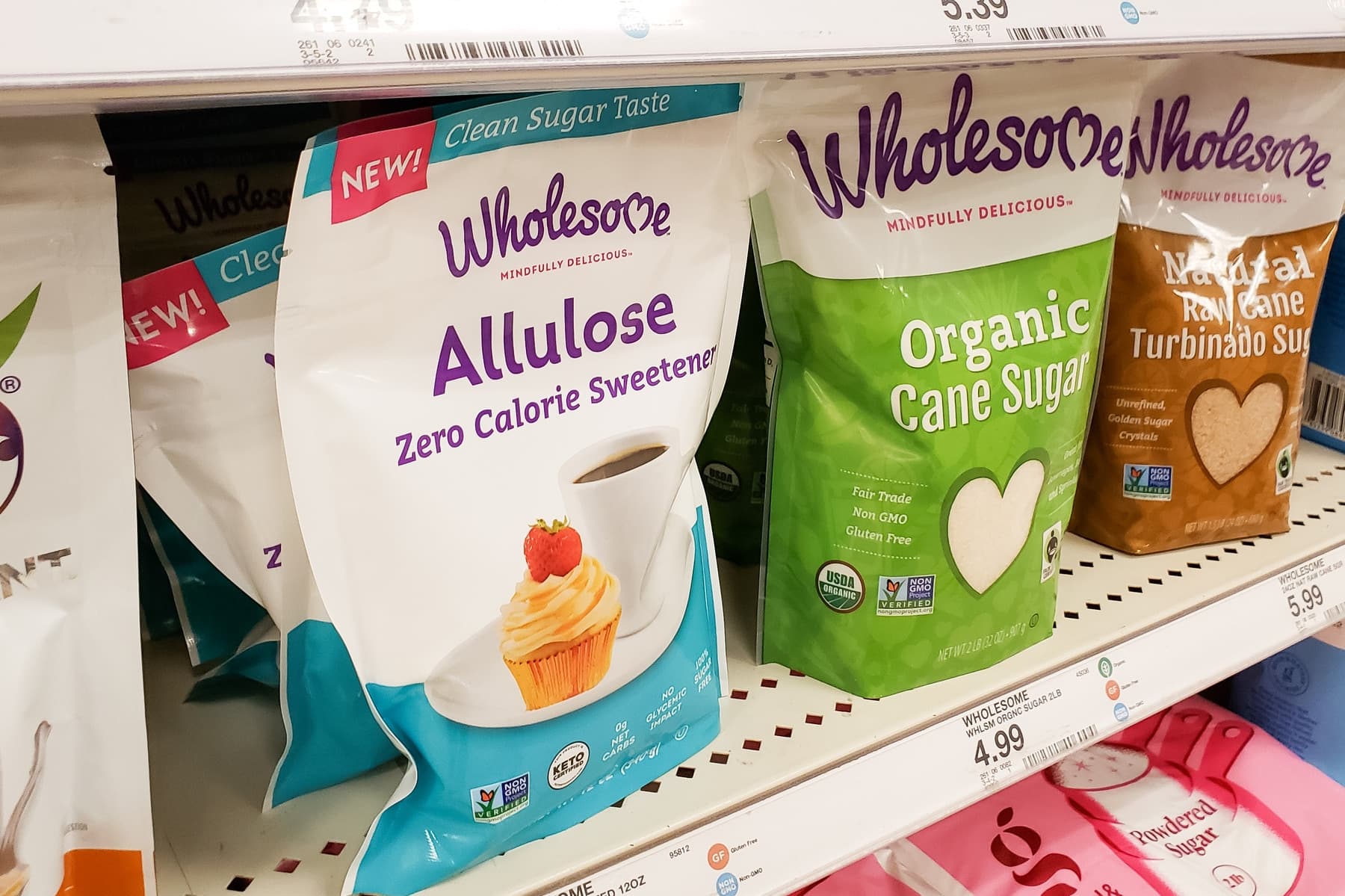
This small change makes a big impact: Per teaspoon, allulose contains 1.6 calories, about four grams of carbohydrates, and zero net carbs because of the way it's metabolized in the body. The same serving of granulated sugar (also known as table sugar) contains 16 calories, four grams of carbohydrates, and four net carbs. Allulose is 70 percent as sweet as cane sugar and doesn't have the bitter aftertaste that turns many people away from stevia, another natural alternative sweetener.
What does allulose do in the body?
Unlike the simple sugars glucose and fructose, allulose is not metabolized by the body, and doesn't contribute to elevated postprandial blood glucose levels. About 70 percent is taken up into the bloodstream in the small intestine and excreted unchanged in urine within 24 hours, while the rest passes through the large intestine and is eliminated within 48 hours.
What are allulose's effects on blood sugar levels?
When you eat foods containing simple sugars or carbohydrates, your body quickly breaks these down into glucose, which raises blood sugar. As a result, your body releases insulin to help transport that glucose from your blood to your cells, where it can be used for energy. Allulose, by contrast, doesn't cause blood sugar spikes, which keeps insulin levels at bay, and may therefore help improve insulin sensitivity.
Although scientists are still figuring out how allulose lowers blood sugar and helps with overall glycemic control, preliminary research suggests that the sweetener may improve insulin sensitivity by helping a liver enzyme called glucokinase work more effectively. Another theory is that allulose interferes with certain enzymes that break down glucose, so you don't digest as many starches when you pair the sweetener with starches. And a third hypothesis is that allulose may reduce blood sugar response by inhibiting alpha-glucosidase enzymes, which play a role in breaking down carbohydrates into glucose for absorption into the bloodstream. While the science on allulose and blood glucose regulation is promising, more large-scale human studies are needed.
Does allulose help burn belly fat?
More research is focusing on how allulose may speed fat loss. Small, preliminary studies of healthy adults suggest that it may increase fat oxidation, decrease body fat, and reduce abdominal fat. Case in point: In a study of 121 subjects, researchers found that those who took 14 grams of allulose a day had a statistically significant decrease in body mass index (BMI), abdominal, and subcutaneous fat compared to those who took a placebo, though absolute losses were small (around .75% of body fat).
Even small amounts of allulose may speed up fat burn, according to a small study of 13 healthy people. Those who consumed 5 grams of allulose had greater fat oxidation compared to those who took 10 milligrams of the artificial sweetener aspartame. (For context, a keto ice cream might have 5-15g of allulose; a diet soda would have 180mg of aspartame.) The researchers suspect that allulose reduces the activity of certain liver enzymes that create fat. At the same time, allulose may enhance fat burn by enhancing the liver enzyme glucokinase, which facilitates glycogen metabolism. What's more, animal research finds that allulose may suppress fat absorption in the small intestine so that it is excreted instead.
In addition to allulose's effect on fat burn, the sweetener may increase hormones that control feelings of hunger and satiety. Allulose is shown to boost the production of GLP-1 (glucagon-like peptide-1), PYY (peptide YY), and CCK (cholecystokinin). As you may know from the popularity of Ozempic and other GLP-1 agonist medicines, these hormones help regulate appetite and metabolism.
Scientists theorize that allulose's effect on hormones may improve metabolic health. Feeling fuller can lead to reduced caloric intake and improved glucose tolerance. It may even protect against health conditions like overeating, obesity, and diabetes, suggests animal research. However, there's not enough scientific proof to recommend allulose for weight loss yet. Future studies are needed.
Can allulose reduce fatty liver risk?
Our bodies can only handle so much glucose and fructose. Excessive sugar consumption triggers a process known as de novo lipogenesis (DNL), where our body turns it into fat. This fat is then stored in the liver, where it builds up and can eventually lead to metabolic dysfunction-associated steatotic liver disease (MASLD), formerly known as nonalcoholic fatty liver disease (NAFLD).
Some early animal studies suggest that allulose, however, may help reduce fat storage in the liver and, in turn, protect against fatty liver disease.
In one 12-week study, adding allulose to the standard diet of rats with Type 2 diabetes prevented fatty liver accumulation. More human studies are necessary, but one study of 90 people with high LDL cholesterol found that daily allulose intake of 5 to 15 grams for almost one year improved fatty liver scores.
The cause of these health benefits is still being investigated, and again, future studies are needed, though researchers believe that allulose may suppress certain liver enzymes that play a role in fat production (at least in animal models), thus potentially reducing the risk of fat accumulation and fatty liver disease.
What are the downsides of allulose?
Allulose can be part of a healthy diet and help with blood glucose regulation, but as promising as it may sound, there are important caveats to bear in mind.
First, we lack large-scale, long-term studies proving its beneficial effects on humans. Because of this, allulose isn't approved for general sale in Canada, Europe, and Australia. These countries consider allulose to be "novel" because their food safety organizations are still assessing its safety. In the United States, however, the FDA classifies allulose as generally recognized as safe, which means that it isn't harmful when used as intended.
Still, like other alternative sweeteners, allulose may cause adverse effects in certain people. It may cause gastrointestinal symptoms, such as gas, bloating, diarrhea, and abdominal discomfort, especially when consumed in large doses.
Allulose is also pricier than many other popular sweeteners. For example, one 12-ounce (¾-pound) package of allulose costs $15, compared with $7 for one pound of stevia, and $3 for four pounds of granulated sugar. (Note that prices may vary by store and location.)
Are there any food sources of allulose?
Because allulose is only present in small amounts in a few foods, it is typically prepared commercially. To do so, manufacturers use enzymes to modify the chemical structure of fructose, which usually comes from corn.
In some cases, the corn or enzymes may be genetically engineered. If that's important to you, look for allulose brands that are organic and use non-GMO ingredients. Although the allulose found in low-sugar products and sweeteners is processed, it doesn't contain extra chemicals or ingredients.
Thanks to its typical sugar taste and texture, you can use allulose as a one-to-one sugar substitute. Try it instead of traditional sugar or artificial sweeteners in your favorite drinks like coffee, tea, and hot cocoa. Allulose also browns and caramelizes like conventional sugar, so you can cook or bake low-sugar desserts with it.
How much allulose is safe per day?
According to a study of 30 healthy adults, ingesting 0.5 grams of allulose per kilogram of body weight caused gastrointestinal problems in certain people, such as severe diarrhea, nausea, and bloating. But lesser amounts didn't trigger negative effects, which is why the scientists recommended a maximum single dose of 0.4 grams per kilogram of body weight and a maximum daily total of 0.9 grams per kilogram of bodyweight. For someone who weighs 150 pounds, that's a max of 27 grams of allulose in one dose and 61 grams throughout the day. Allulose is used as a one-to-one sugar substitute, so you might stir 1 to 2 teaspoons of allulose in coffee.
How does allulose compare with other sweeteners?
The best choice of sugar alternative will depend on individual considerations, but here is a breakdown of how allulose compares to different options.
Allulose vs stevia. Both allulose and stevia are natural sweeteners with minimal impact on blood glucose. But stevia has a bitter aftertaste, while allulose tastes like regular sugar. So some people may prefer the flavor of allulose. And while studies suggest that allulose can boost GLP-1 production, the research on stevia is mixed.
Allulose vs aspartame. Allulose is the smarter sweetener choice over aspartame. This artificial sweetener may negatively impact the gut microbiome, though research is mixed. It's also "possibly carcinogenic" and may have neurological effects.
Allulose vs erythritol. A type of sugar alcohol, erythritol may cause digestive issues, such as bloating, in certain people, such as those with irritable bowel syndrome (IBS). For those people, allulose may be a better pick.
Allulose vs monkfruit. Monkfruit is another type of natural sweetener with zero calories and 4 grams of carbohydrate per teaspoon.

Take control of your health with expert guidance
Levels pairs real-time glucose data and comprehensive lab testing with clinician analysis and personalized support—everything you need to turn insights into real health improvements. Click here to get started with Levels.