The 2026 Levels Guide to hormone replacement therapy
Commonly used to ease menopause symptoms, HRT may also reduce the risk of diabetes, heart problems, and more, but it's not right for everyone.

By the time you reach menopause—the moment when you haven't had a period for a year—your estrogen levels drop sharply across the menopausal period, as much as by half that of your reproductive years. Although each person's experience is unique, other hormones, such as progesterone, also tend to decline during perimenopause (the transitional phase leading up to your last menses).
Many women know that all these hormonal changes during perimenopause, menopause, and postmenopause are the culprit for hot flashes, night sweats, mood swings, and other classic menopause symptoms.
Get more deep-dives like this delivered to your inbox
Sign up to make sure you see our latest articles, as well as recipes and discounts
Most women don't realize that these hormonal shifts also affect metabolic health. During your reproductive years, estrogen offers some protection from obesity, cardiovascular disease, Type 2 diabetes, dementia, and metabolic syndrome. This is because estrogen helps promote energy homeostasis (balance) by regulating food intake, fat distribution, energy expenditure, and more. The decline in estrogen during late perimenopause—and the persistently low levels that follow—can increase your risk for these chronic conditions.
Hormone replacement therapy (HRT) is one of the main treatments for alleviating perimenopause symptoms, and it may also help preserve metabolic health. This article examines the research on HRT's benefits and risks beyond its ability to reduce hot flashes and other common effects of perimenopause.
What is estrogen replacement therapy?
Estrogen replacement therapy is a form of HRT, which is also called menopause hormone therapy (MHT) or hormone therapy (HT). HT can include any hormone used to supplement your natural hormone levels. For the menopause transition and beyond, estrogen and progesterone are most commonly used.
Your body produces several types of estrogen—estradiol (E2) is the most abundant during the reproductive years. Estrogen replacement therapy boosts E2.
If you have not had a hysterectomy and you need estrogen supplementation, you also need to take progesterone HRT. If you've had a hysterectomy, you can take estrogen only if it's appropriate for your needs, but you and your doctor may decide to supplement both hormones.
Bioidentical progesterone has an identical chemical makeup to your body's natural progesterone, whereas progestin (also called progestogen) is a synthetic (manufactured) version.
HRT comes in various forms. Estrogen options include pills, patches, gels, creams, and vaginal creams. Progesterone or progestin is available as a pill or an intrauterine device (IUD).
Note that HRT is not appropriate for everyone, nor are all forms of HRT appropriate for those who do use it. Discuss your options with a knowledgeable clinician who is familiar with your medical history, as some underlying conditions are contraindications.
How estrogen affects metabolic health
Since it supplements your natural hormone levels, estrogen replacement therapy can be somewhat protective against metabolic health concerns, including insulin resistance, changes in body composition, and cardiovascular risks.
Estrogen and insulin sensitivity
Insulin resistance occurs when cells stop responding to insulin's signals to uptake glucose from the bloodstream. This can lead to increased fasting glucose levels and insulin levels and is a key risk factor for the development of Type 2 diabetes.
Research indicates that premenopausal women have lower rates of insulin resistance than both men of the same age and postmenopausal women. Scientists attribute the increased risk in postmenopause to the decline in estrogen, which shows some protective effects against insulin resistance. It's unclear exactly why, but recent animal studies have suggested several theories, including that estrogen receptors in cells lining blood vessels promote insulin delivery to muscles. Muscles then uptake glucose, lowering blood sugar. Another animal study indicates that estrogen activates a signaling pathway that suppresses a glucose-regulating protein in the liver, thereby reducing liver glucose production.
Although researchers are still exploring how estrogen affects insulin signaling, several human studies show that HRT boosts insulin sensitivity. A 2025 research review looking at 17 randomized controlled trials found that HRT significantly improves insulin sensitivity in women without diabetes. And a 2016 study of 40 postmenopausal participants with Type 2 diabetes showed those given HRT experienced a significant increase in insulin sensitivity. These findings align with older research and underscore a risk: Diabetes risk increases after menopause, and prevalence rises with age.
Estrogen and fat distribution and body composition
An overall decline in estrogen during perimenopause is associated with increased fat, changes in where the body stores fat, and decreased muscle.
A 2019 meta-analysis of data from more than 1 million people—about half of them premenopausal and half postmenopausal—found that menopause is associated with an almost 3 percent increase in body fat, as well as increases in waist and hip circumference, waist-to-hip ratio, and visceral fat.
A decline in estrogen appears to decrease energy expenditure and fat oxidation. A 2008 observational study analyzed 156 participants who hadn't reached menopause and followed up with them annually for four years. The 51 participants who eventually were considered postmenopausal showed a significant decrease in serum estrogen, increased body fat, and weight.
The researchers examined 24-hour and sleep energy expenditure in a subset of 34 participants and found that overall energy expenditure decreased with age, and that sleep energy expenditure decreased 1.5-fold more in postmenopausal participants. Fat oxidation decreased 32 percent in those who were postmenopausal but did not change in those who hadn't reached menopause.
The researchers also found that participants tended to gain abdominal subcutaneous fat (the type just below the skin) with middle age, but those who became postmenopausal had increases in total body fat and visceral fat. Your body uses visceral fat, which surrounds internal organs, to produce hormones and as an energy reserve. But too much of this fat puts you at risk for cardiovascular disease, Type 2 diabetes, and other chronic conditions.
The increases in visceral fat also appear to arise from a decline in estrogen. This is because estrogen plays a role in fat storage and distribution. Additional research shows that estrogen, which is higher during one's reproductive years, promotes the storage of subcutaneous fat, specifically in the hips and thighs, for pregnancy support. A decline in estrogen, which occurs as part of the menopause transition, tends to shift people from this gynoid fat pattern to an android fat pattern (where fat accumulates deep within the abdominal cavity and surrounds internal organs).
At the same time, aging contributes to a significant natural decline in muscle mass—about 3 to 8 percent per decade after age 30—unless lifestyle changes help preserve it. Loss of estrogen appears to exacerbate this issue by increasing apoptosis (muscle cell death) and impairing muscle regeneration. Compared to early perimenopause, women in the late menopause transition and those in postmenopause have about 10 percent lower lean muscle mass.
HRT may offer some protection against these body composition changes. A 2025 study indicates that HRT may be somewhat protective against a change in fat distribution. And a 2022 meta-analysis found that HRT helps increase lean body mass while reducing fat mass.
Estrogen and cardiovascular health
Cardiovascular disease (CVD) is the number one killer for men and women alike. However, research shows women tend to develop coronary artery disease 10 years later than men, and suffer heart attacks 20 years later. Basically, before about age 60, men have a higher incidence of these conditions than women, but after age 60, the rates even out.
Research attributes the delay in the development of these conditions in women to the protective effects of estrogen during their reproductive years. In fact, menopause leads to an increase in CVD incidence—as much as a two- to six-fold increase in some cohorts (e.g., Framingham analyses in midlife women).
Research shows that a decline in estrogen reduces nitric oxide (NO) production, which regulates inflammation and vascular tone (the level of constriction or dilation of a blood vessel). More NO dilates blood vessels, while a decrease in NO causes the cells that line blood vessels to narrow. NO is anti-inflammatory and helps reduce the risk for atherosclerosis (dangerous plaque buildup), so a decrease in NO increases the risk. At the same time, estrogen loss and decreased NO can also lead to arterial stiffening and worsened cholesterol levels, further increasing the risk.
Since estrogen appears to offer some protection for cardiovascular health, HRT may help maintain that protection. Some research suggests that HRT may reduce all-cause mortality by 39 percent and coronary heart disease by 32 percent when started before age 60 (the effects were less when started later).
Risks and considerations with HRT
HRT has a (somewhat underserved) controversial history, but research has clarified the benefits and risks of HRT over the past decade. In the 1980s and 90s, observational studies showed that HRT helped reduce menopause symptoms as well as cardiovascular disease risk, and interest in it grew. Then, clinical trial research from the Women's Health Initiative (WHI) in 2002 tempered that enthusiasm with reports that HRT could increase risk for blood clots, stroke, and breast cancer in postmenopausal people. In turn, HRT usage decreased.
In the past decade, several researchers have revisited the WHI study and identified several problems with its methodology and conclusions, specifically regarding younger and early postmenopausal women. The WHI study used data from participants of an average age of 63, whereas the earlier observational studies featured a lower average age. This matters because the older population from the WHI trial may have already developed subclinical atherosclerosis, potentially increasing their cardiovascular risk profile.
Newer research suggests that HRT started within six years after the menopause milestone may slow atherosclerosis progression. When started 10 years after menopause, however, HRT may not offer a benefit. This research comes from the Early Versus Late Intervention Trial (ELITE) from 2016. The study categorized 643 healthy postmenopausal women into two groups: those within 6 years of menopause and those 10 years or more beyond it.
A 2019 systematic review of 31 randomized clinical trials confirmed these results. The researchers found that women who started HRT before age 60 or soon after menopause had reduced all-cause mortality and reduced mortality from heart-related issues, including fewer coronary heart disease events, compared to those who used it after age 60. Based on prior research, the review authors developed a theory: The number of functional estrogen receptors (which decline with age) at the time of HRT exposure may play an important role in how well the arterial wall responds to HRT.
However, all age groups had an elevated risk for stroke, transient ischemic attack (also called "mini stroke"), and systemic embolism (when a blood clot travels from one area of the body to another and blocks blood flow). This may be because many people may have plaques in their arteries when they begin perimenopause, and estrogen therapy may destabilize plaques, leading to a blood clot.
Research from the past few years also indicates that transdermal estrogen (delivered via a skin cream or patch) therapy options carry a lower blood clot risk compared to oral estrogens. This is likely because the liver processes oral estrogen before it enters the bloodstream. During this "first-pass" metabolism, estrogen upregulates clotting factors and decreases anticoagulant proteins. Transdermal estrogen, on the other hand, bypasses the liver.
Ultimately, menopause care, including the use of HRT, is highly individualized. A knowledgeable clinician can assess the risks and benefits of HRT for you, based on your unique medical history, symptom profile, and more, and advise on the best options. They should ask about your history of cardiovascular disease, blood clots, stroke, or cancer, and do labwork, including checking cholesterol and triglyceride levels.
Who may not be a candidate for HRT
HRT is not appropriate for everyone. According to the American College of Obstetricians and Gynecologists (ACOG), you should not use HRT if you're pregnant, and it's generally not recommended for anyone with a history of breast or endometrial cancer, stroke, blood clots, heart attack, or liver disease. Research is mixed, and more data are needed to determine if HRT is safe for people with a history of migraine with aura.
However, ongoing research is exploring options for people with these conditions. For example, some evidence suggests that transdermal estrogen and progesterone-only HRT options may be safe for people with a history of blood clots.
Although rare, some people may experience an allergic-like reaction to progesterone therapy. This is called autoimmune progesterone dermatitis and generally presents as hives or eczema. In these cases, avoiding progesterone HRT is best, which may mean you need to abstain from HRT altogether. Estrogen causes the uterine lining (endometrium) to grow, which increases the risk for endometrial hyperplasia, where the endometrium becomes overgrown, potentially leading to uterine cancer. Progesterone counteracts estrogen's effects on the uterine lining, so if you have a uterus but can't use progesterone, you can't use estrogen either.
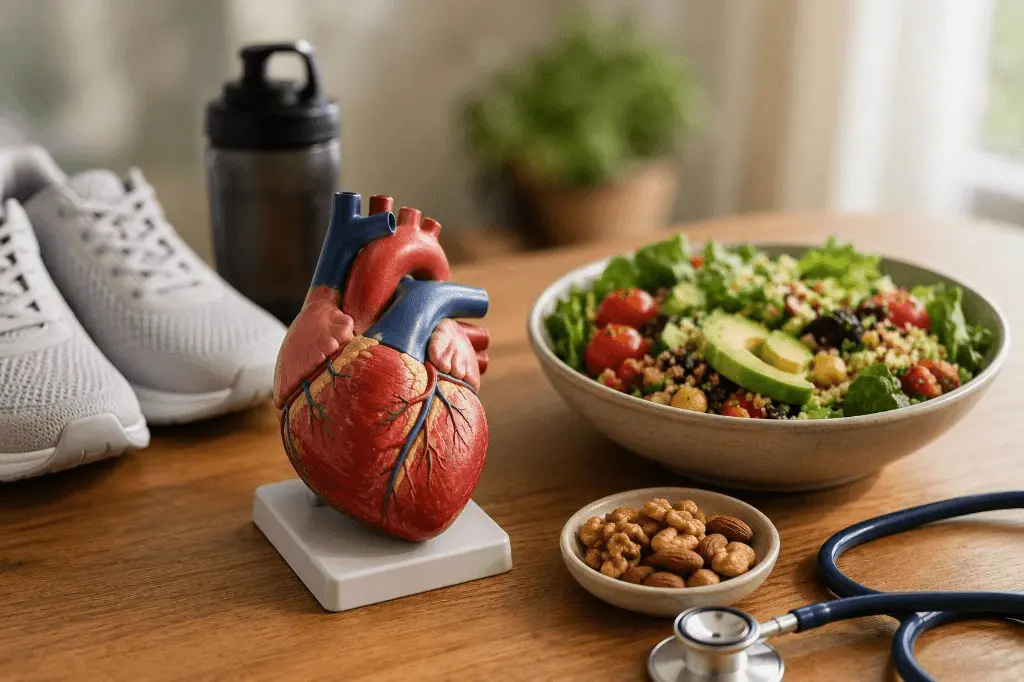
Lifestyle changes for optimal metabolic health
HRT is just one therapy that can optimize your health during the menopause transition. Whether you take HRT or opt for alternatives, lifestyle changes can also support metabolic health as you age. As a bonus, many may alleviate the effects of menopause since worsened metabolic health may exacerbate symptoms. These changes include:
- Eating a metabolically healthy diet that nourishes your body with micronutrients and keeps blood sugar more stable.
- Exercising regularly and incorporating strength training to build and maintain muscle.
- Reducing stress to help regulate cortisol levels.
- Prioritizing sleep to set your body up for optimal hormone signaling.
- Boosting your gut microbiome for beneficial effects on metabolism, mood, and more.
- Reducing exposure to environmental toxins, as these can disrupt hormones.
Find personalized relief and protect your health
Estrogen replacement therapy and other forms of HRT may help optimize your metabolic health, but the decisions about whether to start HRT, at what age to start it, which hormones to include, and which delivery method to use are not one-size-fits-all. Have a candid conversation with your doctor, weighing the benefits against any risks for you. Whether you use HRT or opt for alternatives, lifestyle changes may also help alleviate menopause symptoms and promote metabolic health.

Understand how your hormones affect your metabolism
Estrogen plays a key role in metabolic health. Levels pairs real-time glucose data with comprehensive lab testing and personalized guidance, so you can see how your body responds to food, stress, and lifestyle—and build habits that support your health through every life stage. Learn more about Levels